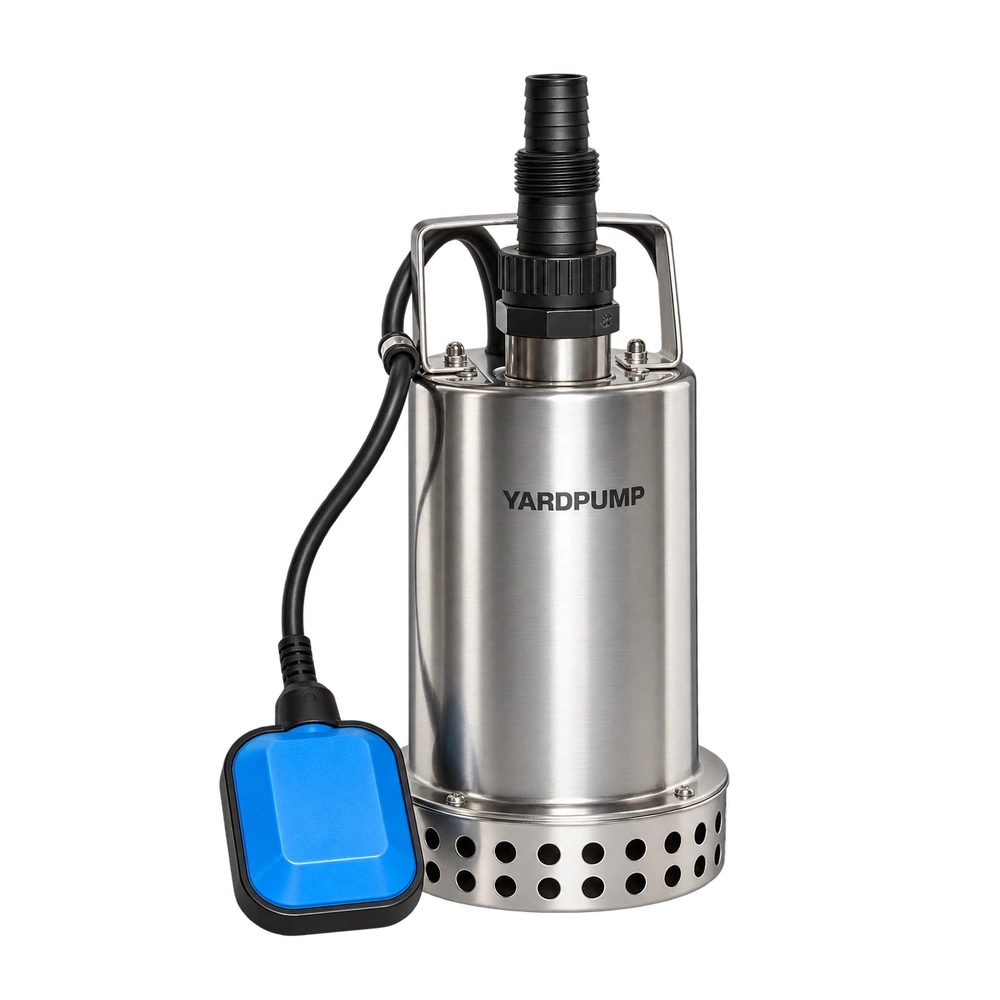
Imagine a clean-and-dirty-water pump has handled sandy drainage. Back on a clean-water test stand it delivers noticeably less through its original hose. The vane edges look dull, and a mating surface near the inlet is bright. Will a new impeller restore delivery? Separate the geometry that transfers energy to the water from the clearance that limits internal leakage. Both can contribute to loss, and the same abrasive service can affect both. The most visible vane damage is not always the only finding that matters.
Two wear patterns affect different parts of the flow
Thinner or damaged vane edges and altered passages can change the way an impeller imparts energy. A larger mating clearance can let more pressurised liquid recirculate toward a lower-pressure region rather than reach the outlet. The location and extent of wear depend on particle properties, velocity, materials and pump design. There is no reliable rule that vane wear changes only flow or clearance wear changes only head. Compare the performance change and the geometry together.
Under approved clean-water conditions, match supply, temperature, inlet condition and discharge layout. Record flow, total head and real input at more than one comparable point. Check speed if relevant. Do not energise a pump with signs of electrical leakage, a jam or obvious mechanical damage. Have suitable personnel isolate it for inspection. Map the vanes, faces, inlet mating surfaces and casing in their original positions, then measure according to the drawing. An outside diameter from one part and an unreferenced caliper reading on another do not establish the specified clearance.
A replacement may leave the other worn surface in place
For illustration, a drawing uses a difference between two diameters to check a concentric fit. Assume the difference is 0.4 millimetres in a new combination and 0.9 in a returned one. If concentric, the ideal radial clearances are 0.2 and 0.45 millimetres. That comparison calls for measuring both the rotating and stationary parts. It does not predict leakage volume or define any model’s allowable clearance. If dimensions remain acceptable but one vane has a missing section, investigate the impeller geometry and eccentricity first. If both surfaces are worn, replacing only the impeller can leave excessive clearance.
Record where marks run and whether they repeat around the part. A polished inlet edge and a deep local groove can have different origins. Transport marks, a trapped object and abrasive operation can coexist. Preserve material and operating information before cleaning. Establish whether the pump encountered diluted fine sand, soft occasional debris or a slurry. A repeatable clean-water test does not establish suitability for continuous abrasive service.
Release the repair against measured performance
Choose an impeller, mating part or approved wet-end assembly according to the drawing and service procedure. Do not increase speed, grind vanes or add a shim to compensate for an unexplained loss. After assembly, compare duty, input, vibration and any required seal checks with the return and approved reference. If the original liquid is outside the permitted conditions, consider a different intake location, settling arrangement or appropriate equipment. The goal is to restore verifiable delivery, not simply to install a new-looking impeller.
Label whether the comparison is before and after repair on one pump or between the return and a separate reference pump. They answer different questions. If hose, check valve or speed changed, establish a repeatable baseline. The site’s inflow and sediment can also change over time, so a wear photo is not enough to calculate a performance loss.
Frequently asked questions
Can maximum head alone verify the repair?
No. It is an endpoint. Check the relevant operating range and agreed duty point.
Does a bright mating surface prove the clearance is excessive?
No. Measure from the defined datum and look for grooves, uneven wear and matching marks.
Could a new casing alone improve performance?
That depends on which surface is worn and the assembled clearance. Confirm compatibility and test the assembled pump.