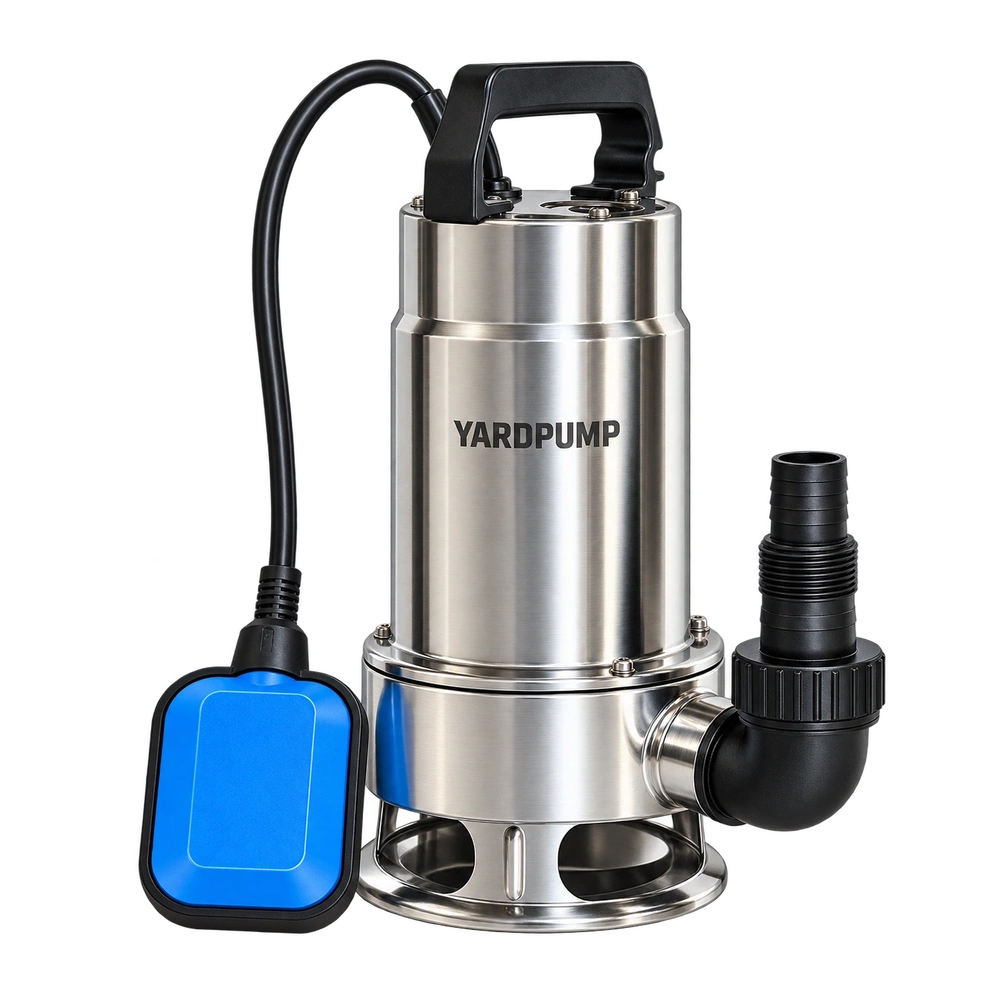
The valve position has not changed, yet pump flow and pressure rise and fall repeatedly. An impeller defect may be suspected, but a typical investigation should also examine the head curve and system dynamics. Some pump curves contain a region where head increases with flow. That can contribute to unstable operation in certain systems, but it does not make every installation unstable.
A curve is not an operating point
The pump curve relates flow and head at specified speed and conditions. The system curve includes static head and flow-dependent losses. Their relationship determines the operating point.
A locally rising pump curve can create more than one possible intersection in some arrangements. Storage, changing liquid levels and control response can further affect dynamic behaviour.
Maximum flow and maximum head cannot describe this interaction. Obtain the complete relevant curve and permitted operating range. Also consider other causes of fluctuation, including air entry, low-flow recirculation and repeated controller switching.
Record events on the same time basis
Measure flow, relevant pressures, levels, speed and control state with a suitable common time reference where possible. A pressure photograph taken at one moment and a flow reading taken later may describe different operating points.
Instrument range, location and response can also create misleading impressions. Establish whether the observed change belongs to the hydraulic system or the measurement method before analysing curve stability.
| Observation | Parallel checks |
|---|---|
| Repeated control switching | Logic, thresholds and minimum recognised flow |
| Bubbles or unusual noise | Air entry, venting and suction conditions |
| Persistent fluctuation at low flow | Curve shape and system storage |
| Periodic receiving-level change | Static head and downstream boundary conditions |
A valve can remain physically fixed while other system conditions change. Confirm the whole boundary rather than treating a stationary handle as proof of a steady system.
Understand the hypothetical instability mechanism
Imagine a pump curve with a locally rising low-flow region and a system containing variable level or stored hydraulic energy. After a small flow disturbance, the relationship between available pump head and required system head may not provide a sufficient restoring response under some conditions.
This describes a direction for analysis, not a measured threshold for a particular pump. Relative curve slopes and system dynamics matter. Positive pump-curve slope alone does not prove that oscillation must occur.
Conversely, identifying a static intersection is not enough to dismiss control, air and storage effects. A competent assessment must consider the complete arrangement and relevant operating range.
Eliminate changing inputs before changing hardware
Confirm valve, bypass and controller states. Then check source level, inlet condition, air and the receiving boundary. Use comparable, steady-speed observations to assess whether the pump and system curves support the required duty.
Do not search for stability by blindly throttling the pump. The resulting point may fall outside the permitted low-flow range and introduce heat or other damage.
Any proposed pipework, control or pump change should be assessed across the intended range, not only at one favourable instant. If speed changes are considered, the motor and drive must be approved for them. An ordinary single-phase pump cannot simply be assigned an arbitrary speed controller.
Request useful acceptance evidence
Provide the supplier with the static-head range, pipe dimensions, terminal demand and control arrangement. Ask for confirmation of an appropriate operating region.
Sample validation should include relevant low, normal and permitted limiting demand conditions. A video showing smooth free discharge does not establish stable installed operation at a restrictive duty.
Diagnosis and fault tests require competent personnel and suitable safeguards. Isolate electrical power and release pressure through the approved method before maintenance. A final investigation should distinguish confirmed causes from hypotheses still requiring validation.
Frequently Asked Questions
Does a locally rising head curve make a pump unusable?
Not universally. Assess the intended region with the system curve and dynamic behaviour.
Must pressure hunting come from an eccentric impeller?
No. Air, controls, changing levels and system stability are other possibilities.
Can closing the valve solve hunting immediately?
Do not adjust blindly. It may create an impermissible low-flow condition; follow the approved system assessment.