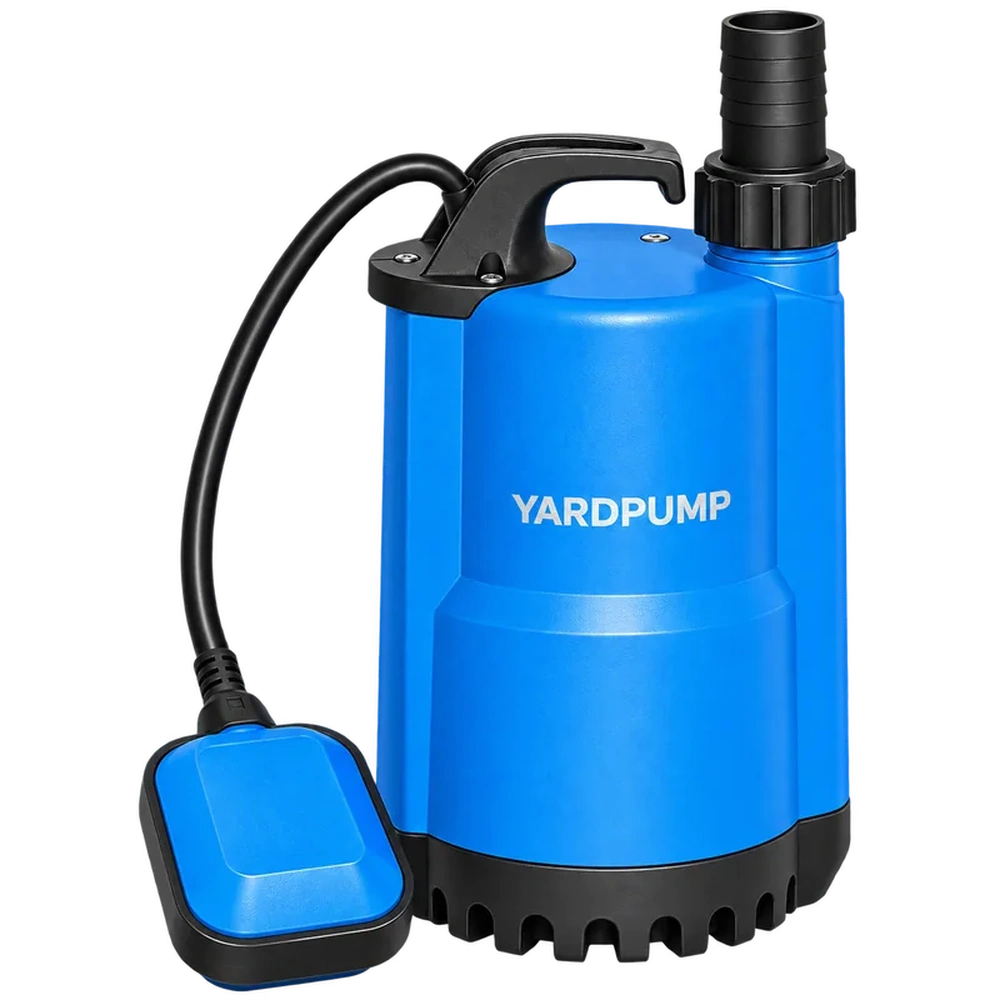
Consider this hypothetical diagnostic question: “The pump has a sharp tone near 200 hertz on a phone spectrum. Is the motor turning too fast?” A sound frequency is not automatically shaft speed. Each impeller vane passing a stationary feature can create a repeated pressure excitation. Its basic frequency depends on shaft revolutions per second and the number of vanes.
Confirm the actual speed, component construction and measurement conditions before assigning a meaning to a spectral peak.
One revolution can contain several events
A mechanical imbalance may create excitation associated with once-per-revolution motion. Four vanes passing a fixed position can produce four repeated events during that revolution. That does not mean the rotor is turning four times faster.
What a person hears also depends on the casing, supports, pipework and surrounding space. Excitation near a structural resonance may sound particularly prominent. Another installation can respond differently to the same forcing. Frequency offers a clue; loudness alone does not establish damage severity.
Work through the frequency relationship
For an illustrative actual speed of 2,850 revolutions per minute, rotational frequency is approximately 47.5 hertz. With four evenly spaced vanes, the basic vane-passing frequency is approximately 190 hertz. With two, it is approximately 95 hertz.
These are hypothetical calculations, not measured noise or speed figures for a YARDPUMP model.
| Observation | Illustrative relationship | Diagnostic use |
|---|---|---|
| Shaft frequency | 2,850 divided by 60 = 47.5 Hz | Compare once-per-revolution events |
| Four-vane passage | 47.5 multiplied by four = 190 Hz | Examine a vane-related periodic component |
| Two-vane passage | 47.5 multiplied by two = 95 Hz | Compare the expected repetition frequency |
| Harmonics or broadband content | Requires the actual spectrum | Avoid assigning one cause from one peak |
If speed has not been established independently, calculating it backwards from an assumed noise mechanism can make the reasoning circular. Confirm what the actual component contains: “two channels” is not automatically proof of two uniformly spaced vanes.
A matching peak does not identify the root cause
A component near the expected vane-passing frequency justifies investigating hydraulic excitation and its transmission path. It does not prove a defective impeller. Operating point, inlet conditions, stationary clearances and casing response can change the amplitude.
Mechanical looseness, rubbing and electromagnetic excitation may coexist. Conversely, an absent or weak peak is not proof that everything is healthy. Measurement location, bandwidth, sampling and display settings affect what is visible.
Phones may apply automatic gain control or noise reduction. A recording can preserve a useful symptom, but it should not become a contractual sound-level acceptance result without a validated measurement arrangement.
Preserve comparable operating conditions
Record model and impeller revision, operating point, liquid and water temperature, mounting and connected pipework. Keep background noise, distance, orientation and recording equipment comparable when investigating a change.
For vibration measurements, identify the measurement point and direction. Readings from different casing locations should not be combined as if they describe the same structural response. The appropriate instrument and analysis method depend on the question.
Competent personnel should select and perform acoustic, vibration and speed measurements. Do not remove guards or approach rotating components to obtain a clearer recording. Stop unsafe abnormal operation, and isolate electrical supplies and stored energy before internal inspection.
Changing the vane count changes a frequency, not a noise percentage
A new vane count can move the repetition frequency. It gives no fixed prediction of sound amplitude. The new frequency might move away from one resonance and towards another.
Where hydraulic geometry, cut-edge condition and assembly eccentricity also change, a noise difference cannot all be assigned to vane count. Assess the complete modified pump rather than treating a quieter moment as proof of a successful redesign.
For purchasing, define the hydraulic task and the sound measurement conditions separately. For after-sales investigation, distinguish the reported sound, observed spectral features and operating changes. This turns a recording into evidence for the next inspection instead of an unsupported diagnosis.
Frequently asked questions
Does a 190 Hz tone mean the motor turns 190 times per second?
No. It may relate to repeated vane passage, harmonics or another excitation. Establish shaft speed independently.
Will removing two vanes halve the noise?
There is no such proportional rule. Both excitation amplitude and structural response may change.
Can a phone recording without a sharp tone prove noise compliance?
Not by itself. Acceptance needs specified conditions and an appropriate measurement method.