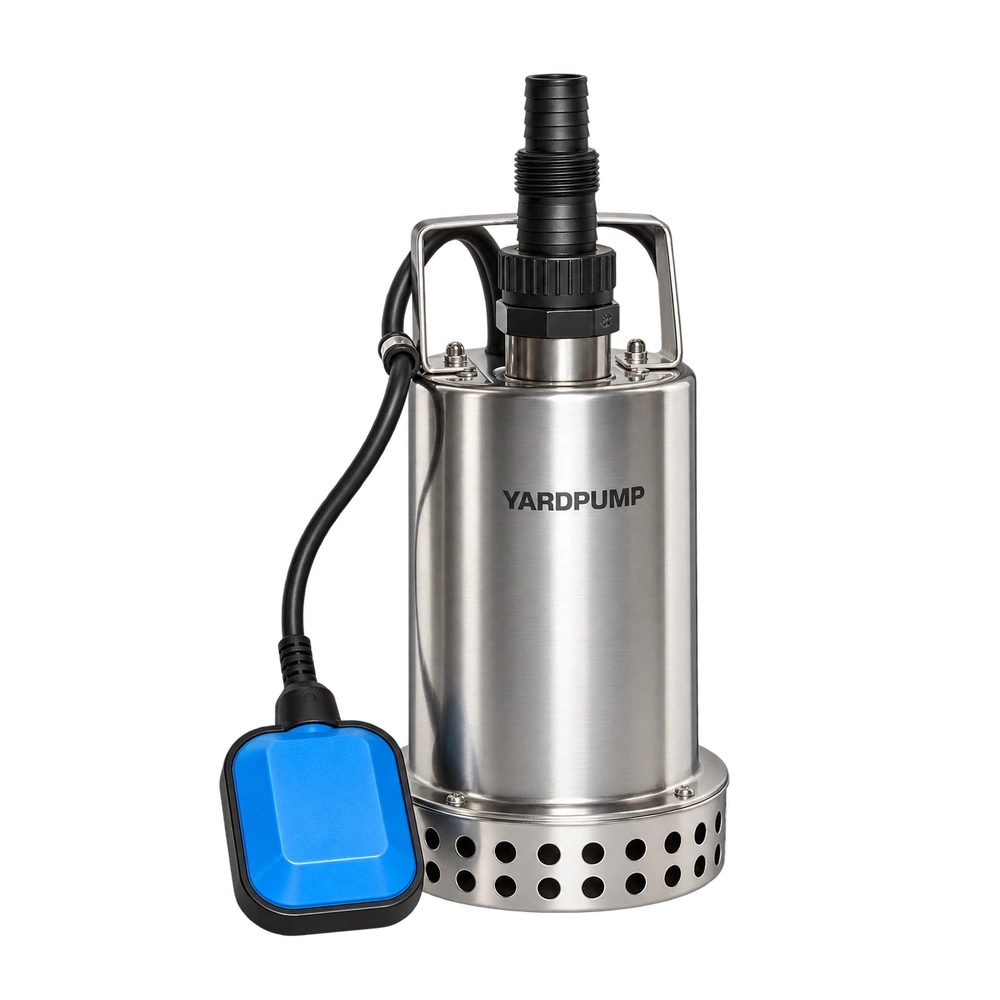
A drainage pump runs quietly with a wide hose. On a more restrictive route, it begins to vibrate. Service suspects a bearing, while the installer suspects an unbalanced impeller. If vibration comes and goes reproducibly with duty, check hydraulic loading and pipe support before replacing the bearing. At off-design conditions, uneven pressure around the impeller can push it sideways. That side load can coexist with other noise sources. Ears alone cannot tell which one dominates.
Follow pressure around the outside of the impeller
The intersection of the pump and system curves sets the operating point. In many single-volute centrifugal pumps, pressure around the impeller is more even near the design flow. Away from it, the difference around the circumference can grow and produce a net force across the shaft. A steady radial force can deflect the shaft and increase load on the bearings and seals. Unsteady flow can add fluctuating forces. That does not mean radial load always produces vibration at once per revolution, or that every sound at low flow comes from the same mechanism. Inlet recirculation, interaction near the volute tongue, rotor unbalance and structural resonance may all be present.
The direction and magnitude depend on the casing and rotor design. Different volutes and diffuser arrangements do not behave alike. Changing the hose can move the operating point and alter the structural restraint at the same time. Find out whether one or both have changed before inferring a hydraulic load from a vibration reading. Mark the sensor orientation relative to the casing so that “lateral” means the same thing in each comparison.
Compare measurements at permitted duties
Have a qualified team choose the reported operating point and suitable comparison points within the model’s approved range. Record flow, head and speed with comparable liquid, mounting and supply. Record vibration on the pump side and the pipe side in consistent directions. Look for air at the inlet, debris or contact with the basin wall. Photograph the hose path and supports with enough context to see if a pipe or hose is forcing a load onto the case. Do not deliberately deadhead the pump to reproduce noise outside the allowed range.
For illustration, suppose the old route is steady at 55 litres per minute. The restrictive route produces 27 and an increase in lateral vibration. Returning to the original permitted route removes the vibration. That supports a duty-related explanation without proving the amount of radial force or ruling out damage. If correcting the hose support eliminates the vibration at the same duty, structure may be part of the problem. If rough running, excess play or contact persists across permitted duties, arrange an isolated inspection. Preserve the bearing condition, wear marks and locations and check alignment and unbalance rather than replacing parts without a record. The example is not a model’s allowed range.
Select for the duty the pump actually sees
A pump listed for soft solids still needs to run inside its acceptable operating range. If a hose or fitting drives the long-term operating point too low, consider restoring a suitable bore or matching the pump to the route rather than treating a larger bearing or different seal as the first fix. If there has already been rubbing or leakage, have the wet-end and electrical condition assessed before returning the unit to service. Clean-and-dirty-water model selection starts with the liquid and the fitted hydraulic duty together.
Keep a photo of hose supports and the vibration sensor position for each run. A line touching the basin wall at only one of the operating points can transmit vibration into the structure and confuse a comparison at the motor.
Frequently asked questions
Is radial thrust the same as axial thrust?
No. Radial thrust acts across the shaft; axial thrust acts along it. Both can change with duty, and their evidence should be assessed separately.
Does vibration at shaft speed prove the impeller is unbalanced?
No. Compare duty, phase where available, support and alignment. One frequency component cannot establish the cause by itself.
If restoring flow quiets the pump, should we still inspect the bearing?
Inspect if there were signs of rubbing, leakage, play or abnormal temperature. Correcting the duty does not repair damage that has already occurred.