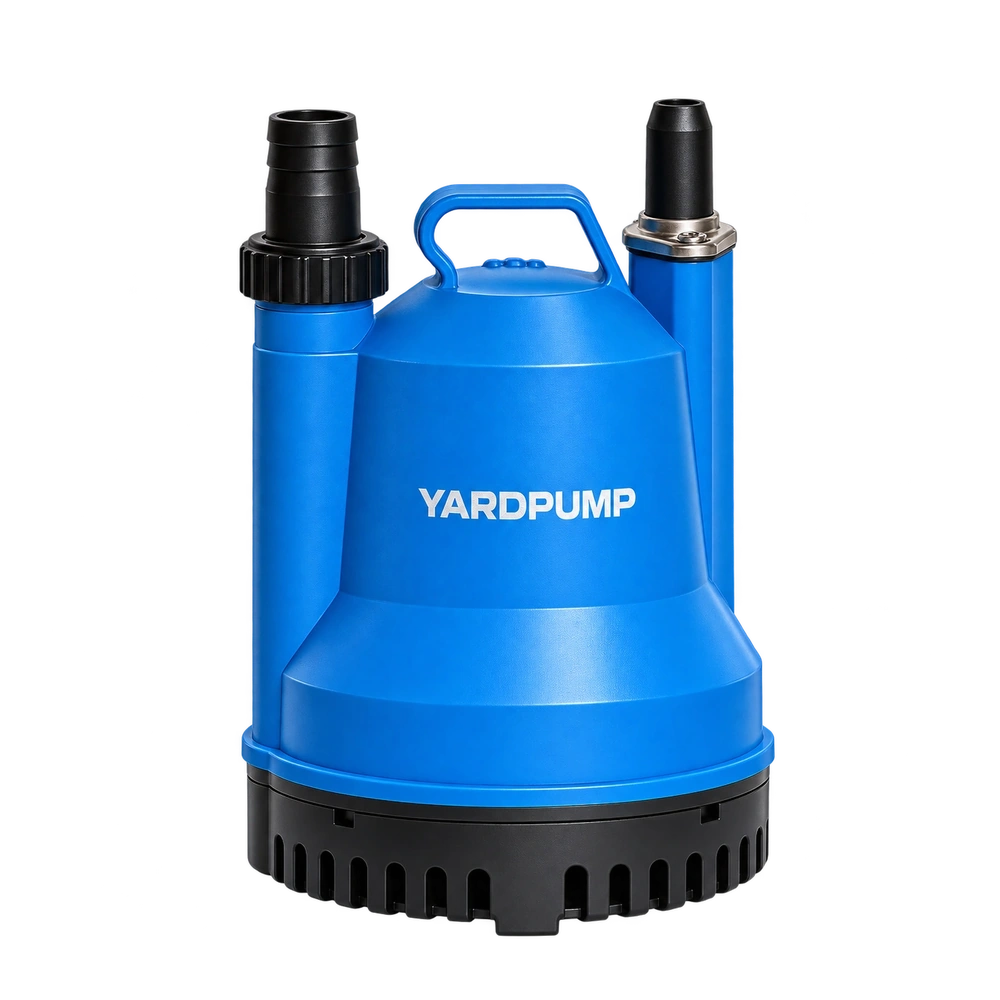
A small dirty water pump serves a narrow discharge line. On a branch with higher resistance, it delivers less water and sounds rougher. The intake is still covered, so why does it sound as if gravel is inside? At low flow, some centrifugal pumps can develop separated flow and local recirculation near the impeller or casing. That can produce pulsation and noise. Air ingestion, cavitation, wear and pipe vibration can sound similar or occur at the same time. The sound is a reason to check the operating point, not proof of one cause.
Less delivery does not mean less movement everywhere
The rate measured in the discharge line is the pump's net delivery. Away from its design flow, liquid can separate and recirculate near an impeller inlet or outlet even when less water leaves the pump. Adequate immersion or high inlet static pressure can remove some air entry or vaporisation conditions, but does not rule out internal recirculation. Recirculation can create local low pressure and coexist with cavitation. Neither a high inlet pressure reading nor one discharge pressure value separates the two.
Find the allowable operating region for the actual pump. The maximum head end of the curve is generally near zero external flow; it does not by itself allow continuous operation there. If the manufacturer has not approved a range for the comparison, do not close a valve to provoke the noise. Severe vibration, protection operation or a sudden loss of delivery calls for shutdown, isolation and qualified investigation under the site procedure, not another run to listen.
Separate the causes by changing one duty condition
Collect water level, installation and hose or valve configuration, stable flow, outlet pressure or head and when the sound appears, during permitted operation. Check for a surface vortex, bubbles or intermittent discharge. If the noise tracks falling level or disappears when the approved intake approach is restored, investigate air entry and inlet restriction first. If a pipe resonates or strikes a support, note where movement is greatest; sound transmitted through a pipe can mimic pump damage. Dynamic pressure and electrical measurements belong with qualified personnel and suitable equipment.
Imagine two manufacturer approved operating points. The same test pump sounds smooth at 35 litres per minute and rougher at 20. Water level and intake layout are unchanged, there is no visible air ingestion and the noise disappears at the original duty. That supports a link with the operating point and justifies investigating recirculation or related pressure pulsation. It does not clear cavitation or set a 20 litre per minute limit for other pumps. Noise at both conditions, or physical evidence of rubbing, looseness or damage after isolation, calls for a mechanical investigation too.
Decide whether the pump or the system needs work
Review the resistance of the actual discharge and the pump curve. If normal duty repeatedly puts the pump at the low flow end of its allowed range, assess a better matched pump or have engineering review the system. Bypass, speed control and other changes depend on the pump, where water returns and the heat load; do not install a bypass just to quiet the pump. Give service staff the working points, observation video and repeat conditions for the same configuration. That is more useful than a diagnosis based on sound. If operation is still abnormal within the approved region, follow the service plan for the impeller, clearance, bearings and supports.
If roughness appears at a particular valve setting, record the valve and pipe layout. Sound downstream of a valve can travel back toward the pump. Comparing the two locations from a safe position helps a technician choose where to measure.
Frequently asked questions
Does the absence of visible air rule out cavitation?
No. Cavitation involves vaporisation at low local pressure. Air drawn from outside is a different mechanism and both require evidence.
Does rising outlet pressure with falling flow prove recirculation?
No. It shows a changed duty. Check the allowable range, inlet condition and whether the sound repeats under comparable conditions.
Would the next larger pump solve a low flow noise problem?
Not necessarily. Choose a pump matched to the actual duty. More rated power does not guarantee operation in a suitable flow region.