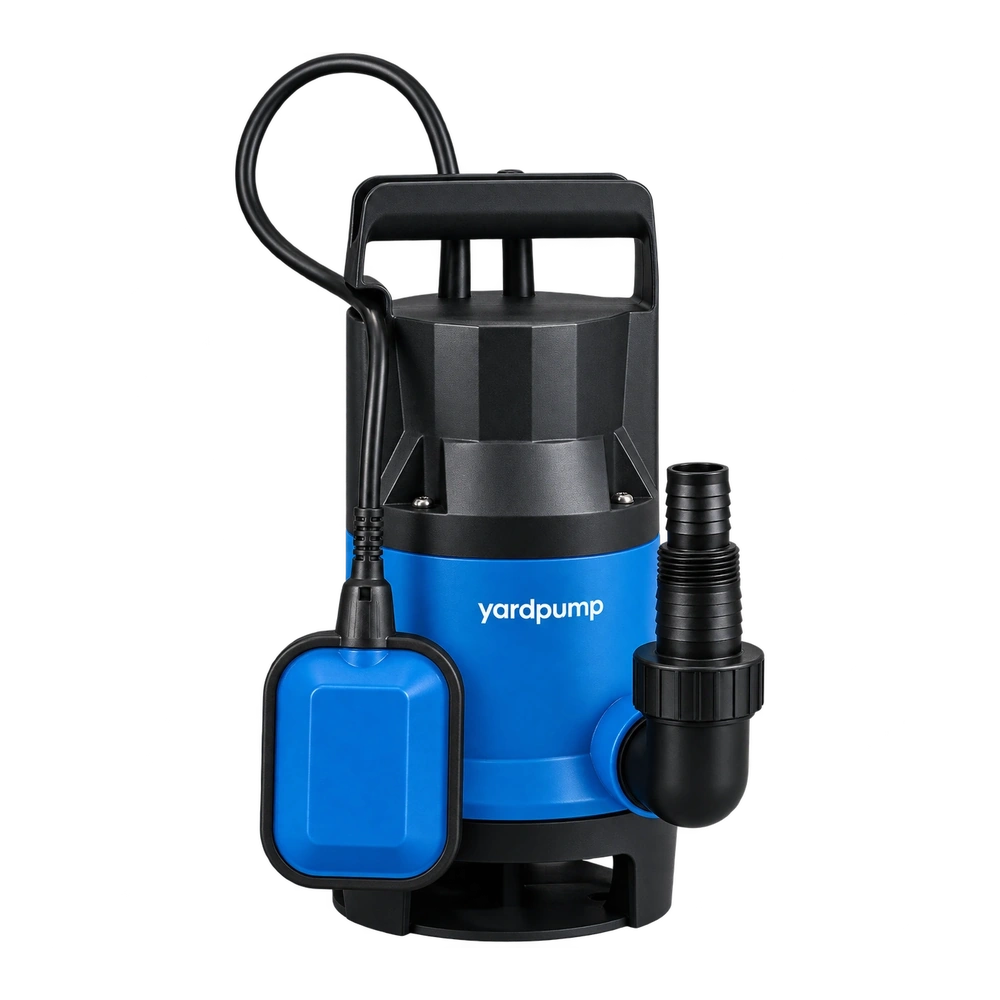
Imagine two motors intended for small submersible pumps are compared on an approved bench without a hydraulic load. One draws fewer watts. Does that make it more efficient under load? The result can flag a difference but cannot answer that question. Even without useful output to the driven equipment, a motor establishes magnetic flux and has internal losses from its windings, bearings and rotating parts. A reading above zero is expected. What matters is where it was measured and why it changed.
Separate current, real power and measurement boundaries
An induction motor draws magnetising current. Current magnitude alone does not tell you how much real power it consumes. Record real input using appropriate equipment rather than treating volts multiplied by amperes as watts. No-load input can include core loss, winding loss at no load, bearing friction and windage or other mechanical loss associated with the approved arrangement. The balance depends on the motor and bench. If a drive, supply converter or cooling system shares the meter boundary, say whether its power is included. Two no-load readings on different arrangements are not automatically comparable.
A no-load motor test is not an instruction to run a complete submersible pump out of water. The assembled pump has cooling, seal and hydraulic operating limits. An approved motor test and a whole-pump trial are different arrangements. Qualified personnel need to establish the correct motor support, guarding and cooling. Do not dismantle the pump or bypass protection to get a convenient reading.
Subtracting an unloaded reading does not give shaft output
For illustration, suppose a motor draws 60 watts of real input on a no-load bench. At the agreed load its input is 500 watts. Subtracting those readings gives 440 watts, the difference between two electrical measurements. That is not shaft output. Loaded current, winding temperature and slip can change, so the losses do not all stay at the no-load values. If an approved independent test establishes 350 watts of shaft output at the same loaded condition, motor efficiency uses that 350 watt result and the 500 watt input. These are hypothetical figures, not ratings or limits for a particular pump.
A buyer can still use the no-load observation in a process comparison. Match voltage, frequency, initial temperature, test duration, cooling and measurement boundary. If the reading rises, compare no-load current, speed, bearing or seal configuration and instrument settings. Check whether the difference repeats. Do not use a lower result to predict installed flow, head or temperature. A change in magnetising conditions can affect the unloaded reading without establishing better loaded performance.
Return to the duty the buyer will receive
Use an appropriate approved method at the specified load if you need motor efficiency or shaft output. If the purchasing question is energy used to drain a pit, compare the whole pumps’ measured flow, head and real electrical input for the same duty. Record the test locations, supply and water conditions. Keep no-load results for process control or to explain a difference, rather than letting them replace acceptance. A useful report identifies which energy boundary was measured, which was not and what decision the result supports.
Connect the readings to what changed on the line. A bearing or grease change suggests a different investigation from a simultaneous change to core laminations and windings. Compare an unchanged control unit and repeatable records before attributing a difference to one component.
Frequently asked questions
Does lower no-load current always mean lower real watts?
No. Verify voltage, phase relationship and real input. Current alone is not enough.
Is an unloaded reading useful without a dynamometer?
It can be useful for approved screening or comparison. It does not establish shaft output or an efficiency class.
Is a pump operating against a closed outlet at motor no load?
No. The wet end can still absorb power, and shutoff operation has its own limits. Do not close an outlet to simulate a motor no-load test.