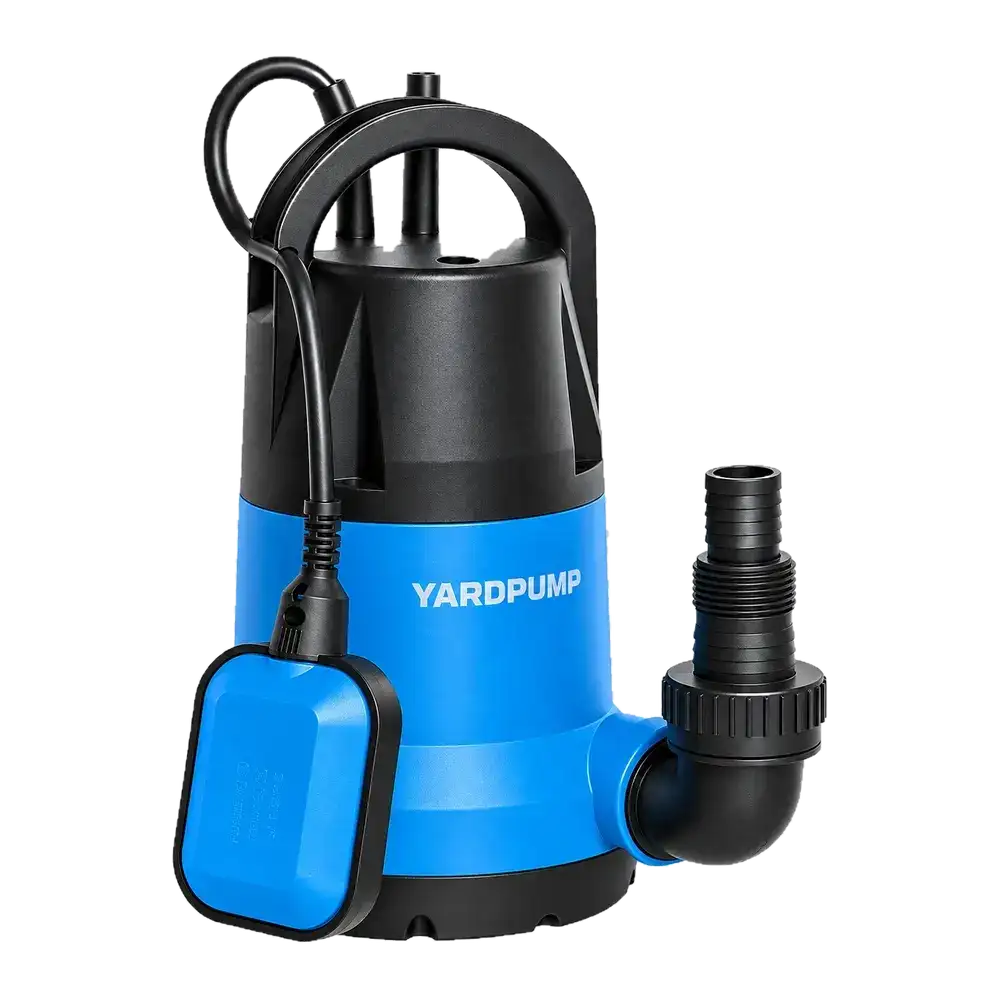
After a cold spell, a sump pump's float has to rise higher before the pump starts. There is no visible ice and the water does not rise unusually after the pump stops. Should the switch be replaced? On a tethered float, first see whether the same anchor and free length still let the float travel through its full range in the cold. A cable can become harder to bend. That can change the water level needed to reach the internal switching angle. One late start on a cold day does not prove the cable or contacts have failed.
Switching angle and water level are different observations
A tethered float swings about its anchor as water rises and falls. The internal switch changes state at its designed orientation. The start level depends on buoyancy, free cable length, the mounting point, cable routing and the space around it. With a stiffer cable, some installations make the float work against the cable during early travel. A cable lying against a wall, kinked at a clamp or rubbing a hose can make the restriction worse. The effect depends on the jacket, construction and temperature; two floats need not respond in the same way.
Separate the switching event from the start of water delivery. A controller can introduce a delay, while a valve or pump fault can delay discharge. Water can keep rising during that time. Inferring the switch point from the sound of discharge mixes those events. From a safe location, note the level, float orientation, visible controller indication and delivery sequence. Leave electrical measurements and disassembly to qualified personnel.
Compare wet operation within the approved range
Check the permitted liquid temperature, mounting method and free cable length for that model. Have qualified staff observe normal wet cycling in cold and milder conditions under the equipment instructions, within approved limits in both cases. Keep the anchor, cable route and surrounding obstructions the same. Record where the cable bends at rest, whether the float presses against it or a hose during its rise, the start level on the way up and stop level on the way down. Do not flex a live cable, tie the switch in an operating position or apply heat to speed up a comparison. If overflow is imminent, use the site's emergency drainage procedure instead of waiting to finish a retest.
In a hypothetical comparison, the cold float visibly meets resistance at the base of its tether, but travels freely on the way down after the pump has started. With the same mounting in milder conditions, the old start level returns. This supports a temperature dependent movement problem. If the float reaches the switching orientation in both tests but the controller does not show the expected change, have qualified service staff check the approved switch and control path. If the symptom persists when warmer, check wall contact, inflow, jacket damage and anchor movement.
Act on the condition you can reproduce
If routing or the anchor restricts travel, use an approved mounting arrangement and record its position. Retest both switching levels, the highest operating water level and the immersion needed before stop. If the pit is too tight or the temperature falls outside the approved range, ask for a compatible level control arrangement. Replacing the tether with a softer general purpose cable is not a repair. A dealer ordering a replacement should confirm the switch number, cable length, tether fittings and permitted temperature range together. That makes it possible to wet test the replacement in the same layout rather than compare the plug and housing alone.
If the float body or cable is damaged, automatic stop is unreliable, or there are signs of electrical leakage, isolate the equipment using the site procedure and refer it to qualified service. A temporary return to normal movement does not clear damage.
Frequently asked questions
Can cable stiffness matter even if there is no ice?
Yes. It depends on the jacket and installation. Compare wet movement with the same layout and within the permitted temperature range.
Does a longer free tether always lower the start level?
No. Cable length, swing angle, mounting height and obstructions all matter. Use the approved arrangement and verify wet start and stop.
Is manual switch movement enough to accept the installation?
No. A function check under the instructions is useful, but verify wet operation with the wall, hose and other obstructions present.