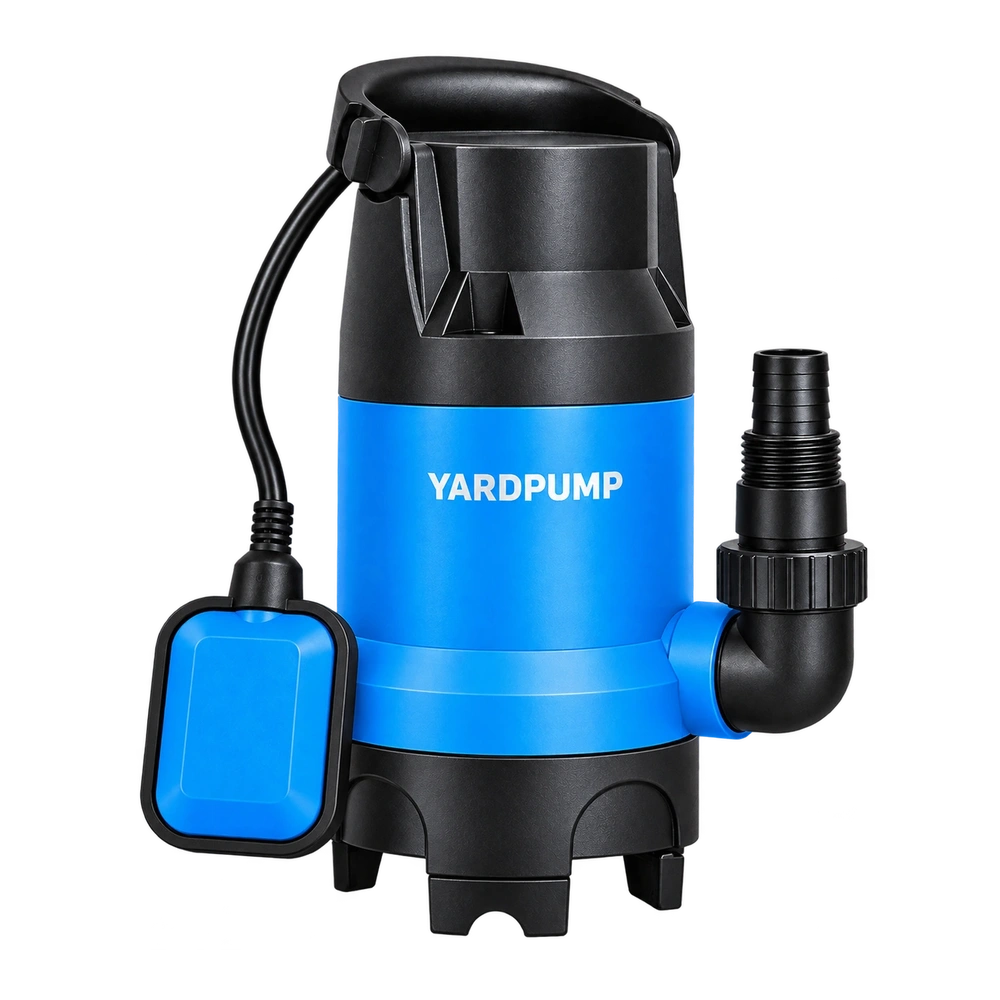
YARDPUMP application expert
“We need a 500–750 W submersible pump for our market. Please send your best model and best price.”
This kind of inquiry is common because wattage and price are easy to compare. But they leave the supplier guessing about the hydraulic duty, liquid, voltage/frequency, cable, control method, market documentation and what “OEM” actually changes.
A fast and comparable quotation starts with the application and duty point, then freezes the electrical and OEM configuration. Price becomes meaningful only after everyone is quoting the same requirement.
A composite sourcing conversation
The RFQ that looked complete until the second email
Imagine a distributor asking for a 750 W, 230 V submersible pump with private-label packaging. A supplier quotes immediately. Then the buyer adds that the market is 60 Hz, the pump must drain dirty water, the outlet must match a local hose standard, the cable needs to be longer and automatic control is required.
The first quotation was not wrong; it answered an incomplete question. Each new requirement can change the motor version, hydraulic platform, accessories, cost, packaging and even which product family is appropriate.
This is why experienced sourcing teams try to move technical uncertainty forward—before samples, tooling and artwork—rather than discovering it during production.
Think of it like this
Buying a pump by wattage is like buying a truck by engine size
Engine size tells you something about the machine, but it does not tell you the payload, route, axle requirement, body type or whether it can do the job economically. Pump wattage works the same way.
Two pumps with similar input power can have different flow-head curves, solids capability, outlet geometry, controls and materials. The duty point and liquid decide whether the platform fits before wattage becomes useful context.
For B2B sourcing, “500 W” is a filter—not a complete specification.
Start with the duty
Flow at working head is the technical center of the RFQ
Professional pump-selection frameworks begin with application requirements, liquid characteristics and hydraulic duty. The Hydraulic Institute treats pump selection and specification as a discipline built around pump type, liquid properties, flow and head—not a single maximum number.
For a small submersible pump, the RFQ should state the target flow at the expected working head or provide enough installation detail to estimate it. Also describe the liquid: clean water, dirty water, expected soft solids, sand exposure, temperature and relevant chemistry.
This immediately eliminates platforms that look similar in a catalogue but solve different problems.
Then freeze the market version
Voltage, frequency, plug, cable and control are part of the product identity
Electrical configuration should be defined by target market, not added after hydraulic selection. Voltage and frequency can affect motor and performance variants. Plug style, cable length, insulation requirements and thermal protection may change the BOM and compliance path.
Control method also changes the product: manual, tethered float, vertical float or another validated sensor concept may require different physical space and target water levels.
A quotation becomes much easier to compare when these items are fixed instead of left under a vague “standard configuration” label.
Separate base product from OEM changes
Logo and carton artwork are not the same kind of customization as motor or seal changes
Private-label color, logo, manual and carton changes mainly affect commercial execution. Changing motor winding, cable, sealing arrangement, outlet, control or hydraulic component can affect validation and production control.
Keep those categories separate in the RFQ. First approve the base hydraulic and electrical platform. Then list cosmetic, packaging, documentation and functional OEM changes as controlled deltas.
This makes sample approval meaningful because everyone can see which changes require re-verification rather than assuming the approved sample covers every later BOM change.
Why good specifications save money
The cheapest quote can become the most expensive comparison when the scope is different
Suppose three suppliers answer the same vague inquiry. One includes a copper-winding option and long cable, one assumes aluminum winding and short cable, and one prices without float control. The spreadsheet may show three pump prices, but it is not comparing three equivalent pumps.
Specification quality is therefore a commercial tool. Industry guidance on pump systems repeatedly emphasizes that fragmented specifications create coordination failures, while complete application-driven specifications improve the chance of a functional result.
The objective is not to make the RFQ bureaucratic. It is to remove the handful of ambiguities that create expensive rework later.
What each buyer should send
A useful first RFQ can fit on one page
For distributors and brands, include target application, liquid, required duty, power range if constrained, voltage/frequency, outlet preference, cable, control, target market, expected order quantity and required documents. Add color, logo, packaging and other private-label changes in a separate block.
For engineering or OEM teams, add performance acceptance points, material or component requirements that are truly necessary, revision-control expectations and the tests or documents used to approve the sample.
The factory can then respond with a matched platform, clearly stated assumptions and a quotation that can be compared to another supplier on equal terms.
Where this guide stops
A sourcing brief cannot replace market-specific compliance review
Certification, labeling, electrical and safety requirements vary by destination and product scope. The buyer and supplier should confirm which standards and documents actually apply rather than copying a requirement from another market.
Use the sourcing brief to define the product. Use the applicable standards and local compliance process to define whether that product can be sold in the intended market.
YARDPUMP expert takeaway
The best RFQ is not the longest RFQ. It is the one that freezes the few variables that change the pump: duty, liquid, electrical market, control, outlet, cable, documents and OEM deltas. Once those are clear, “best price” finally means something.