YARDPUMP BOM engineering
“Can we include one stepped adaptor for every market and let the customer use whichever hose size fits?”
Stepped adaptors are convenient because one molded part serves several hose sizes. The hidden trade-off is that the smallest step can become the controlling restriction for the entire discharge line.
Connection convenience should not create a hydraulic bottleneck. Use the largest practical clear bore and match thread or hose standards to the market without shrinking the discharge unnecessarily.
Think of it like this
A reducer is a tollbooth at the entrance to a long highway
The pump can accelerate a large volume of water, but forcing that flow immediately through a small opening raises velocity and friction.
If the smaller hose then continues for many metres, the restriction is not local anymore—the entire line becomes a higher-resistance system.
This is why an adaptor that “fits” can still be hydraulically poor.
A common user complaint
The pump had strong flow in a bucket and weak flow through the garden hose
A user tests the pump with a short open outlet and sees strong flow, then installs a small-diameter garden hose and the performance collapses.
The motor has not changed. The system curve has. The reduced bore and long hose add friction head, moving the operating point to lower flow.
This is one of the easiest ways for an accessory decision to become a product-performance complaint.
Connection types
Threaded, stepped and quick connectors solve different user problems
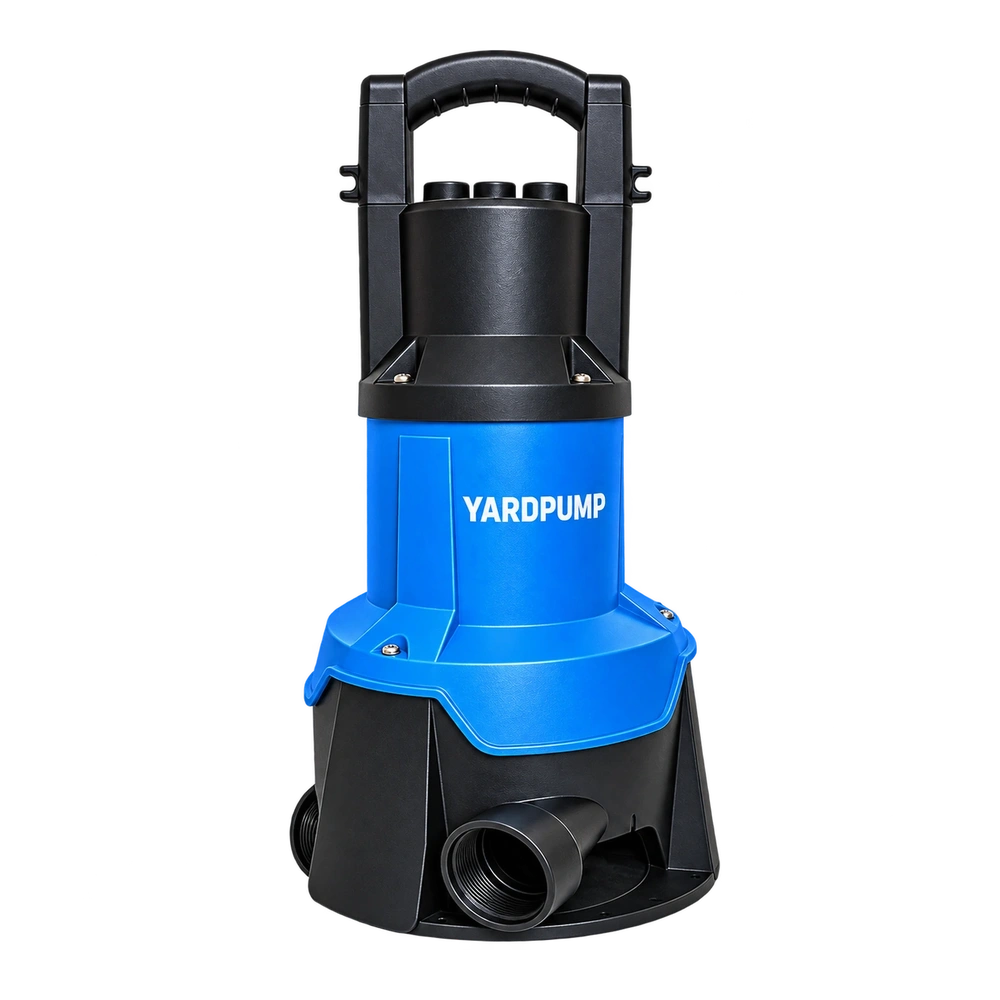
A threaded outlet can provide a standardized mechanical interface when the thread form and size match the market. A stepped hose adaptor is convenient for consumer hoses. A quick connector improves setup speed.
Each architecture adds its own internal bore, seals and failure modes. Cracked plastic threads, wrong BSP/NPT assumptions, missing O-rings and loose clamps can all create leakage or service issues.
For OEM sourcing, define the thread standard, included adaptor sizes and minimum clear bore.
Hydraulic effect
Pipe and hose diameter should be large enough to avoid unnecessary friction
Grundfos installation guidance recommends properly sized pipework and avoiding unnecessary restrictions because excessive velocity increases friction loss.
The same principle applies to compact drainage pumps. A short reducer may be acceptable, but a long small-diameter discharge can consume a large part of the pump’s available head.
Published performance should therefore be tied to a defined outlet setup rather than to an unspecified hose.
QC at the adaptor
A connector can pass a thread gauge and still choke the pump
Mechanical inspection should verify thread fit, sealing and hose-clamp engagement. Hydraulic inspection should also verify the internal bore and the assembled flow path.
A thick wall, molding flash or undersized insert can reduce the passage without changing the external thread size.
The best adaptor is the one that connects safely without quietly becoming the narrowest part of the system.
Where connector advice stops
The outlet cannot compensate for a pump selected at the wrong duty point
A larger hose can reduce friction, but it cannot create head that the pump curve does not have. The pump, connection and discharge line must be considered together.
Use the connection to preserve available performance, not to disguise an undersized hydraulic design.
Engineering decision layer
What to lock before you approve this component.
The narrative explains why the decision matters. This reference layer turns that reasoning into BOM, validation and supplier-control points.
- Threaded discharge — robust standardized connection when thread form and size match the market.
- Stepped hose adaptor — convenient for consumer hoses but smaller steps can dramatically restrict flow.
- Quick connector — improves setup speed and user experience but adds proprietary geometry and seals.
Adaptors are inexpensive individually, but multiple molded fittings, thread inserts and seals increase packaging and tooling cost.
The smallest internal diameter in the discharge path can become a major pressure-loss source. A high-Qmax pump connected to a narrow hose may deliver far less flow.
Threads can crack or strip; O-rings can age; hose barbs can leak if clamp fit is poor.
Failures include cracked plastic threads, mismatched thread standards, loose hose clamps and missing O-rings.
Gauge thread fit, pressure/leak test assembled adaptors and verify internal bore dimensions.
B2B buyers should specify thread standard (G/BSP/NPT where applicable), clear bore, adaptor sizes and included accessories by market.
Connection changes can alter flow performance and packaging; published flow claims should use a defined outlet setup.
YARDPUMP expert takeaway
Do not treat the outlet adaptor as a free accessory decision. Preserve bore size, define the market connection standard and remember that every reduction becomes part of the pump’s real working head.