YARDPUMP BOM engineering
“Can we make the pump more durable just by changing the casing from plastic to metal?”
Metal often feels more premium in the hand, but pump casings fail through more than raw material strength: cracking, erosion, corrosion, warped sealing faces, damaged threads and thin-wall impact all depend on design and process.
Choose casing material from the environment and mechanical duty, then verify wall thickness, hydraulic geometry, sealing faces and corrosion/impact behavior.
Think of it like this
The casing is the pump’s skeleton and its water channel at the same time
It holds parts in alignment, contains the water path and often forms the volute that converts velocity into pressure.
Changing the material therefore changes more than appearance. Stiffness, cooling, thread behavior, impact resistance and corrosion all move together.
A strong material with poor geometry can still create a weak pump.
A composite sourcing decision
The stainless shell that solved rust but created no hydraulic advantage
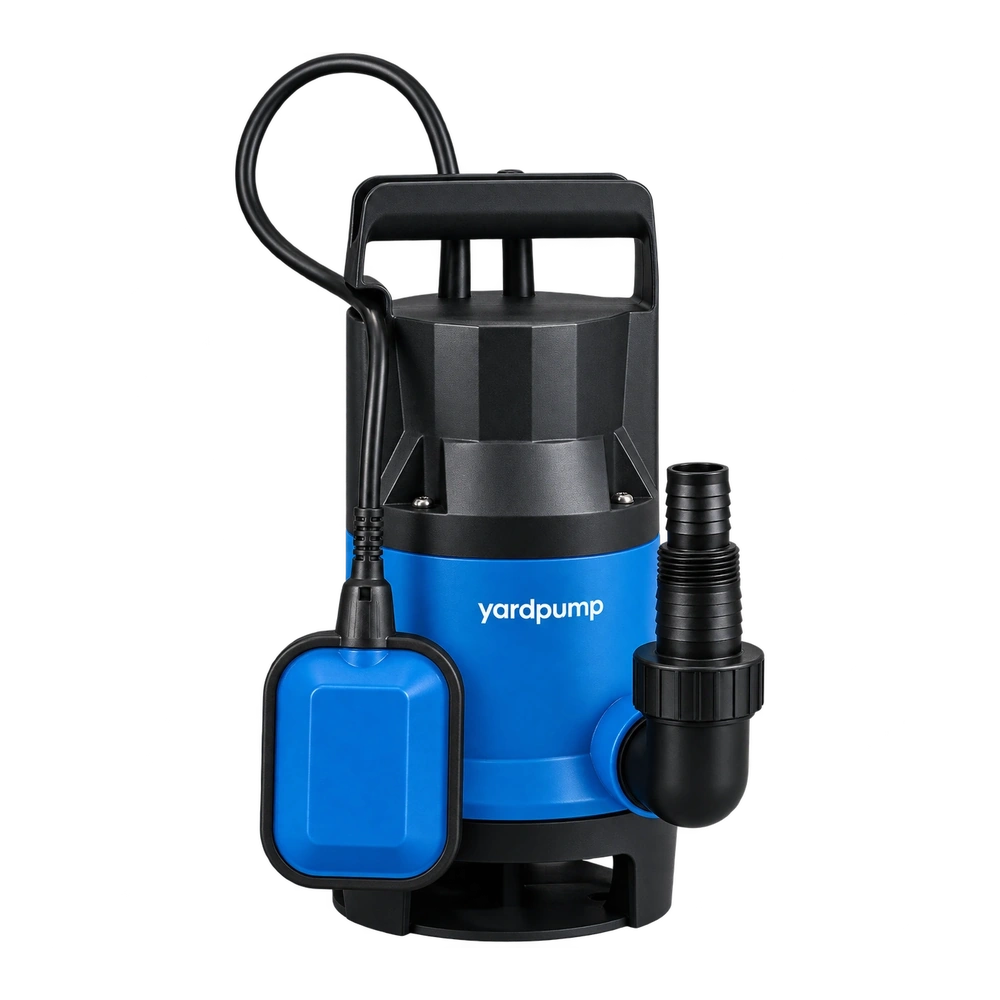
Imagine a buyer upgrading a compact plastic pump to a stainless-looking casing because the target market associates metal with quality.
The product gains weight and a premium appearance, but the water, duty and hydraulic performance do not require the change. Meanwhile, seams, fasteners and internal components remain the true corrosion limits.
The material upgrade may still make commercial sense, but it should not be confused with a universal engineering improvement.
Durability
Casing life is a combination of material, wall design and the liquid
KSB notes that pump-casing durability is important enough that some industries prescribe material and wall thickness. Different metals are selected for different corrosion and pressure environments.
In compact pumps, engineering polymers can provide light weight and corrosion resistance, while aluminum, cast iron or stainless can add stiffness or different environmental behavior.
Abrasion, impact and chemical exposure still need to be evaluated for the exact application.
Hydraulic function
The volute surface is part of the pump curve
The casing is not simply a protective box around the impeller. Its internal shape guides the liquid and interacts with the impeller to produce the final hydraulic result.
Wear or dimensional distortion near the cutwater and clearances can reduce performance. KSB identifies casing tongues and flow-facing surfaces as wear-prone zones in abrasive service.
A material change that alters molding, machining or wall stability can therefore require hydraulic revalidation.
QC at the casing
Leak testing and dimensions matter more than tapping the shell with a finger
Useful checks include critical dimensions, thread fit, sealing-face flatness, pressure or leak tests where applicable and coating or corrosion checks for metal housings.
Plastic housings may need drop and boss-strength tests; metal casings may need coating and casting inspection.
The correct test follows the failure mode instead of the marketing category.
Where casing material stops
A metal casing does not redefine the liquid category
Changing plastic to stainless does not automatically make the pump suitable for sewage, sand, seawater or chemicals. Impeller, shaft, seals, fasteners and cable entry remain part of the wetted system.
Use casing material as one controlled decision inside the complete pump architecture.
Engineering decision layer
What to lock before you approve this component.
The narrative explains why the decision matters. This reference layer turns that reasoning into BOM, validation and supplier-control points.
- Engineering plastic volute — light, corrosion resistant and cost efficient for compact pumps.
- Aluminum — light and stiff but must be protected from corrosive environments and galvanic couples.
- Cast iron — rigid, durable and common in professional sewage/dewatering pumps, but heavy and susceptible to corrosion without suitable protection.
- Stainless steel — corrosion-focused option with higher material/forming cost.
Polymer molding can be economical at volume; cast iron needs casting/machining/coating; stainless adds forming, welding or precision casting cost.
Casing geometry controls hydraulic losses, while material controls stiffness, corrosion and abrasion behavior. A higher-spec alloy cannot compensate for a poor volute design.
Life depends on wall thickness, erosion, corrosion, impact and fastener interfaces. Coatings can extend cast-iron service but eventually wear.
Failures include cracks, warped sealing faces, eroded cutwater regions, rust under coatings and threaded-port damage.
Pressure/leak test castings, check critical dimensions and inspect coating thickness/adhesion on metal housings.
OEM buyers should lock material standard, wall thickness, pressure/leak acceptance, coating and corrosion test expectations.
Material changes can affect tooling, grounding, fasteners and seal interfaces.
YARDPUMP expert takeaway
Do not buy casing durability by material name alone. Match the material to the environment, then verify wall design, hydraulic geometry, threads, sealing faces and the rest of the wetted system.