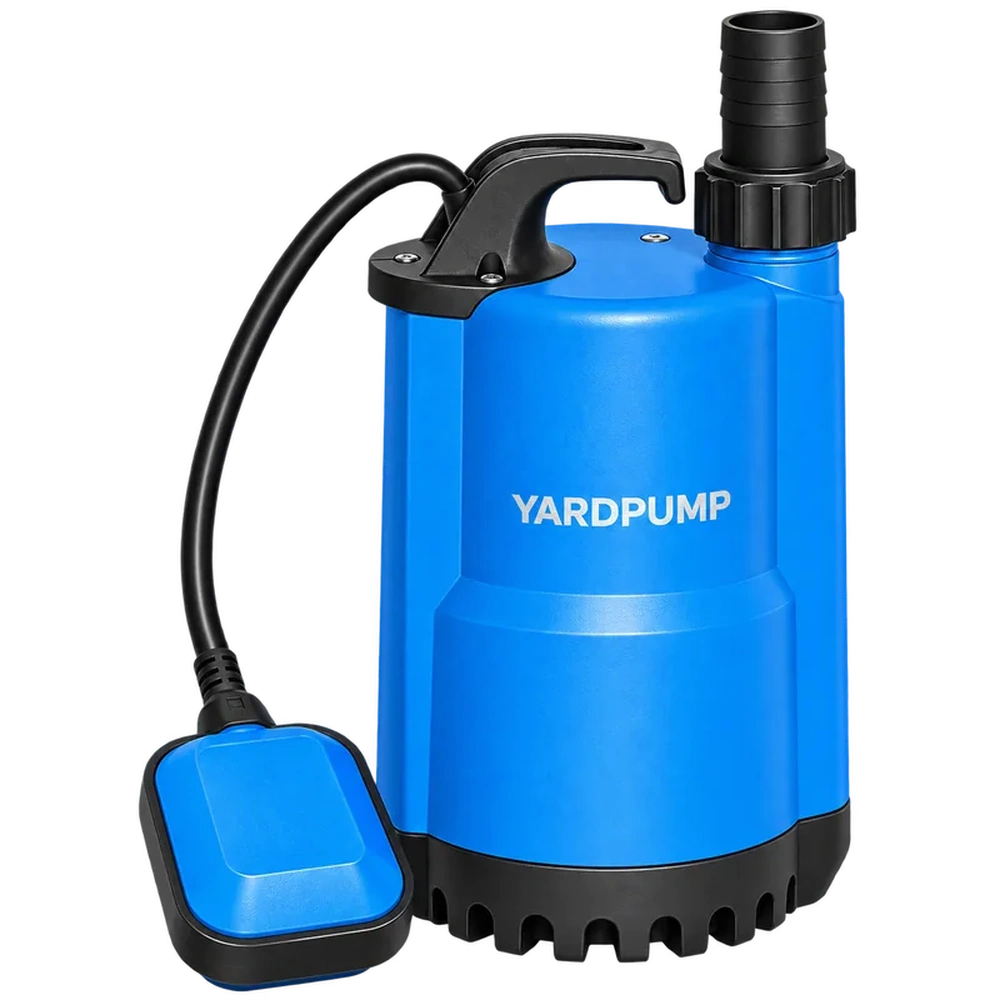
Consider a hypothetical warranty review. A returned submersible pump has dark, damaged winding insulation. The proposed warranty answer is “the user ran it dry.” Can the appearance support that conclusion by itself? No. It establishes heat or electrical damage that needs investigation. Cooling loss, prolonged starting, mechanical overload, supply problems and insulation faults can lead to overlapping final damage. A fair service decision connects the observed pattern to independent evidence of the initiating condition.
Preserve the sequence before the winding is removed
Confirm model, electrical version, serial identity and the original complaint. Record whether the motor failed to start, stopped during pumping or tripped protection. Ask about water level, liquid temperature, delivery route, supply and control behaviour using observations the customer can make safely. Do not ask for another start on a burnt or electrically suspect return.
Have qualified staff isolate the unit, verify the safe state and manage stored electrical energy before examination. Photograph the assembled condition and the damage as successive layers are opened. Keep the capacitor, protector, terminals, cable and mechanical parts associated with the return. Cleaning or rewinding first can erase deposits, connection damage and the location where the failure began.
Separate a damage pattern from its possible causes
Uniform discoloration may be consistent with general overheating, but it does not identify why cooling or loading became unsuitable. A localized burned connection can point toward resistance heating. Concentrated insulation failure can have an electrical origin and then spread. The final short-circuit damage may obscure the earlier event.
Use winding-system knowledge appropriate to the actual motor. A single-phase main/auxiliary winding arrangement cannot be diagnosed by copying a three-phase failure photograph. A damaged capacitor or seized bearing may be a cause, a consequence or an unrelated finding; establish the sequence rather than treating every damaged component as the first fault.
| Finding | Evidence to add | Premature conclusion to avoid |
|---|---|---|
| Broad thermal discoloration | Liquid level, cooling conditions, duty and load history | Dry running is proven |
| Local terminal damage | Joint condition and approved electrical examination | All winding wire is undersized |
| Impeller or bearing binding | Original deposits, damage and timing | The motor was defective from manufacture |
| Protector found open | Component type, condition and operating record | The protector either worked correctly or caused the failure |
Test competing explanations with a bounded plan
List the leading hypotheses and the observation that would distinguish each. Evidence of operation below the permitted level is different from an owner's statement that the water was low after the event. High water temperature, unsuitable liquid, an obstructed intake or extended near-shutoff duty can also matter without the pump ever leaving the water.
For a hypothetical review, a control log shows repeated start commands while the rotor did not accelerate. A retained obstruction and corresponding mechanical damage support a starting-overload investigation. They do not establish that every dark winding came from blockage, nor do they clear the supply and protection arrangement. Report what the log actually captured and what remains unknown.
Electrical comparison or controlled reproduction belongs with qualified test personnel using suitable equipment and stopping limits. Do not run a suspect pump dry or bypass protection to create a matching burn pattern. Safe component examination and records often provide a better next step than destructive reproduction.
Write the service finding at the strength of the evidence
Use separate lines for confirmed damage, supported cause, unresolved alternatives and required action. If the initiating cause cannot be established, say so. Commercial replacement or goodwill handling can proceed under the applicable policy without inventing a technical verdict. A successful rewind would not by itself confirm that the original installation problem has disappeared.
For distributors of compact clean-water and clean/dirty-water pumps, retain actual operating limits with the case. Industry failure mechanisms are not evidence that a particular YARDPUMP model has a weakness. The practical goal is a defensible repair or replacement decision and, where identified, a correction that prevents the same exposure from damaging the next unit.
Frequently asked questions
Does a pump remaining underwater rule out overheating?
No. Liquid temperature, intake conditions, loading, duty and the actual cooling design still matter. Submergence alone does not establish acceptable winding temperature.
Can a burnt smell locate the first failed component?
No. Heat and smoke can spread. Preserve the location and physical sequence of damage before cleaning or separating the parts.
Must the customer wait for a final root cause before receiving help?
Commercial handling and technical investigation can be managed separately. Record the chosen assistance without treating it as proof of either product fault or misuse.