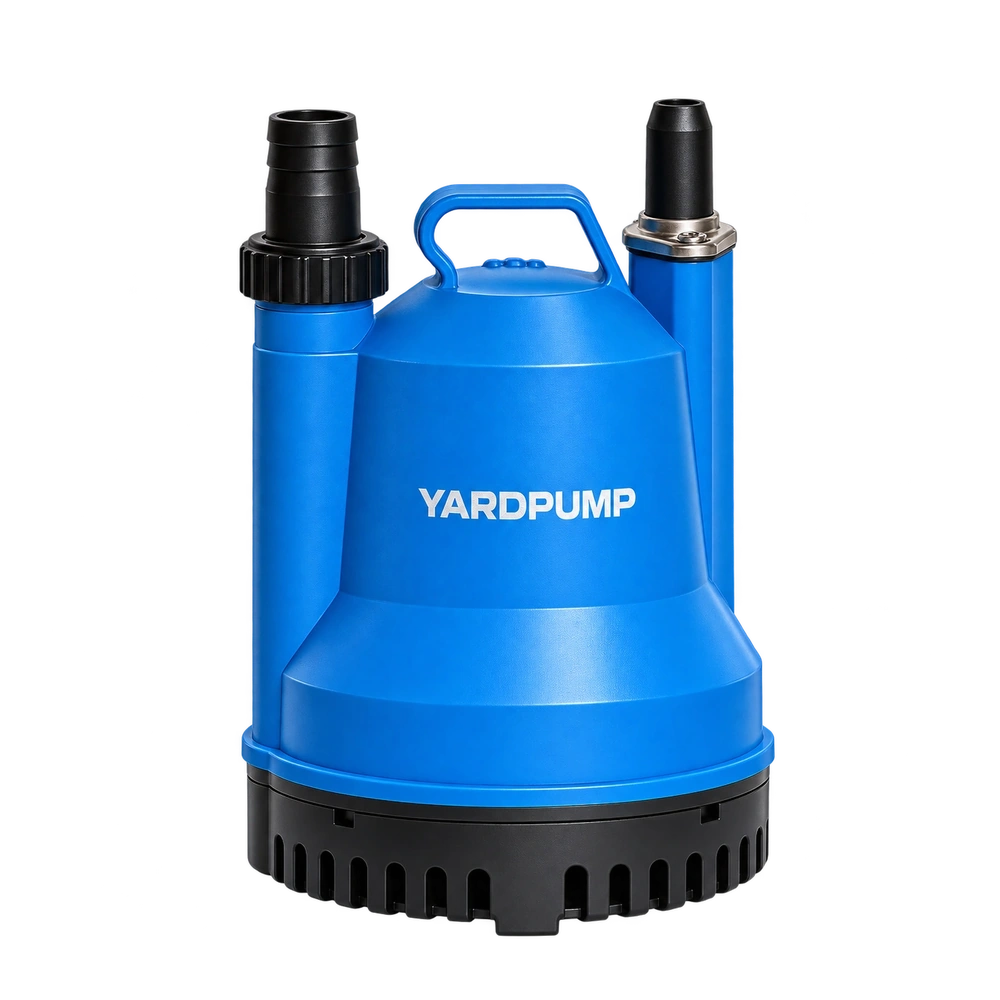
A plastic pump arrives in winter with a crack. Frozen residual water is an obvious hypothesis, but it should not close the case without evidence. Some plastics behave differently under impact at low temperature, while notches, assembly stress and packaging loads can act together. Define cold transport, storage, recovery and operation separately.
A generic description such as “cold-resistant plastic” is not an adequate purchasing specification.
Separate cold impact from freezing damage
Water freezing inside a product creates an internal loading mechanism. Cold-impact damage can occur in a dry part. Temperature changes polymer behaviour, but the result depends on the exact grade, modifiers, fillers, moisture condition and moulding quality. A generic PP or PA66 designation cannot guarantee the complete pump at any low temperature.
Crack location alone does not identify the cause. Ports, screw bosses, weld lines and thickness transitions can concentrate stress and may also receive local packaging loads. Preserve fracture surfaces and packaging before applying adhesive or forcing the crack apart. Altering the evidence makes later attribution harder.
Specify three different temperature boundaries
A storage or transport range describes a non-operating product’s environment. It does not automatically permit energising the pump at the same temperature. Recovery conditions describe what must happen before handling or use. Internal temperature and condensation matter; a casing that no longer feels cold is not proof that the whole assembly has recovered.
Operating limits additionally depend on the liquid, electrical parts, lubrication and seals. These limits must come from the particular model’s approved information.
For illustration, an order might require a packaged, non-operating unit to experience transport at −15°C, followed by a defined recovery before testing within its permitted liquid-temperature range. That requirement does not mean the pump can operate in water at −15°C. It is a hypothetical purchasing condition requiring supplier confirmation, not an approved product rating.
| Condition | Define | Assessment focus |
|---|---|---|
| Cold storage | Minimum temperature, duration and dry/wet state | Appearance, dimensions and recovery |
| Cold handling or impact | Load, package and maintained temperature | Structural integrity after exposure |
| Use after warming | Condensation and internal condition | Safety, sealing and function |
| Low-temperature operation | Approved water temperature and duty | Model-specific application boundary |
Maintain the intended specimen condition during testing
A conditioned part can warm before the mechanical exposure if transferred casually into a warm room. Specify temperature control and transfer conditions through a competent test provider. A resin test-bar impact value and a packaged complete-pump test assess different objects. Material data help screening but do not replace structural verification.
For moisture-absorbing polymers, conditioning may change both dimensions and toughness. State it when comparing samples. Moulding conditions, controlled regrind, fibre orientation and weld-line position can affect local behaviour. A visible crack, however, is not proof of inferior material. Evaluate identity, process records and fracture evidence together.
Keep an acceptance chain for investigation
Agree beforehand on appearance, connection integrity, sealing and the necessary functional results. Retain temperature history, package revision and the original product condition. If damage occurs, distinguish distribution loading, out-of-range storage, residual-water freezing and structural or material factors. Where evidence remains incomplete, keep the conclusion open rather than assigning responsibility from one plausible mechanism.
Qualified personnel should perform electrical tests after the specified recovery and safety screening. Do not patch a cracked unit with sealant and return it to sale as though the structural condition were unchanged. A material or packaging change requires review of the relevant cold boundary; passing a room-temperature check does not automatically cover winter distribution.
Derive the transport boundary from the intended route and storage requirements. A reported outdoor minimum does not automatically describe the complete pump’s long-term temperature. Packaging introduces a time-dependent response. Treat requirements beyond the existing declaration as new conditions awaiting assessment rather than extending the claim verbally.
Frequently asked questions
Does a room-temperature drop pass establish cold-transport suitability?
No. Material and packaging behaviour may change. The assessment must match the intended distribution conditions.
Does a thicker housing always resist cold impact better?
No. Local stiffness, notches, weld lines and load paths matter. Added thickness can also alter moulding and stress distribution.
Should the pump be energised immediately on receipt to check it?
First meet the specified recovery and safety conditions, considering condensation, residual water and structural damage.