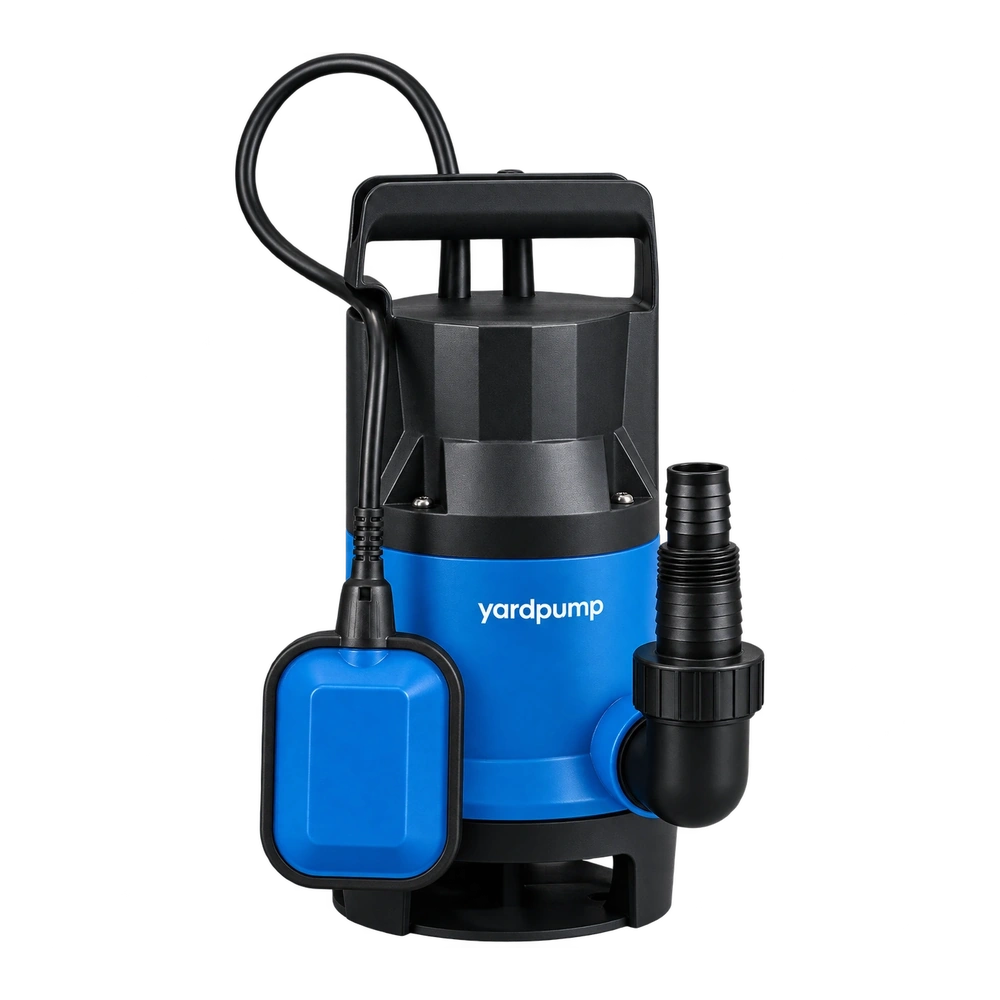
A pump can look dry after removal while water remains inside. When that water freezes, trapped cavities, check valves, fittings and hose low points experience expansion pressure. Fine cracks in a plastic housing may appear only when the pump is immersed again. Winter protection means draining according to design and preventing the discharge line from freezing, not merely wiping the exterior.
What drives the result
Water changes volume during freezing. Without relief space, pressure acts on thin walls, thread roots and seal interfaces. A check valve can retain a water column while outdoor horizontal pipe stores water in low spots. Even if a frozen pump starts later, microcracks, cable-jacket damage or displaced seals may reveal themselves only under immersion and pressure.
An illustrative way to check
At season end, isolate power and follow the manual to remove hose and permitted fittings. Drain the pump in the stated orientation and store it dry, out of sunlight and above freezing. Before reuse, inspect housing, fittings and cable, then perform the approved water-run and leakage checks. Do not improvise with high-pressure air or direct heaters.
A sound investigation of submersible pump freezing damage separates hydraulic, motor, structural and installation observations before connecting them. Replacing the first damaged part may restore operation temporarily while leaving the initiating cause untouched. Start with safe isolation and stated operating limits, preserve the original condition, examine the installation and liquid, and only then dismantle internal components. Comparison units must use the same voltage, frequency, piping, water level and running time; otherwise differences in current, temperature or sound have little diagnostic value.
Actions for the site or purchasing team
- Identify every low point that can retain water in the pump, valve, riser and hose.
- Follow documented draining, cleaning and storage without opening the sealed motor housing.
- Design permanent outdoor discharge piping for local frost and building requirements.
- Quarantine and inspect a pump that has frozen before any powered immersion test.
- Put draining, storage temperature and recommissioning steps in distributor instructions.
Limits and application boundary
Freeze protection depends on climate, piping rules and product design. Stop using equipment with cracks, bulging or abnormal insulation.
Frequently asked questions
Does a dry exterior mean no freezing risk? No. Water can remain in the casing, fittings and hose low points.
If it still turns after freezing, is it undamaged? No. Fine cracks or seal displacement may appear only on re-immersion.
Can a heat gun thaw it quickly? Avoid uncontrolled local heating, which can damage plastic, cable and seals.
Related reading
Pumps Have Been Stored for a Year: What Should a Distributor Retest Before Sale?
A Check Valve Is Fitted but the Sump Pump Will Not Deliver: Could It Be Airlocked?