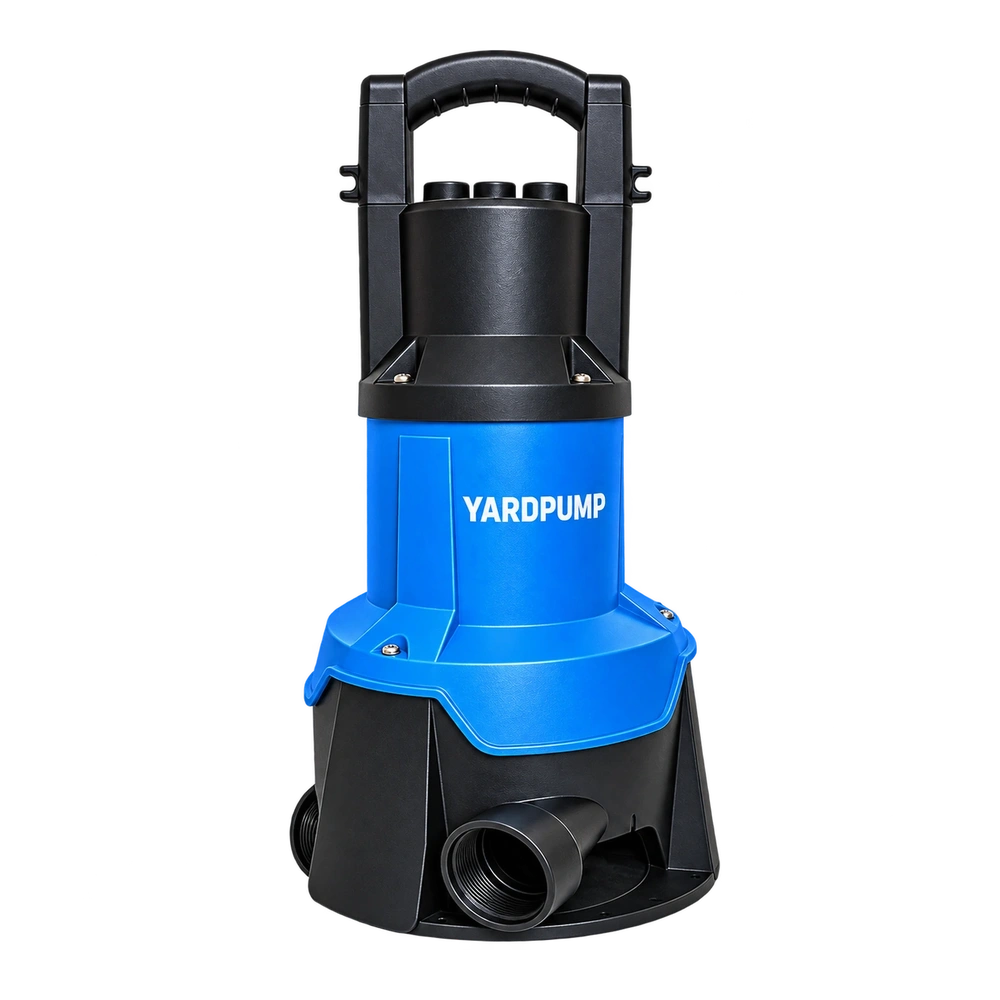
Imagine a portable submersible pump that still delivers water but has developed a quick tapping noise. The handle makes a similar sound when moved after retrieval. Do not hold it during operation to test the theory. Record whether the noise occurs at startup, during steady flow or at shutdown. Then isolate the pump and look for corresponding marks at the handle, pivot or casing. An external contact can be verified; a similar sound does not rule out an impeller, bearing or pipe problem.
Separate the vibration source from the part that makes it audible
Vibration from a motor or moving water can travel through the casing and accessories. A pivoting carry handle may have play at its pivot or lie where it repeatedly touches a stop or the casing. The contact can make a sharp tap and may occur only at one position or level of vibration. Excess vibration in the pump can still be what drives the handle. Air entering the inlet, an impeller rubbing, bearing damage or a pipe touching a cover can also produce sounds heard at the surface. A recording at a fixed location helps compare runs, but it cannot safely identify the source by itself.
Check whether the sound followed handling, a new hose layout, a base change or debris. Record the delivery and level at the same time as the sound. A single tap on shutdown suggests examining supports or the discharge movement. Continuous scraping with a change in delivery calls for stopping and inspecting the pump or water path. Noise only near the low end of the cycle warrants checking intake conditions. Normal flow does not make an unexplained sound safe.
Check for matched contact points with power isolated
Have the responsible personnel stop and isolate the equipment, including automatic starting, before retrieval. Control retained pressure and use the approved lifting method. If the handle is cracked or loose, do not rely on it or lift by the cable. Inspect its pivots, fastenings, stop and mounts for wear or distortion. Look for a bright line or a dent on the handle at the same position as a mark on the casing. Gentle movement of an accessible, isolated handle can show where it touches. It does not prove that the same contact happens while running. Check nearby hose, lifting rope or lid clearance. If the handle carried the weight of the hose, record the arrangement so service can examine the mount for distortion. Do not tie the handle near the float or inlet, or remove a load-bearing part and keep using the unit.
For example, a handle stop and the casing have fresh marks at the same height. The isolated check shows that the handle no longer stays in the position described in the instructions. Service restores its mounting with approved parts, confirms it is secure, and verifies the pump at the same level and discharge setup. If the noise disappears and delivery is steady, the contact explanation is stronger. If rubbing, excessive vibration, fluctuating flow or trips remain, stop use and have the pump inspected. The mark is not evidence that every symptom came from the handle.
Document conditions when reporting a return
Give service the model, mounting arrangement, timing of the sound, changes in delivery and photos of both contact surfaces. Note any accessory that changes clearance. Pumps without a pivoting handle can still transmit noise to other parts, but do not assume they have the same mount. After service verify that handling and installation meet the instructions. A noise check cannot replace inspection of the lifting hardware.
Frequently asked questions
Can I hold the handle while the pump runs to see if the noise stops?
No. Observe from a safe dry position. Stop and isolate the unit before touching or moving the handle.
Should I tighten everything when the handle feels loose?
Some movement is normal in a pivot. Check whether it is intended clearance, wear or a loose attachment and follow the approved procedure. Extra torque can damage the mount.
Does less noise prove the pump vibration is harmless?
No. Check the level, delivery and equipment condition. Persistent abnormal operation or a trip warrants service assessment.