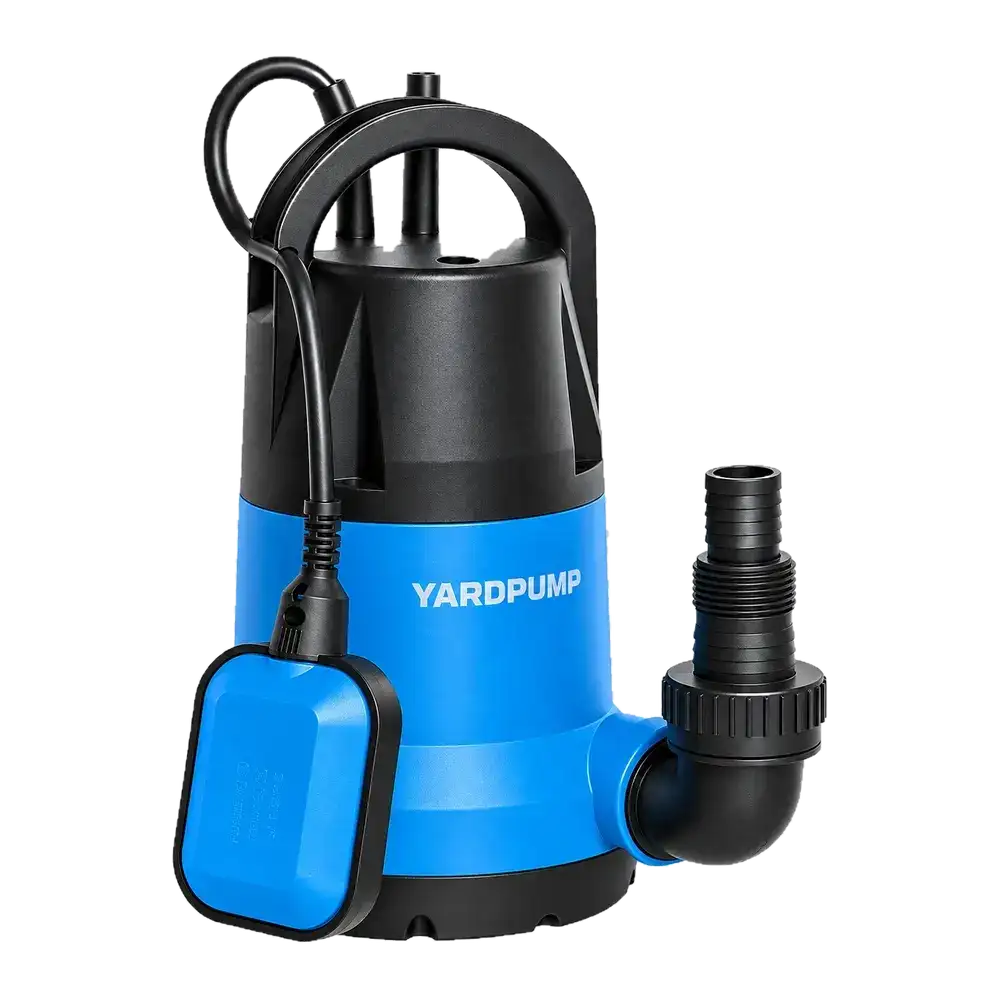
A typical service report says the pump worked until it was lifted out for cleaning. After it was lowered again, delivery or electrical operation became abnormal. Ask how it was retrieved before assuming the motor failed. The cable, float lead and discharge connection are not automatically lifting components. Damage from pulling or impact can become apparent only after the pump returns to water.
Separate the load paths
Support the pump's weight through the manufacturer's designated handle or lifting point, using suitable lifting equipment. Arrange the discharge hose so its filled weight and movement do not continually load the outlet. Provide enough cable allowance that moving the pump does not immediately pull the cable entry tight.
Excess loose cable is not the answer either. It can catch the float, enter a passage or become trapped beneath a cover. Arrange restraint, bend radius and protection without transferring harmful force to the entry. An excessively tightened tie can also damage a sheath.
These are different functions: lifting the equipment, supporting the water-filled hose and protecting the electrical cable. Combining all three into whichever line is easiest to grab creates an avoidable failure path.
Pulling can disturb more than the visible jacket
A cable entry relies on a particular cable diameter, sealing arrangement and strain relief. Lifting by the lead can load the sheath, seal or internal termination. An intact-looking outer surface does not prove that an internal connection has remained in place.
Consider an illustrative inspection situation, not a reported company claim. A pump sits on a platform; someone retrieves it by pulling the cable; the sheath appears to have shifted axially at the entry. The correct next step is to preserve photographs and have competent personnel inspect it. Reimmersing and energising it to see whether it leaks is not an appropriate diagnostic shortcut.
Dragging a pump by its hose can also damage the outlet or housing. A collision with steps or a pit wall may leave a small external mark but disturb a loaded interface.
Make the system safe before retrieval
Isolate electrical power and prevent automatic restarting. Release pressure and control retained or returning water according to the installation procedure. Assess the weight of the pump and filled hose, and provide a route that avoids striking walls or trapping the cable.
Do not enter an unknown or hazardous pit to retrieve equipment. Heavier assemblies need a suitable lifting plan. Once removed, place the pump securely and inspect the housing, handle, outlet, cable entry and float lead for evidence of loading.
A cut sheath, loose entry, exposed conductor or suspected electrical leakage requires withdrawal from service. Tape over a damaged cable or arbitrary tightening of an entry nut does not establish restored sealing or electrical safety. Repair and subsequent checks belong with competent personnel following the approved construction.
Include handling in sample acceptance
A useful purchasing demonstration can cover connecting the hose, positioning the pump, routing the cable, securing the installation and retrieving it using the designated point. Observe whether operators mistake the float lead for a lifting rope or whether the cover creates a cable pinch point.
Any formal load or strain-relief test should follow the relevant design and test procedure. This is not an invitation for end users to suspend extra weights from a lead. The handling illustration in the manual must match the product's actual lifting provision and the space available on site.
A repeatable retrieval method protects the equipment and improves evidence when a fault appears after maintenance. It also helps distinguish a repair problem from damage introduced while moving an otherwise functioning pump.
Identify the correct lifting point at handover and clearly distinguish the rope from the electrical lead. Include the rope, attachment and handle in routine condition checks. For a pump removed regularly, retrieval access is a purchasing condition. If the only practical way to reach it is by pulling the lead, redesign access or the retrieval arrangement instead of relying on an instruction to be more careful.
Questions about lifting portable pumps
Is pulling the cable acceptable for a very light pump?
Do not assume so. The designated handle and cable entry perform different design functions. Follow the equipment instructions.
Does a shifted sheath prove the seal has failed?
It is reason to stop and inspect. Competent personnel must establish the actual damage; appearance alone cannot replace electrical and sealing checks.
Should a retrieval rope remain in the water?
That depends on the installation, rope suitability and entanglement risk. If retained, secure it so it cannot obstruct the float or inlet.