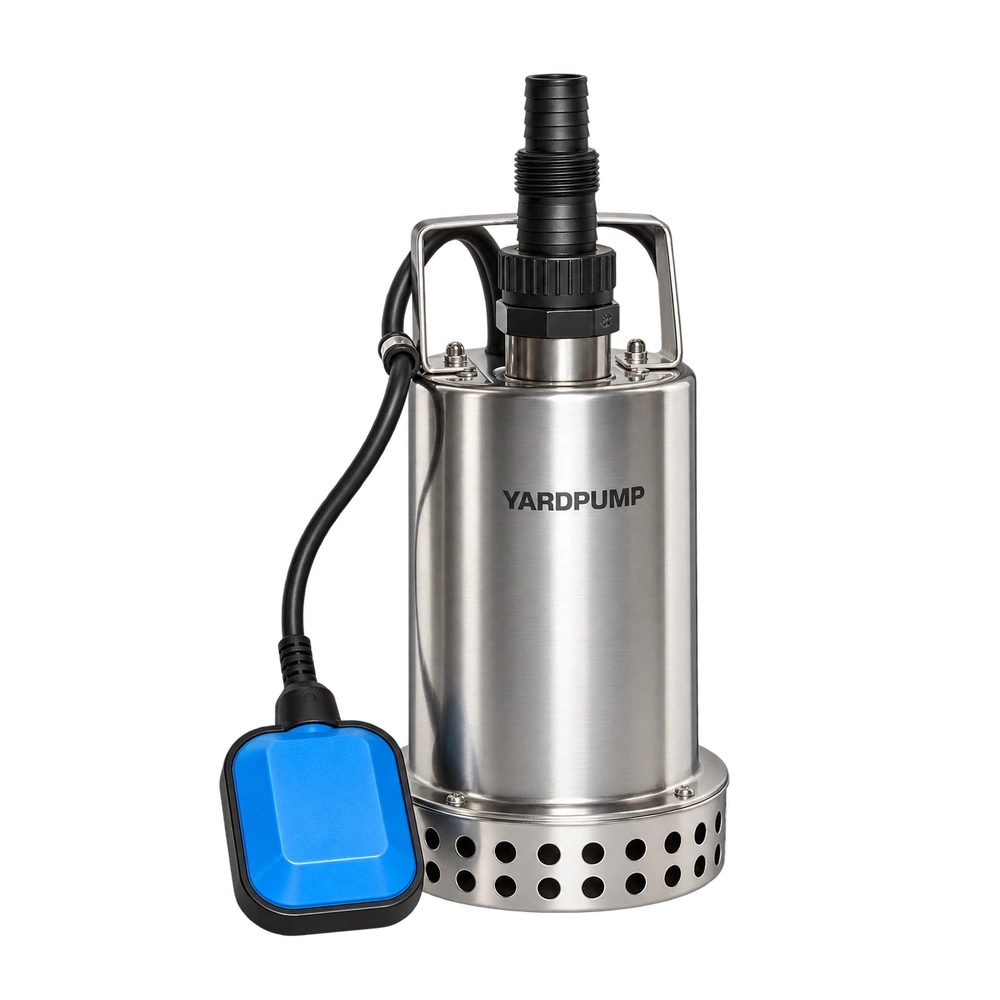
A container of new pumps arrives with softened cartons and moisture marks on metal accessories. The buyer suspects leaking pumps. This typical complaint has two different investigation paths: liquid released from equipment, and transport moisture condensing on packaging or cargo. Both can occur together. Damp packaging neither proves a product defect nor allows every instance of water ingress to be dismissed as container condensation.
A closed container can carry a moisture load
Moisture can enter with loading air, cartons, pallets, dunnage or goods that have not adequately drained and dried. When temperatures change, surfaces below the local dew point can collect condensation. Water forming on a roof or wall may drip onto a limited area, leaving uneven damage within one shipment.
An apparently dry loading surface therefore does not establish a controlled moisture balance. Conversely, a damp carton does not prove water reached a motor chamber. Distinguish external packaging, hydraulic spaces, oil chambers and electrical spaces. Their observations should not be combined into one undefined “wet pump” fault.
Preserve the distribution before changing it
Where safe, record the container identification, seal, opening time, stowage positions and affected area. Photograph relationships between roof, walls, floor, pallets and cartons. Distinguish general dampness, local dripping, moisture at the bottom and water inside an individual box. Retain affected packaging and neighbouring unaffected samples before widespread unpacking or drying changes the evidence.
Keep original temperature, humidity or indicator records where available, together with sensor locations. One measurement position cannot automatically represent the container. A changed humidity indicator does not independently identify the source of water. Interpret it alongside loading, packaging and equipment evidence.
Patterns guide checks rather than determine the answer
| Observed pattern | Further investigation |
|---|---|
| Local wet carton tops below the roof | Condensation, external leakage and stowage position |
| Greater moisture near pallets and carton bases | Floor or dunnage moisture and capillary uptake |
| Water concentrated around one pump | Residual test water, drainage and a specific leakage path |
These clues do not replace technical examination or a cargo-damage assessment. Do not energize potentially affected electrical equipment as an initial test. Qualified personnel should determine inspection, drying and testing requirements. Arbitrary heating is inappropriate, and a dry-looking exterior does not prove that insulation condition has recovered.
Prevention begins before the doors close
Review post-test draining and drying, carton and pallet storage, rain protection during loading and the moisture carried by packaging into the enclosed environment. Film can act as a barrier but can also trap moisture already inside. Film thickness alone does not establish a suitable moisture-control system.
Where desiccant is used, design its capacity, placement and separation from the goods for the packaging, journey and expected exposure. There is no universal bag count for every pump shipment and route. Desiccant cannot compensate indefinitely for wet cargo or continuing external water entry.
Validate packaging under relevant humidity conditions
An illustrative evaluation exposes production-packed samples to representative humidity and cooling conditions, then checks carton support, label readability, accessory corrosion and equipment condition. The parties and packaging specialists should agree actual conditions and acceptance. A proposed evaluation is not evidence that a certification or transport test has already been passed.
Consider moisture together with stacking, vibration and handling where these occur in the journey. The dry compression capability of a new carton does not establish its protection after damp exposure. Use the actual packaging materials and packing arrangement, rather than a specially prepared demonstration box.
Separate safe disposition from commercial responsibility
Quarantine affected goods and distinguish external-packaging damage from units requiring equipment assessment or approved repair. Reboxing does not automatically restore saleable status. Equally, one wet carton corner does not establish that every motor in the shipment has suffered internal ingress.
Retain batch, location, disposition and inspection records, and contact the relevant parties in line with the shipment and contractual arrangements. For distributors, establishing the source and impact of moisture supports an effective next-shipment correction. Assigning responsibility before understanding those boundaries does not.
Frequently Asked Questions
Does uneven damage rule out condensation?
No. Different surface temperatures, drip locations and packaging moisture can produce uneven effects. Interpret the pattern with other evidence.
Can extra desiccant replace controlled drying before shipment?
No. Absorption capacity is finite. Goods, packaging and loading still need appropriate moisture control.
May goods be sold or energized once their exterior looks dry?
Not on that observation alone. Required safety, function and packaging checks depend on what was affected and the equipment instructions.