A discharge hose keeps leaking on one side beneath the clamp, despite more tightening. If its cut end or insertion mark is skewed, check whether the whole circumference lies over the fitting's intended support zone. An angled cut, damaged liner or uneven insertion can leave local sealing conditions inadequate. Prepare and assemble the end to the fitting requirements rather than crushing the hose with extra clamp torque.
How the cut affects circumferential support
An angled cut places different parts of the hose end at different axial positions. Locating a clamp directly from that edge can leave part of the band outside the supported fitting zone. Cutting damage, flattening and liner tears can also create leak paths and need inspection separately from insufficient tightening.
A square end provides a consistent datum rather than merely a tidy appearance. With one side longer than the other, seeing the long edge reach a shoulder does not prove the shorter edge has the required insertion. Distinguish an angled cut from skewed assembly: even a square hose can fold or contact unevenly when pushed onto a misaligned fitting. Inspect the end, circumferential insertion indication and fitting position together.
Inspect cutting and assembly separately
Record hose specification, lot, cutting method and end condition. Mark insertion from the approved datum, seat the hose to the specified position and place the clamp over the designed sealing band rather than the fitting edge. Remove twist and side load, then perform approved leak and retention checks.
Use cutting equipment suitable for the hose construction. A blunt blade can flatten the wall or tear the liner; reinforcement may fray or separate locally. Stop, isolate and depressurize before removing a damaged end and recutting by an allowed method. Do not use flame, uncontrolled heating or an incompatible lubricant to force assembly. After shortening the line, verify that it still reaches naturally so that a leakage repair does not create a continuing pull-off load.
Transfer insertion depth from the datum defined by the fitting drawing. An external indication should help inspect the circumference rather than mark only one small point. Match clamp type, width, position and tightening method to both components. Tightening over an unsupported edge or unsuitable barb position can worsen cutting. Nominal hose bore alone does not select the clamp range, which also depends on wall thickness and the fitting's actual outside dimensions.
Example: average insertion is insufficient
Example: one side inserts 32 mm and the opposite side 24 mm with a 12 mm wide clamp. An average of 28 mm does not prove the entire circumference lies on the sealing band. The figures illustrate why minimum circumferential insertion matters.
Check leakage and retention under the specified water-filled conditions, with the joint directed away from people and electrical equipment. Observe bulging, cut growth, movement and new wet trails. Stop and release pressure before any correction. One brief dry result under pressure does not replace durability, pull-off or cycle requirements. Acceptance samples must use the hose, fitting and clamp actually supplied rather than an easier-to-assemble substitute.
Leakage, retention and return evidence
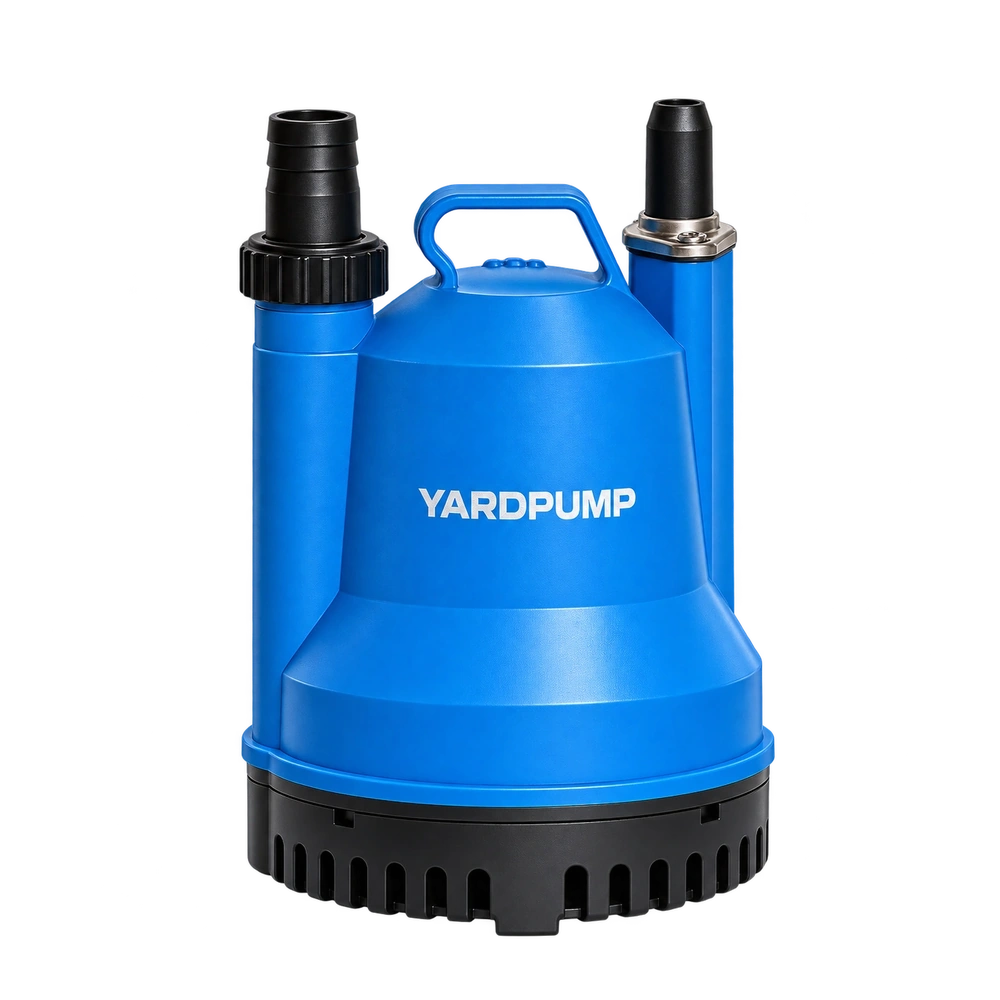
For returns, retain the original hose end and clamp position where possible. Do not retighten or trim away the evidence before photographing it. Determine whether the cause concerns cutting, insertion, component matching or sustained external load before changing assembly instructions, replacing accessories or investigating the pump outlet. A compact drainage pump's discharge connection has its own assembly requirements. Matching nominal outlet size is only one part of accepting the complete water path.
Frequently asked questions
Is a visually square cut enough?
Production needs a defined datum or fixture plus minimum insertion.
Should the clamp be as close to the edge as possible?
Not necessarily; it belongs over the specified sealing band.
Can a crooked but dry joint pass?
Retention, durability and approved criteria still apply; one static dry check is insufficient.