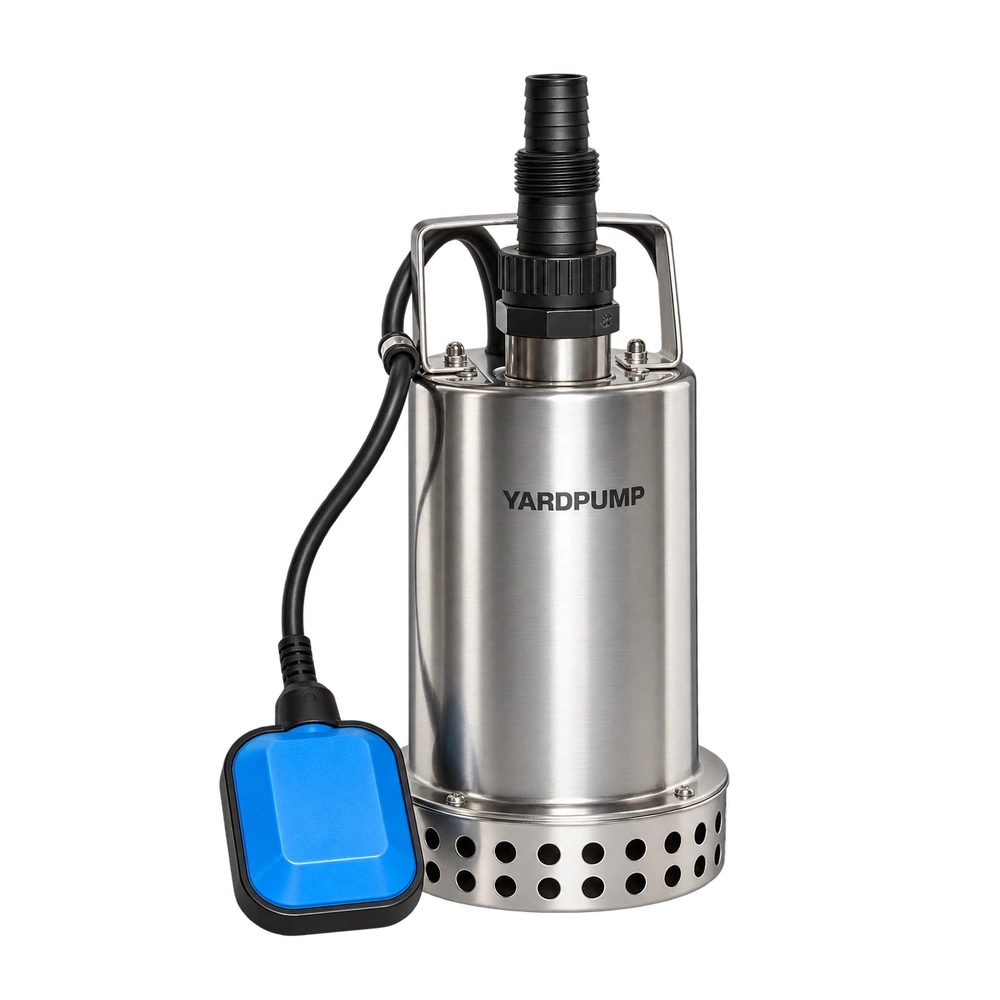
“This pump has been on test since the same month last year. Can we describe a year of continuous operation?” Do not answer by subtracting the start date from today. Power failures, refill stops, protective trips and missing records can change what that claim means. A purchasing review should separate calendar duration, supported running time, known stops and unconfirmed intervals. An empty log is not automatically evidence of operation.
Define what the counter measures
An energised cabinet, an engaged contactor, motor current and delivery of the specified pumping duty are different states. A powered-hours counter may include periods without rotation. Conversely, a logger resetting to zero does not erase earlier operation that has valid independent records. The counting signal must match the test-plan definition.
Where the objective includes flow, head or temperature, current alone will not normally prove that the required duty persisted. Link the necessary operating conditions and measurements. “Power available” cannot silently become “continuous operation at the specified duty”, and a short video cannot reconstruct months of undocumented conditions.
Keep four kinds of time separate
Calendar duration describes the period occupied by the trial. Confirmed running time identifies supported intervals. Stopped time records known interruptions. Unknown time preserves an evidence gap. Where cycles, starts or loaded hours matter, define them independently instead of combining everything into one hour figure.
For an illustrative calculation, a trial spans thirty days, or 720 hours. Records confirm 700 hours running, twelve hours stopped and eight hours without usable data. Preserve those three categories. Do not claim all 720 hours as running or classify the unknown eight as failure without evidence. These are example numbers, not company test results.
| Record | What it establishes |
|---|---|
| Calendar start, finish and time zone | The real period covered |
| Running signal and qualifying conditions | What the counted hours represent |
| Stops and restoration events | Interruptions and return to duty |
| Data gaps | Unconfirmed intervals and the treatment applied |
Record the return to service
A pump may restart automatically after power returns or require manual reset. Water temperature, level, valve position and line condition may have changed. Restored electricity does not establish restored test conditions. Record when the required duty is regained so starting, stabilisation and qualifying operation can be distinguished.
Do not erase a protective trip as an ordinary pause. It may be an intended response to an abnormal condition or evidence of a configuration problem. Assess it against the test objective. Replacing a capacitor, changing clearance or altering protection also changes the test article; retain the event and revision relationship.
Make timestamps reconcilable
Loggers, video systems, inspection notes and counters may use different clocks or time zones. Establish the time reference and retain records of power-up, clock corrections and exports. Joining files by their names does not demonstrate uninterrupted time coverage.
Keep raw records separate from subsequent calculations. Explain collection frequency, missing-data treatment, counting logic and corrections so another person can reproduce the total. A counter storing only its final reading has an identifiable limitation: it may not explain individual stops. A persuasive accumulated number does not remove that limitation.
Review a claim through its evidence
Identify sample, revision, objective and duty before requesting time summaries and relevant event records. Check whether totals reconcile with the logs. Examine refilling, maintenance, failures and part changes for their effect on the conclusion. Every project need not collect at an identical frequency, but its records must support its specific claim.
Running hours still cannot be exchanged directly for years of service in every application. Good time accounting makes the test history clearer; it does not create a universal lifetime guarantee. Public wording should describe the supported achievement, such as accumulated operation under defined conditions, rather than presenting an interrupted calendar period as unbroken running.
For a distributor comparing two suppliers, this distinction also prevents a continuous counter and a manually reconstructed estimate being treated as equivalent evidence. Ask each supplier what the total includes before deciding which trial is more informative.
Questions about test-hour records
Are cabinet-powered hours the same as pump-running hours?
Not necessarily. Confirm whether the signal represents motor operation and the qualifying duty in the test plan.
Must a few missing hours invalidate the entire trial?
Not automatically. Apply the planned rules, objective and risk assessment. Do not fill the gap with assumed operation or failure.
Can earlier hours remain after a component replacement?
Preserve the history, but identify the event and revision. Explain separately what each stage establishes.