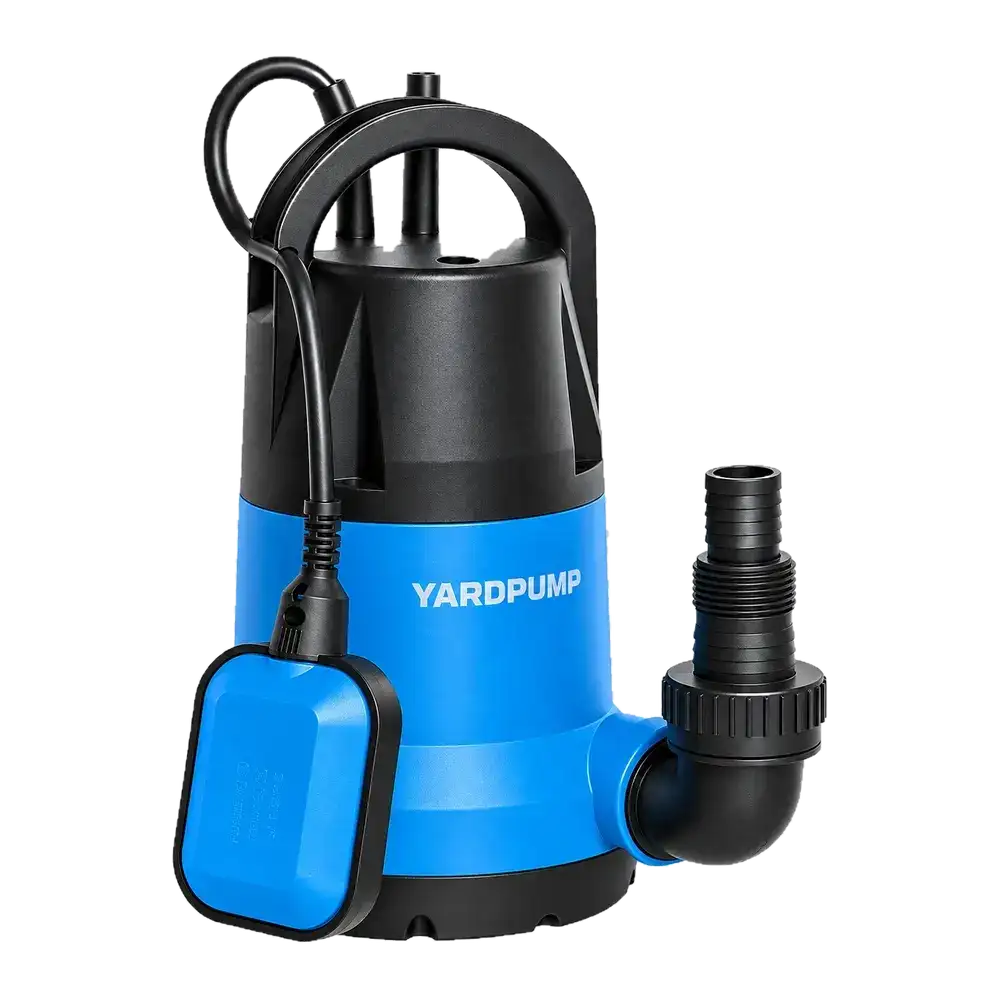
A supplier describes a pump as quiet, but a distributor measures a higher number in a warehouse. Neither result necessarily establishes an error. One may describe sound power while the other records sound pressure; distance, background noise, mounting and duty may also differ. Define the acoustic quantity and test boundary before setting an acceptance limit.
A contract containing only a number of decibels leaves too much room for disagreement.
Sound pressure and sound power are different quantities
Sound pressure level describes pressure variation at a measurement position. Distance, reflections, obstacles and background noise influence it. Sound power level describes acoustic power radiated by a source and normally requires a specified measurement method and environment for its determination. The label dB(A) does not make these quantities interchangeable.
For a submersible pump, specify whether airborne noise is being measured while it operates in water or whether another acoustic quantity is intended. Underwater sound, tank-wall radiation and airborne pipe noise cannot be casually combined into one product rating. A phone measurement may help screen a site complaint, but should not become a contractual acceptance instrument without validation.
Fix the installed arrangement and operating point
Record tank dimensions and material, water level, pump support or suspension, hose or rigid piping, outlet restraint and nearby reflecting surfaces. A pump beside a thin barrel wall can excite a different radiation path from the same unit in a test tank. Temporary acoustic wrapping must be declared rather than used to improve a reported number invisibly.
Also specify voltage, frequency, water temperature, flow and head. State whether the result concerns steady running or includes starting and stopping. Investigate abnormal air intake, contact or valve noise rather than averaging it into a normal-operation result.
| Specification item | Define |
|---|---|
| Quantity | Sound pressure or sound power, weighting and evaluation |
| Positions | Distance, direction, height, count and averaging rule |
| Environment | Background, reflections and test space |
| Installation | Tank, level, support, pipework and outlet |
| Decision | Method edition, instruments, uncertainty and retest rule |
Why a distance example is not a correction procedure
For an ideal point source in a free field, doubling distance can reduce sound pressure level by approximately 6 dB. A real pump, tank and pipe assembly is not necessarily a point source, and warehouse reflections can dominate. Do not subtract six from a one-metre reading and present the result as a verified two-metre measurement. The example explains why distance matters; it does not replace the test method.
Background noise close to the operating reading also contributes materially to the result. Any correction must satisfy the selected method’s applicability conditions. Decibel readings are not simply subtracted as ordinary linear quantities. If the environment is unsuitable, improve it or choose an appropriate method instead of calculating an unjustified precise result.
Agree on borderline decisions before testing
Select an applicable acoustic method and identify the edition used in the contract. A competent test provider should confirm scope, measurement positions and environmental requirements. Decide in advance how uncertainty affects acceptance near the limit, who may retest and which installation will be used.
The report should retain raw readings, background records, instrument calibration status, installation photographs and the hydraulic duty. A single headline value is not enough to reconstruct a disagreement. If the housing, support or accessory changes, compare revisions under the same conditions.
The buyer’s objective is suitability for the intended installation. A lower number obtained with a different mounting arrangement does not automatically mean a quieter customer experience. Where a tonal character matters, define an additional evaluation rather than assuming an overall A-weighted value captures it.
If the concern is noise reaching neighbouring occupants, the actual installation and operating times require assessment. A factory product test is not automatically a site environmental-compliance conclusion. Establish a consistent product comparison first, then let the project assess its location under applicable requirements. Name each report according to its actual scope.
Frequently asked questions
Is dB(A) alone a complete specification?
No. Quantity, position, time evaluation, environment and operating duty remain undefined.
Can a sharp tonal sound be ignored if the total level is low?
Not necessarily. Agree on any required spectral or tonal assessment for the application rather than relying on the overall number alone.
Are results from different tanks useless?
They can support controlled comparisons within each setup. Cross-setup acceptance requires aligned conditions or a verified correlation.