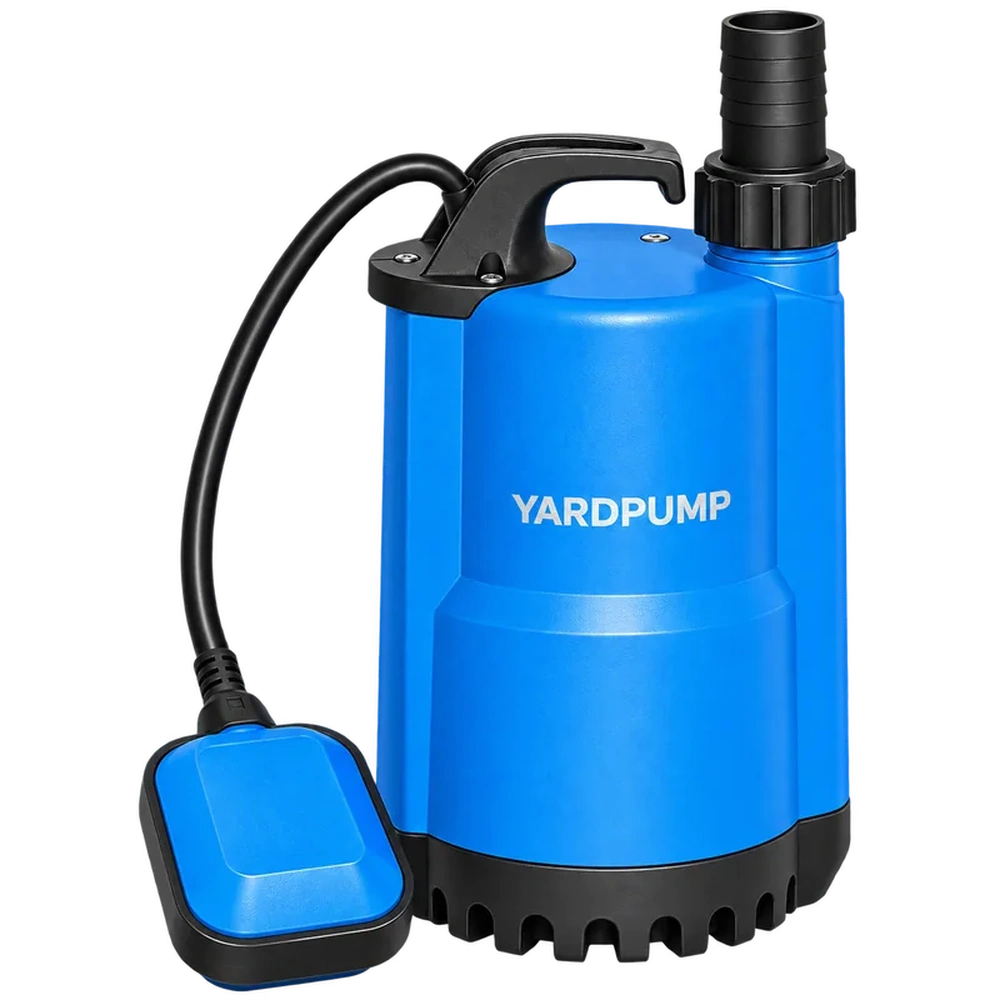
A replacement sump pump has the same outlet size but its centreline is 20 mm higher. The rigid riser can be bent slightly to connect. Is that a compatible replacement? The dimension is illustrative; the principle is that engagement does not establish natural alignment. Measure outlet height, centreline and connection space before buying, then support the pipe independently and revise the connection rather than forcing it into position.
How forced pipe alignment loads the outlet
Rigid pipe forced sideways or axially applies continuing load to the outlet, fitting and housing. It may seal initially, then cycle with temperature, vibration and service movement. The load can also push the pump off its stable position and reduce float clearance.
Forcing a pipe stores preload in the outlet, fitting and pump. A joint that is dry at assembly can change under temperature, starting vibration or later servicing. A plastic outlet should not serve as the lever used to reposition the riser. However, an offset value alone cannot calculate stress. Pipe length, support spacing, material, elbows and connection design determine the load and need an installation assessment.
Measure outlet height from the same support datum
For a replacement, record base-to-outlet centre height, direction, envelope, feet and float sweep, not just nominal size. After isolation, depressurization and independent pipe support, bring the pipe to the outlet without forcing it. Use an approved rework, union or transition where needed, then observe a full cycle and dry joint.
Measure from a common datum. Place old and proposed pumps on their specified supports and measure from the actual support plane to the outlet centreline. Do not estimate from handle height. Record direction, connection standard, union withdrawal space, feet and float envelope. An old pump that was raised on blocks, settled into the base or accumulated sediment may already have a changed elevation. Copying an old photograph can therefore carry an installation error into the replacement order.
Before disconnection, stop and isolate the pump, relieve pressure and support the riser and check valve so that pipework cannot drop when released. An installer can revise a short spool, union or transition according to the system requirements. A flexible connection is useful only within its documented purpose and movement limits; an arbitrary rubber sleeve is not a universal expansion joint. The pipe should meet the pump without a continuing push or pull on the housing.
What an illustrative offset does and does not show
Example: the old centre height is 180 mm, the replacement 200 mm and the first rigid support only 300 mm away. Forcing 20 mm creates obvious preload, but these figures alone cannot calculate outlet stress. They trigger a piping review rather than define tolerance.
Acceptance includes a dry joint, stable pump position and complete float travel during starting and stopping. Future service should release the union as designed, without using the pump or basin wall as a pry point. If someone must hold the pipe under force to close the connection, alignment work remains. Do not describe that as a merely tight fit for delivery. One static leak check also does not prove retention or compliance with an allowable outlet-load limit.
Accept more than a dry connection
For a distributor replacement catalogue, retain the installation envelope alongside hydraulic data. Compact sump pumps with similar power and nominal outlet size can still differ in outlet elevation, base and control clearance. Obtaining the key site dimensions before ordering is more reliable than forcing the old pipe after delivery. The illustrative offset is not a permitted tolerance for any model; the final arrangement must match the approved pump and connection requirements.
Frequently asked questions
Is 20 mm too small to matter?
It depends on pipe flexibility, supports, materials and fittings; the number alone is not acceptance.
Does a flexible coupling always solve it?
It still has orientation, length and support limits and must be approved.
If it does not leak, is installation acceptable?
Also check preload, pump stability, float travel and service removal.