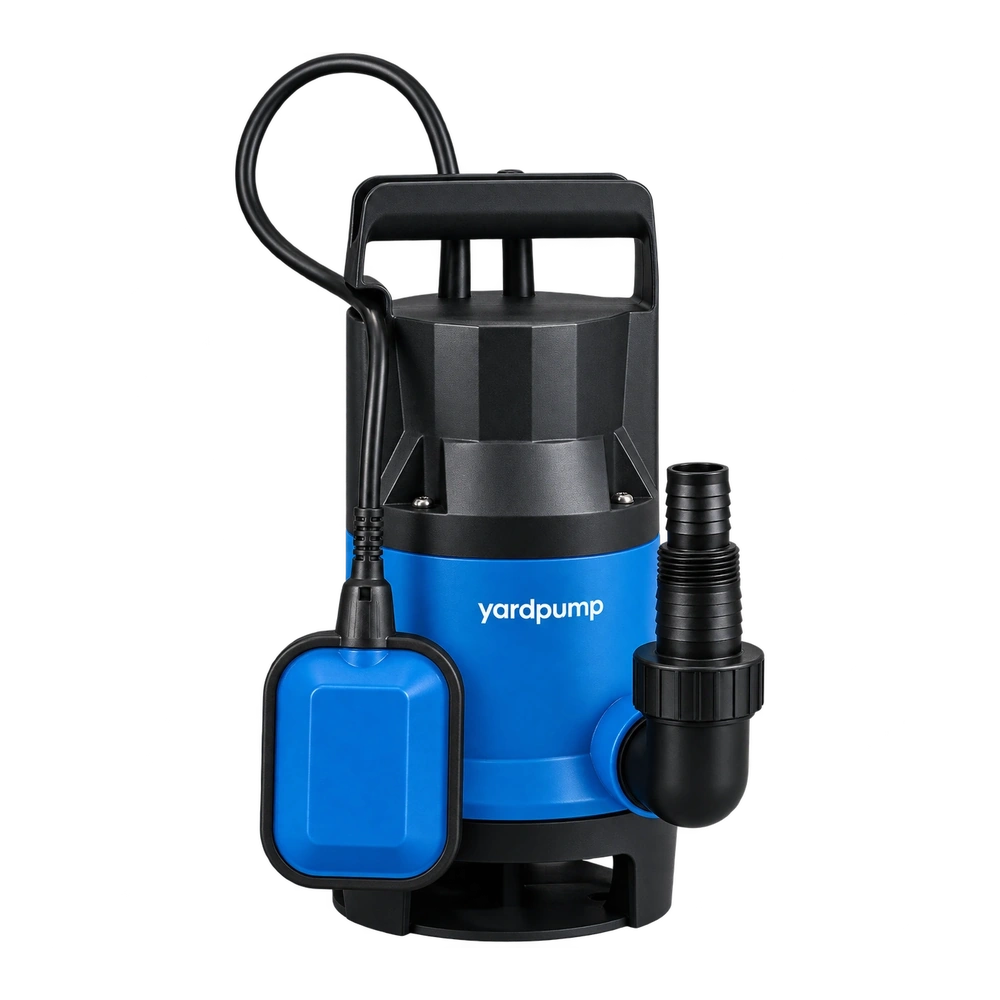
Suppose a buyer lifts a small plastic submersible pump by its handle during sample review and it seems fine. The supplier later changes the handle material or attachment while keeping nearly the same appearance. Confirm the approved handling method and assembled configuration before deciding what to retest. What the handle can support depends on the handle, its seat, the fastener or lock and the condition in which the pump is delivered. A test of a loose handle does not establish that a production pump can be carried or retrieved the same way.
Confirm how the manufacturer allows the pump to be moved
Hand carrying, retrieving a pump from a wet location and suspending it for long periods are different duties. Some models have a carrying handle and some have a specified lifting point or accessory. A handle's shape does not establish permission for continuous suspension. Do not use the power cord, float cable or discharge hose as a lifting line. For a portable clear-water or clean-and-dirty-water pump, ask the supplier to identify the normal handling point, permitted attachments and isolation and pressure-relief requirements. A water-filled hose can pull on the outlet or housing. Handle the connection as instructed before moving the pump.
At sample review, look at how force passes into the housing. A moulded-in handle, latch, screw and combined arrangement can each have different locations to check. Inspect the seat, installed position, locking and orientation. Look for pinch points, interference with the cord or difficulty holding the pump safely through the actual opening. A front photo shows the shape but cannot establish full engagement. If material, cavity or part revision changes, identify the affected models and lots.
Test the setup the buyer will actually receive
Consider an illustrative change from a screw-fixed handle to a different latch. The loose parts look similar and neither shifts in a simple hand check, but their attachment to the housing differs. The buyer can ask for a comparison on the same pump body and actual production revision. Use the manufacturer's approved plan to confirm assembly and handling in the specified directions and to check for cracking, disengagement or permanent change afterwards. If the intended duty includes wet or cold conditions, verify that those conditions are permitted and whether they belong in the test. This example does not set a universal load or invite users to add weights, suspend the pump indefinitely or improvise drop tests.
The report should identify model, sample serial, handle and fixing revisions, assembly condition, environment, method and acceptance criteria. Confirm that the test unit represents production rather than a display sample or a temporarily reinforced setup. If a fixture pulled on a loose component with a smooth grip, record that boundary. It does not verify the latch or housing seat after assembly. Visual inspection can find missing, damaged or partially engaged parts but does not replace the agreed structural verification.
Carry the result into receiving and service
Open units from the actual delivery and compare the approved handle, fixing and instructions. Preserve photos and revision information. If a handle is loose, cracked or deformed, hold the unit for qualified assessment. Do not lift it again to see what happens. For a returned pump, record the handling action, connected hose or accessories, any drop and the direction of damage. That helps distinguish an assembly omission, use outside the instructions, transport damage and a structural issue. One successful sample lift does not release a whole shipment.
Where several outlet kits share a housing, record which fitting changes access to the handle or recovery route. Mark configurations the test did not cover. The easiest unit to carry should not stand in for the family.
Frequently asked questions
Can I skip assembled testing if the new handle has the same dimensions?
Dimensions alone are not enough. A different seat, lock, material or installation condition can change the result.
Does a loose-handle pull test establish safe retrieval from a sump?
No. Verify the test scope and model-specific handling method. It does not prove the assembled connection passes.
Can I lift the pump by its hose or cable?
Do not use them as lifting points. Safely isolate the unit and follow the instructions for connections and approved lifting.