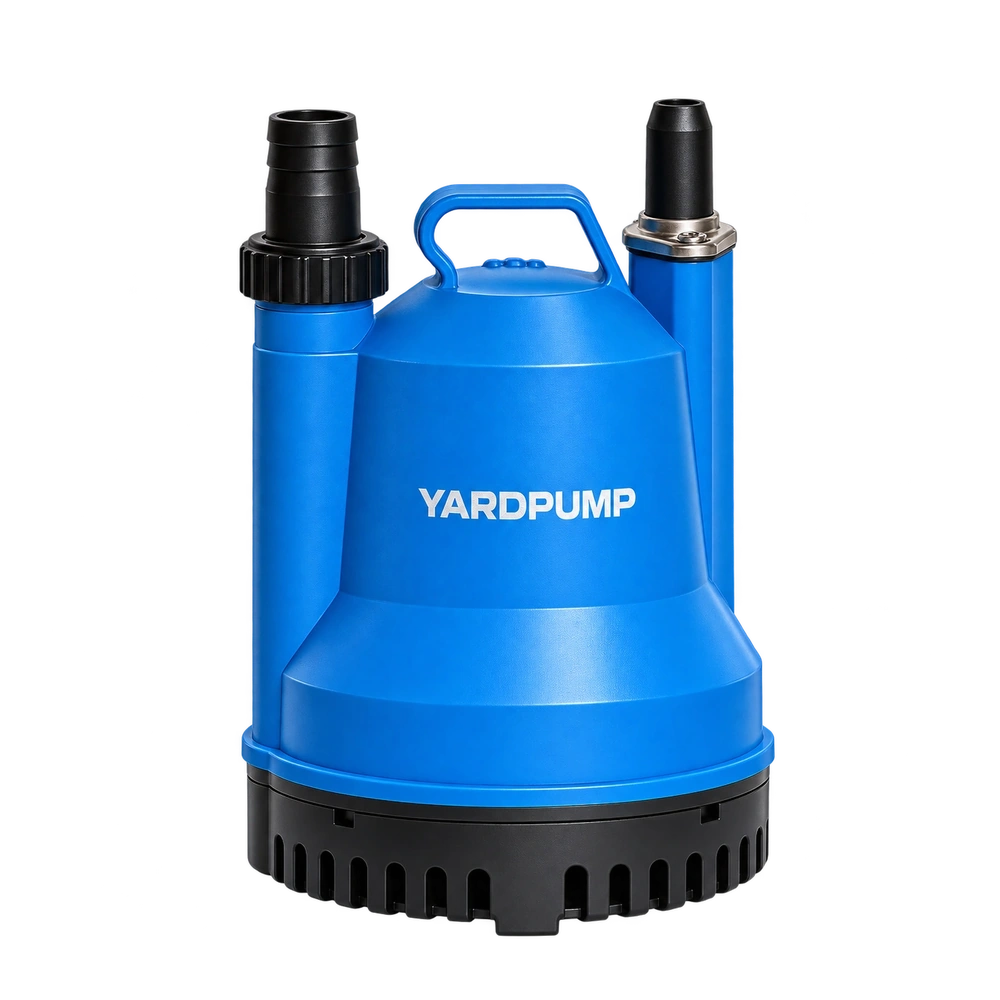
The main sump pump needs replacing, but the cover is sealed as part of a radon system and you cannot see how much room remains. The replacement must meet the drainage duty, fit through the permitted service opening, leave room for the float, and allow the cover and its penetrations to be restored as designed. Give the drainage and radon service providers photos and dimensions before ordering. A successful pump test does not also confirm that radon control has been restored.
Identify the drainage and radon components
A sump collects and moves water. Where a sealed cover is part of radon or soil gas control, the cover, fittings and gaskets are part of the air barrier. Some systems also have a suction pipe nearby. The discharge riser, pump cord, monitoring cable and radon piping may all be around the same cover. Do not decide which is which by color or size. Keep the cover model, service opening, penetration positions and equipment markings in the service record. If there has been flooding or the power cannot be isolated from a safe, dry position, have qualified personnel address that first. Even after safe isolation, do not pry open a sealed cover or change a suction pipe just to look inside.
Ask people familiar with the cover and radon system which parts are intended to open, what must be resealed, and whether any gaskets or fittings must be replaced. If there is no separate service opening, the cover may have to be opened and restored by the service provider using the manufacturer's procedure. Permanently gluing every joint can prevent future servicing. Fitting an ordinary lift-off cover may fail to preserve the original design.
Check three clearances before ordering
Measure the usable service opening, the space taken up by pipes, and the full removal path. Ask for the real envelope of the replacement with its handle, outlet elbow and float as installed. Then check the available height from the base to the underside of the cover, the inlet and other obstructions. Record where the float sits at its limits and the expected start and stop levels. Finally, list the discharge pipe, pump cord, any separate float cord and alarm cable. Have the installer confirm what can go through the existing openings and what needs a cover-approved part. Do not cut a molded plug to pass a cord through or leave a slot open around it.
As an illustration, a service opening has a clear width of 240 mm and depth of 210 mm. The replacement pump and an elbow that must stay attached need a width of 265 mm for straight upward removal. A 190 mm body on its own fits, but the assembled combination cannot pass straight up. These are example dimensions. If an approved union can be removed or the pump can be lifted in a different orientation, confirm the whole movement with the actual parts in a safe mock-up. Do not enlarge the cover opening or trim a cover feature to make an unverified part fit.
Accept pumping and cover restoration separately
Have the service provider verify the start and stop levels, float travel and sustained discharge against the intended installation. Check that the perimeter seal, each penetration and the access parts have been restored to the agreed configuration. Keep photos from before the change, before closing, and after completion. If the cover is part of an active radon system, arrange a review of its operation and any retesting advised for the locality or original system. A pressure indicator or fan sound can show some aspects of operation, but neither establishes the indoor radon concentration. Keep the pump configuration, cover model and the two sets of acceptance results together.
Frequently asked questions
If the pump fits through the access opening, is it compatible?
Not yet. Check the path with the actual fittings and float, operating levels, cover penetrations and whether the seal can be restored after service.
Can I pass an alarm cable through the same outlet as the pump cord?
Have the service provider check the allowed configuration for that fitting. An extra cable can compromise the seal; surface sealant is not a substitute for an approved part.
The sump drains after replacement. Does that clear the radon system?
No. Drainage and radon control are separate checks. Have the radon system reviewed against its design and local guidance before closing the service record.