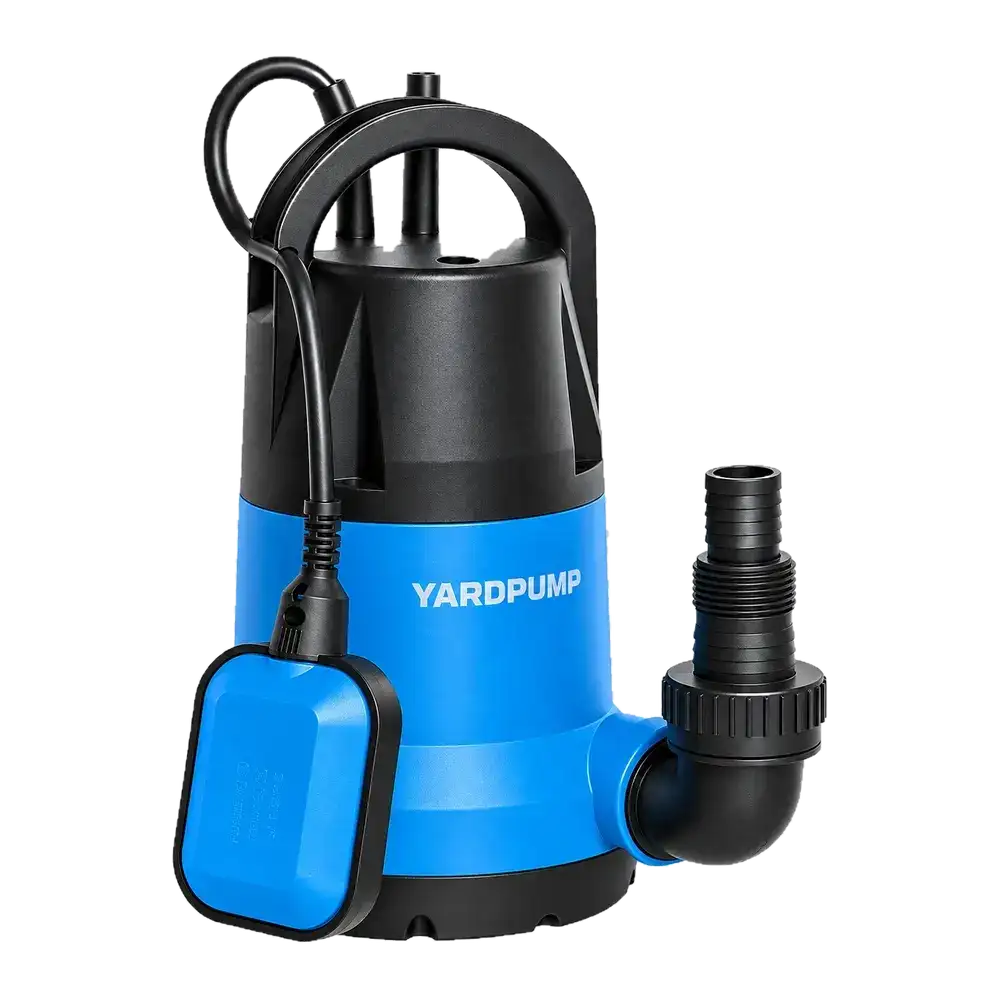
A familiar pump problem often starts with a simple observation: An aquarium owner wants faster water changes than a siphon provides, but the pump intake will be close to fish, gravel and biological debris.
The useful answer is not to choose a larger rating or accept a supplier's single measurement. Choose by gentle controllable flow, intake protection, liquid compatibility and a cleaning plan. Keep the pump dedicated if cross-contamination would matter. This keeps the decision tied to the actual liquid, installation, component revision and operating point.
The decision first
Choose by gentle controllable flow, intake protection, liquid compatibility and a cleaning plan. Keep the pump dedicated if cross-contamination would matter.
The first step is to freeze what is being compared. Record the pump model or component revision, liquid condition, supply, speed, installation and test method. If two samples are tested under different water levels, temperatures, hose layouts or electrical conditions, the result cannot isolate the feature named in this article.
For a service complaint, preserve photographs, labels, marks, deposits and measured values before cleaning or dismantling. For a purchase change, connect the drawing, BOM, supplier lot, sample and production cut-in. That evidence prevents a plausible explanation from becoming an unsupported conclusion.
Why the symptom can be misleading
The pump curve sets possible flow, while hose diameter, lift and a valve determine the actual transfer rate. A coarse screen that passes debris may still draw small animals or gravel. Saltwater needs verified wetted materials; freshwater suitability does not prove aquarium-safe materials or potable-water approval.
The observed symptom is therefore a system response. A dimension can influence hydraulics, mechanics and heat at the same time; a control component can change both operation and the evidence seen by a technician. The correct question is not whether one feature is “good” or “bad,” but what changes at the agreed duty and which limit becomes controlling.
A practical check plan
| Check | What to verify | 中文现场提示 |
|---|---|---|
| Liquid | Confirm freshwater or saltwater and any treatment chemicals | 确认淡水或海水及所用处理剂 |
| Intake | Use a guarded, visible pickup away from fish and substrate | 使用有防护、可观察且远离鱼和底砂的进口 |
| Installed flow | Check lift, hose loss and controllable discharge | 核对高差、软管损失及出口调节能力 |
| Cleaning | Define rinse, disinfection and dedicated-use boundaries | 明确冲洗、消毒和专用使用边界 |
Carry out the checks in a sequence that protects evidence. Begin with identity and external conditions, continue with non-destructive measurements, and dismantle only when the earlier results justify it. Use calibrated or otherwise controlled instruments appropriate to the decision. Record raw values as well as the final pass/fail judgment.
When several factors may be involved, change one controlled factor at a time. Keep an approved reference unit where possible. A matched comparison usually explains more than a single result against a broad catalogue tolerance.
Worked example
Example only: moving 100 L in 10 minutes requires an average 10 L/min at the installed head. Start with the discharge throttled and increase gradually while keeping the intake visible and away from animals.
Write the example assumptions into the report. Show the starting condition, what was changed, and the measured response. If the result depends on an assumed dimension, water level, voltage or material condition, label it as an example rather than presenting it as a YARDPUMP model specification.
How to turn the result into a decision
For selection, confirm that the installed duty remains inside the pump and accessory limits, then document the setup the user must reproduce. For procurement, turn every critical finding into a drawing note, inspection characteristic, approved sample or change-control requirement. For after-sales work, distinguish a confirmed cause from a symptom and an untested possibility.
Acceptance should cover the complete assembly where the interaction occurs. A loose component may pass a dimensional check and still behave differently after clamping, immersion, heating or loading. Conversely, a failed assembly test does not automatically identify which component is defective; it tells the team where a controlled comparison is needed.
Boundaries and safety
Do not use an ordinary pump for flammable treatments or unknown chemicals. Electrical equipment around aquariums needs dry connections, appropriate protection and safe cable routing.
Industry mechanisms in this article are not specifications for every YARDPUMP model. Use the latest approved drawing, datasheet, manual and compliance file for the exact model and revision. Stop any test that creates unsafe heat, leakage, unstable support or electrical exposure.
Frequently asked questions
Can I tie a fine mesh directly over the intake?
Check its open area and attachment. A small screen can clog, restrict flow or deform under suction.
Can I share a pump between the aquarium and cleaning buckets?
Dedicate a pump where detergents, treatments or pathogens could be transferred.
Can I set the water-change rate from the pump label?
Measure delivery at the installed lift and hose, and observe the livestock and substrate.