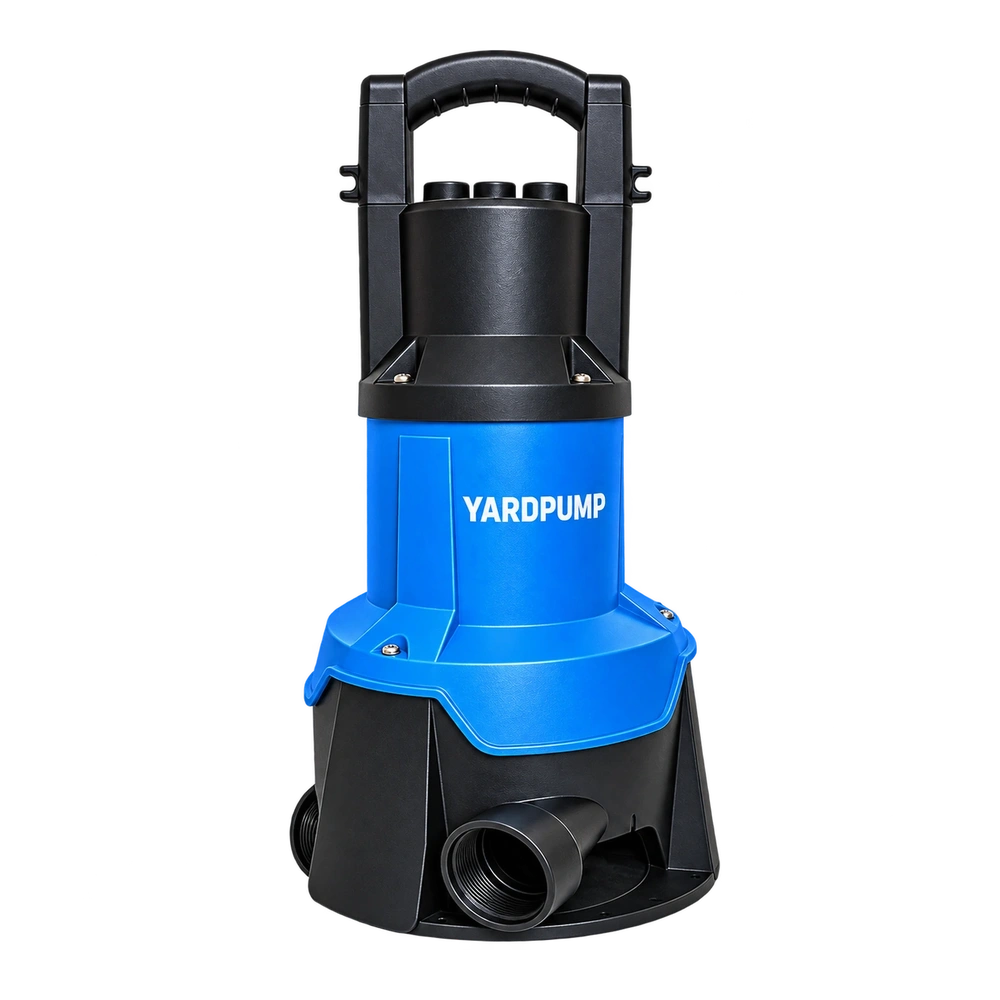
After a crawlspace floods, the most dangerous shortcut is to drag a pump and extension cord into the opening before considering the water, the structure and the exit route. Temporary dewatering starts with electrical isolation, contamination assessment and access safety. Only then should the operator choose a clean-water pump, a dirty-water model or a staged settling arrangement. A pump that physically fits may still be impossible to operate and retrieve safely.
What drives the result
Crawlspace water often carries soil, insulation fragments and fibres. A clean-water pump may pass small particles yet still collect stringy debris around the inlet. A larger solids-handling pump may leave more residual water. Placing any pump directly in soft mud continually stirs sediment and can accelerate hydraulic wear. Hose routed over joists and sharp turns adds loss, while hose reaction can move the pump and obstruct the inlet or switch.
An illustrative way to check
Suppose the water is about 120 millimetres deep over a 30-millimetre layer of soft sediment. A low-level pump placed directly in the mud may lose its residual-water advantage as the inlet blocks. A more controlled method is to create a hard support or perforated collection basket, allow sediment to settle, and remove water in stages while observing the discharge. These dimensions illustrate the method rather than a universal limit.
An RFQ should not ask only for a crawlspace dewatering pump. It should state the liquid, highest and lowest water levels, vertical lift, hose bore and length, target emptying time, solids or fibres, electrical supply, and whether operation is supervised or automatic. The supplier can then identify a duty point instead of combining maximum flow, maximum head and rated power as though they occur together. Validate the first sample through a complete start-run-stop cycle in the intended piping. A brief no-load sound check does not represent the service.
Actions for the site or purchasing team
- Identify the water source, electrical isolation boundary, air-quality risk and structural condition before entry. Stop if sewage, gas or collapse hazards are credible.
- Take a visible sample and describe sand, clay, fibres, oil and odour rather than calling everything dirty water.
- Create a stable local low point or support board. Keep every plug, connection and receptacle dry and visible.
- Use the shortest practical hose with adequate bore. Restrain the pump and piping while preserving safe access to the handle.
- Log level reduction, discharge, sound and sediment accumulation. Stop before the permitted minimum level and remove the final residue by an appropriate separate method.
Limits and application boundary
Confined spaces, contaminated water and submerged building electrics require qualified risk control. This guide supports product selection and communication; it does not replace site-specific entry procedures or local safety rules.
Frequently asked questions
Can a dirty-water pump sit directly in mud? It should not. Mud can block the inlet and accelerate wear even when some particles can pass.
Can the pump run dry while the last water trickles in? No. Stop according to the model's minimum-water and operating limits.
Is an elevated extension-cord joint automatically safe? Cable rating, protection, environment and local electrical rules still require review; connections must stay out of the wet area.
Related reading
Rated to Pass Particles but Still Blocking? Sand, Fibres and Sludge Behave Differently
Water on a Flat Roof: How to Choose a Temporary Drainage Pump