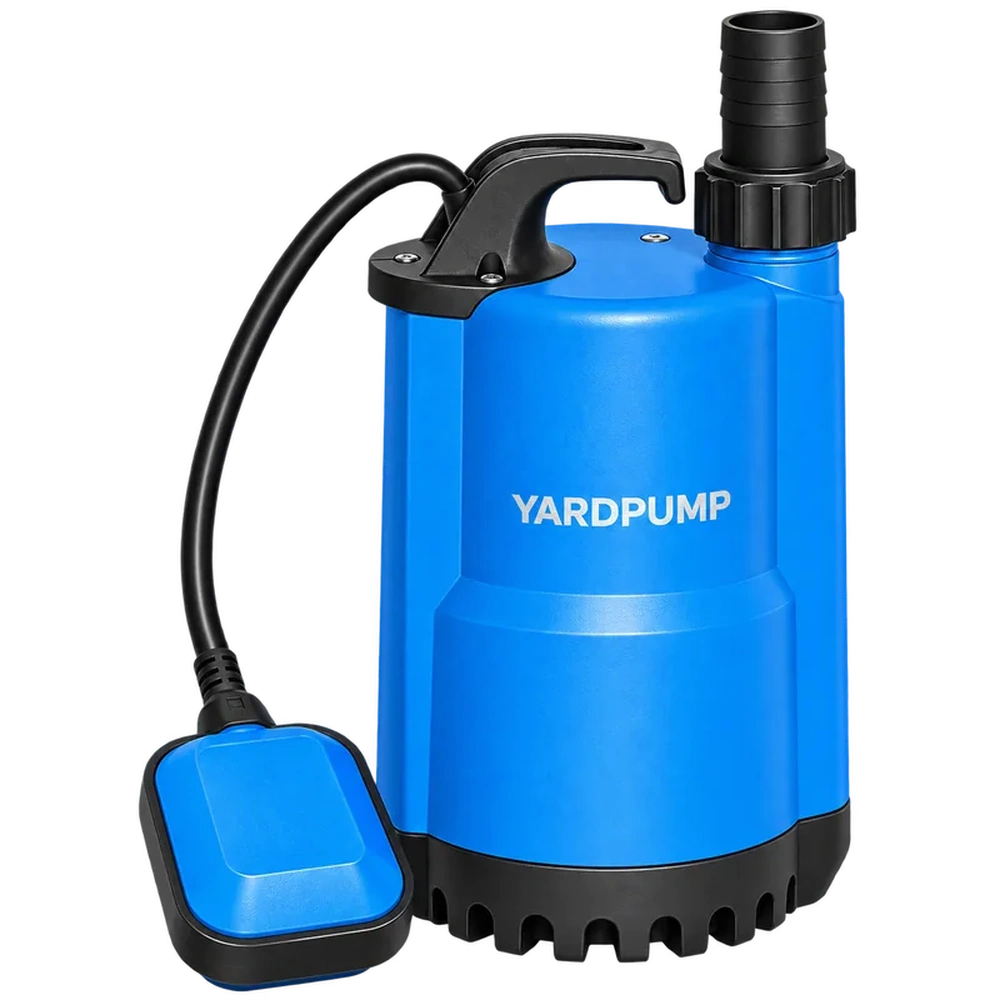
Water from washing concrete tools settles in a container. The upper layer looks clear. Can an ordinary clean-water submersible pump remove it? Transparency is not enough. Concrete washwater can combine alkalinity, fine solids and continuing deposition. Assess chemical compatibility, solids loading and the receiving route separately. Moving the liquid does not prove material suitability or permission to discharge it into a storm drain.
Clarity describes only what is visible
Settling visible particles does not necessarily return the liquid's acidity or alkalinity to the pump's permitted range. Test the liquid actually being transferred and consider changes when fresh washwater enters. A sample from the surface may not represent a pump drawing near the bottom. One clear cup cannot characterise a layered container under changing operation.
A pump's ingress-protection rating is not chemical-resistance approval. A plastic housing is also only one part of the wetted assembly. Shafts, fasteners, seals, elastomers and cable materials may matter. Request application limits for the exact model and configuration rather than inferring complete compatibility from a broad material description.
Separate suspended fines from settled material
Fine particles can contribute to wear or enter running gaps. Concentrated bottom material may turn the job into slurry transfer. Continuing deposition, adhesion or hardening can also make cleaning after shutdown more difficult. Establish what enters the pump, where the inlet sits and when the operation stops. A maximum particle-passage figure does not cover these questions.
Do not press an ordinary pump into sediment merely to remove everything from the container. Dedicated slurry equipment, treatment or another removal method may be needed according to the material and site plan. The term dirty-water pump does not authorise every cement-slurry application. Its actual operating limits remain decisive.
| Site information | Selection consequence |
|---|---|
| Actual chemical condition and variation | Wetted-material and seal compatibility |
| Solids concentration and particle characteristics | Wear, deposition and blockage |
| Layering and intake position | Whether the sample represents inlet conditions |
| Receiving container and destination | Collection, treatment or approval requirements |
Arrange collection before increasing flow
Manage concrete washwater under the site's environmental arrangement. Treatment, reuse and discharge requirements vary by destination. A conditional practice allowed in one jurisdiction is not a worldwide rule. The responsible site team should confirm the receiving facility and applicable requirements. A transfer pump does not make the liquid compliant by moving it elsewhere.
Do not improvise acid addition to make the water appear suitable for a pump. Chemical treatment involves dosing, reaction, safety and verification and belongs to competent personnel using an approved method. Avoid unnecessary exposure during sampling. Follow electrical isolation requirements rather than handling an energised pump in contaminated water.
Define an achievable operating boundary
Consider a hypothetical task transferring treated supernatant already confirmed within a particular pump's liquid limits into a designated receiving container. Selection can then address flow, total head, temperature, duration and inlet conditions, with a defined stopping level or solids condition. This illustrates a task definition; it does not approve any YARDPUMP model for concrete washwater.
If the site cannot maintain those conditions, a larger ordinary pump does not resolve chemistry or deposition. The treatment and transfer arrangement needs review, or equipment specifically accepted for the task. Compatibility evidence must represent the actual medium. A clean-water trial alone establishes neither chemical durability nor performance in concentrated sediment.
Include the condition after use
Ask the manufacturer for permitted cleaning, draining and storage methods. Avoid unsuitable chemicals or unauthorised dismantling. Deposits retained in the chamber can change the next start, so stopping and preservation belong in the application plan. For a distributor, clear limits are more useful than simply assuring the customer that the pump has sufficient flow.
A well-defined job separates liquid treatment, equipment capability and lawful disposal. Confusing those responsibilities can turn a simple transfer operation into a material failure or a site-management problem that more motor power cannot solve.
Questions about concrete washwater
Does settled water without visible grit count as clean water?
Not necessarily. Chemistry and unseen fines may still exceed the operating boundary. Check the actual medium.
Is a plastic pump naturally resistant to this liquid?
No blanket conclusion is possible. Confirm the complete relevant materials, seals and service conditions.
Can the water go directly into a storm drain?
Pump capacity cannot decide that. Establish the permitted collection, treatment and receiving route first.