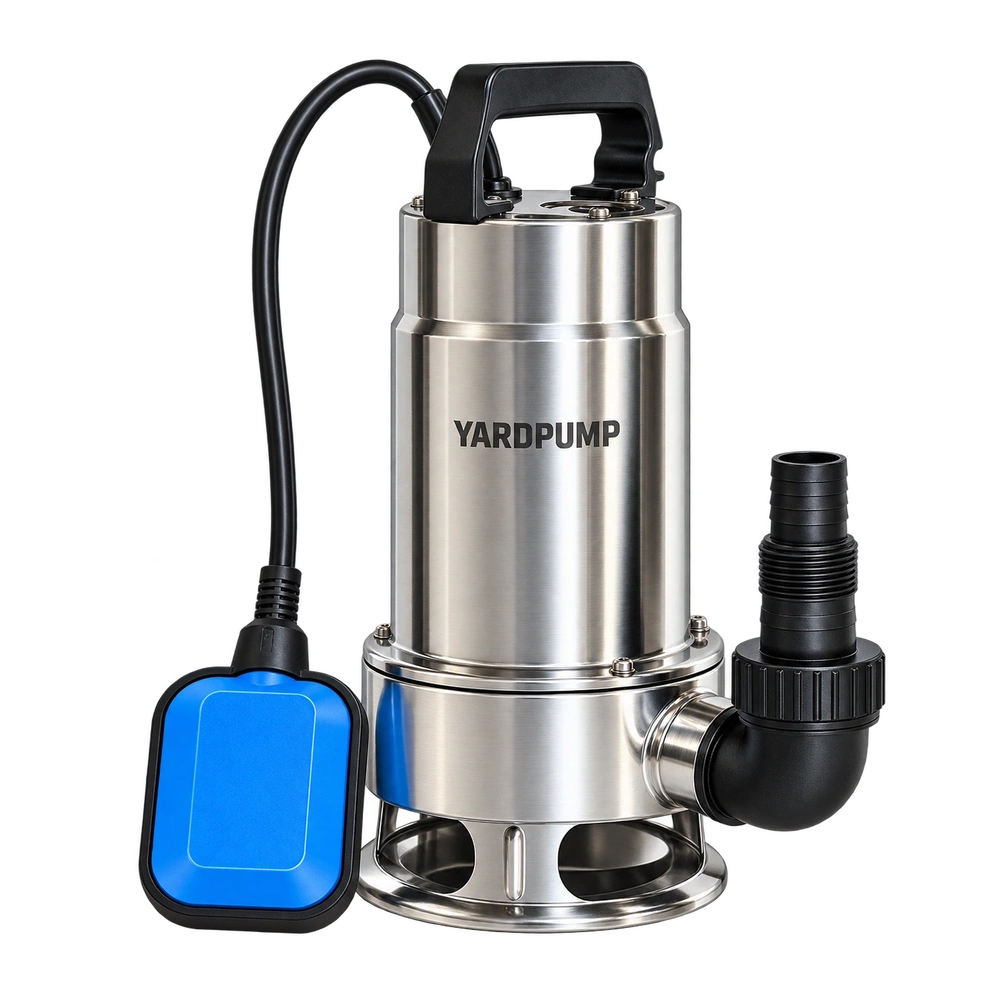
A typical garden watering complaint sounds contradictory: the pump starts every few seconds with the spray gun barely open, but runs smoothly when more water is used. In a pressure-controlled installation, investigate demand, leakage and the pressure tank's usable drawdown before ordering a larger tank. A tank marked 24 litres does not deliver 24 litres between pump stops and starts.
The tank stores energy as well as water
A diaphragm pressure tank uses compressed gas to store energy. After the pump reaches the stop pressure, the tank supplies some water while its pressure falls. The pump starts again at the cut-in setting. The water delivered between those pressure settings is the usable drawdown.
Drawdown depends on precharge, cut-in and cut-out pressures, as well as tank construction. Two tanks with the same nominal volume can provide different useful water quantities in different systems. Lost precharge, a damaged diaphragm or a blocked connection can make a previously adequate tank ineffective.
A pressure tank does not repair a leaking suction pipe, a passing check valve or a defective controller. Treating every cycling complaint as an undersized tank can leave the original fault untouched.
Make the cycling visible in time
Consider an illustrative example. A tank provides six litres between the agreed stop and start pressures, while a small outlet consumes three litres per minute. The approximate pump-off supply period is two minutes. If the available drawdown falls to 0.6 litres, that period becomes about twelve seconds.
This calculation covers the off period only. It does not include the pump's refill time or establish an acceptable number of starts. During running, delivery above the user's demand refills the tank. Pump flow can change as pressure rises, so its maximum flow rating should not be applied as a constant throughout that refill.
Choose drawdown using the pump manufacturer's starting limits, required minimum running time and realistic demand patterns. A generic rule about one minute of running is not automatically the correct requirement for every small pump or control system.
Follow a useful diagnostic order
First record whether the pump cycles with all outlets closed. Then record actual start and stop pressures, running duration and the interval between starts. These observations can usually be collected without opening electrical equipment.
Cycling with no intended demand points toward leakage, reverse flow or a pressure-retention problem. Cycling only at low demand directs attention to drawdown and controller behaviour. Test normal watering as well: a system may be stable at one outlet flow and poorly matched at another.
Precharge inspection requires the procedure for the particular tank. Suitable personnel should isolate electrical power, prevent automatic restart and safely depressurise the water side before making the prescribed check. A gas-valve reading taken while the water side remains pressurised is not simply the precharge value.
Do not raise the stop pressure beyond the ratings of the pump, vessel, hoses or fittings to obtain a longer interval. Pressure changes can also move the pump away from the required watering duty.
A larger tank is a design choice
A correctly selected larger tank can extend the buffer period, but it adds space, support and retained-water considerations. A variable-speed constant-pressure system can use its tank differently from a basic pressure-switch installation. In that case, the tank may mainly support small demand and transient conditions, and the controller's own requirements take priority.
An electronic controller may also have minimum-flow recognition, restart logic and dry-run protection that affect cycling. Verify those functions rather than assuming the tank alone determines operation.
For distributor acceptance, demonstrate three conditions: all outlets closed, a small continuous draw and normal irrigation demand. A simple time log is more informative than a photograph of one gauge reading. The objective is stable service within the approved operating limits, with any leakage or control fault resolved.
A useful additional observation is the actual water delivered between stop and start pressures under the approved procedure. Measure that quantity safely and distinguish it from nominal tank volume. Leakage can affect the observation, so verify gauge and collection conditions before drawing conclusions. If drawdown is unexpectedly small, have suitable personnel investigate precharge and diaphragm condition rather than inferring the internal state from vessel size.
Questions at the service counter
Does a larger pressure tank always save electricity?
No. It may reduce starts, but delivered volume, working pressure and control losses still determine energy use.
Can a sealed storage barrel replace a pressure tank?
No. Use a vessel designed and approved for the intended pressure, liquid and installation. An ordinary water barrel is not a pressure vessel.
Does a steady gauge prove the tank is healthy?
No. Gauge location, controller response and outlet restrictions can conceal changes elsewhere. A static reading cannot diagnose a diaphragm on its own.