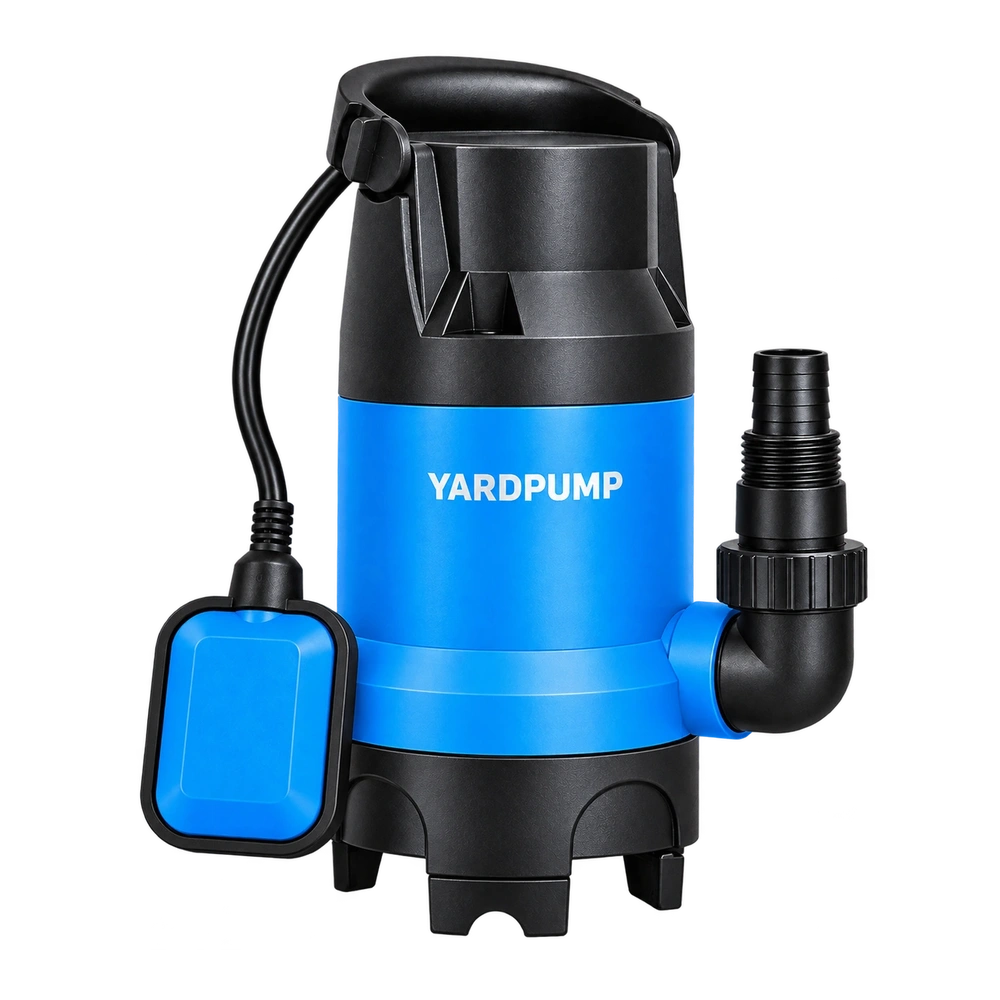
A garden pump worked with an open connector. After fitting a shutoff quick coupler, the latch clicks and the motor runs, but the sprinkler is dry. Stop and isolate the pump before inspecting the fitting. The latch proves mechanical engagement only. It does not show that the internal shutoff opened far enough to deliver water.
Find out which halves contain valves
Some couplings shut off on one side; others have a valve in each half. Two parts can look compatible and even lock while differing in nose length, shoulder position, seal compression or poppet travel. A valve that remains shut prevents delivery. One that opens only slightly can give a convincing trickle through an open hose and fail as soon as a sprinkler is installed. Check the part numbers and the maker's mating list. Do not shorten a stem, remove a safety feature or assume that an adapter marketed for the same nominal hose size will open the valve.
Isolate the restriction with comparable tests
Switch off and isolate power and release trapped pressure as instructed. Inspect the connector for grit, a displaced seal or visible distortion. Reassemble with confirmed mating halves and check that hose weight is not pulling them out of alignment. Then compare the approved straight-through fitting with the shutoff assembly in a supervised test. Keep source level, hose, nozzle and timing the same. Where there are suitable measuring points, record running pressure on each side. Static pressure upstream of a closed valve can be substantial while useful flow remains zero.
For an example, a sprinkler needs approximately 120 kPa while delivering its intended flow. With a straight-through connection, pressure just before the sprinkler measures 145 kPa. With the shutoff assembly, it falls to 85 kPa while the upstream reading remains higher. That points to a restriction across the changed assembly, but the two readings do not identify the failed component. Check mating, valve travel, any inlet strainer and loss at representative flows. If the correct pair restores delivery, record both part numbers so a visually similar half does not enter the spares bin.
Treat disconnection and shutdown as separate actions
A self-sealing coupler is not automatically a pump stop. Disconnecting it can leave some pumps operating close to a closed outlet. Verify what the pump and controller permit before using that arrangement. Turn off and relieve pressure before disconnecting where required; trapped pressure can cause a fitting or hose to move abruptly. For low-head pumps especially, ask for loss at the intended flow or check it yourself with the approved assembly. Nominal size describes a connection; it does not tell you the effective flow area of the valve.
When specifying the kit, list both halves, orientation, rated liquid and pressure, and the acceptable pressure loss with the intended nozzle. Keep the valve pair together during packing and service. A brief delivery check after replacement can catch both an incorrect part and a correct part assembled improperly.
Cross-check only one component at a time
Keep the hose, pump and outlet height fixed. Compare a known compatible pair with the suspect pair, following the equipment instructions and isolating and relieving pressure before every change. If the approved combination restores flow, identify which half is incompatible rather than treating the pump as faulty. In receiving inspection, record the exact two part numbers and check flow as well as engagement and leakage. A fitting that locks cleanly can still open its internal valve only partway; an exterior pull check cannot reveal that.
Frequently asked questions
If the connector locks, why check the part number?
Latching and opening the valve depend on different dimensions. Use the confirmed mating combination even if another half appears to fit.
Can I remove the poppet to regain flow?
That defeats the shutoff and can change the product's safety or warranty conditions. Compare with an approved straight-through connector instead.
Does a leak-free connection prove the valve is open?
No. The seal may hold while the valve barely moves. Check delivery and pressure loss under working flow.