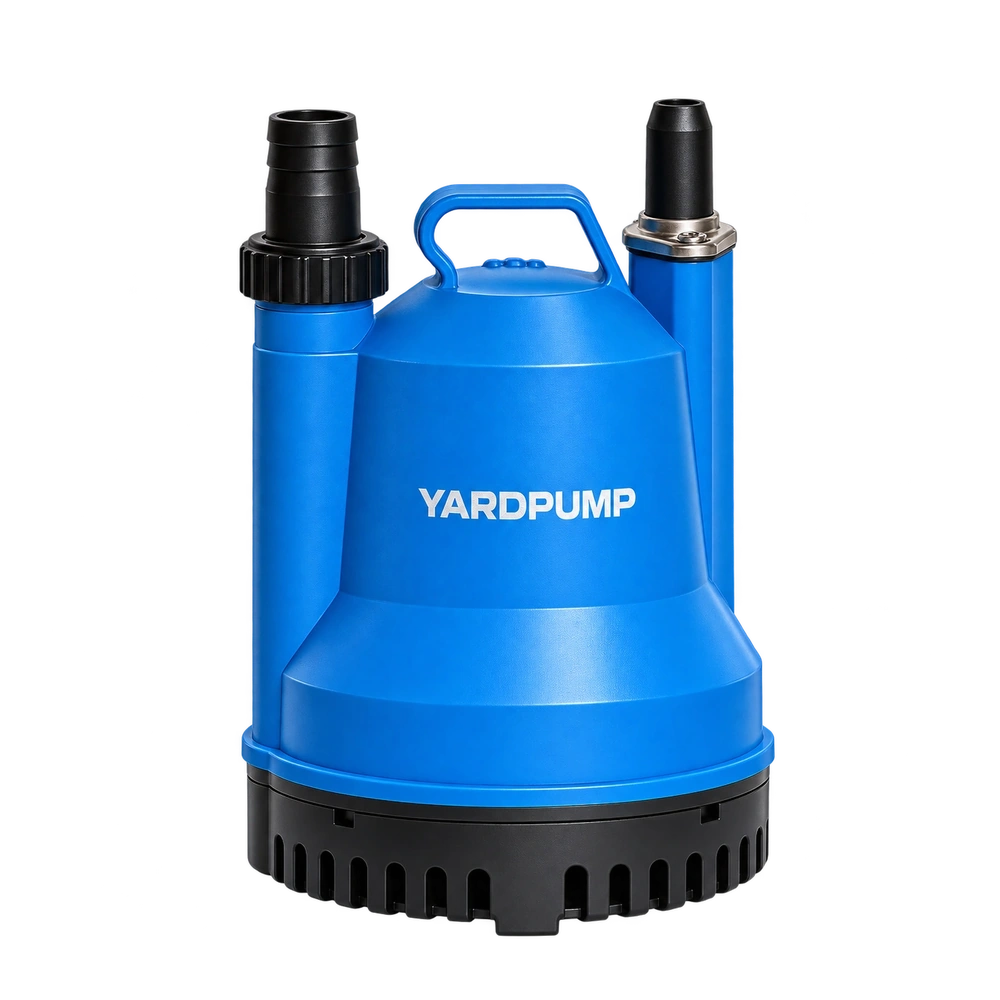
Imagine moving a drainage pump around a yard with a layflat discharge hose. The first run works. After the hose empties and you start again, it sometimes delivers little more than a dribble. The route across the ground still looks straight. Look for a twist, especially where both ends are fixed and a section was picked up or recoiled after the first run. A hose can follow a straight line in plan while turning around its own axis. As the water opens the hose, that turn can create a narrow throat.
The centreline can be straight while the hose is twisted
An empty layflat hose lies in two layers. It does not keep a round cross-section to resist twisting. Fix one end and pull the other around an obstacle, and part of a turn can collect in a short length just beyond a coupling. The hose may inflate on one side of the twist first. As it fills and shifts, the apparent location can move a little. A low-pressure hose need not look perfectly round. Look for an isolated sharp change in the section or a repeating crease that coincides with poorer delivery rather than trying to judge pressure by sight.
Distinguish this from a hose pinched by a wheel, door or weight, where an external load usually leaves a fixed point. An inner liner that has detached and flaps into the waterway presents a different fault again: straightening the outside will not reliably cure it. If you see a local bulge, exposed reinforcement, water spraying from the wall, or a coupling starting to move, stop and isolate the pump. Let the line depressurize as instructed and have the damaged parts assessed. Never try to untwist an inflated line by hand.
Trace orientation with the system safely stopped
After isolation, depressurization and drainage, lay the hose flat from the pump connection to the outlet. Follow a printed line or a seam along one edge. Where permitted, use a temporary external mark that will not harm the hose. Watch for the mark suddenly rolling from the top to the underside, especially between two constrained points. Pulling the free end taut can load the coupling and pump without removing the twist. Use the prescribed supports and outlet restraint, so nobody needs to stand on the hose or hold it during startup.
For illustration, suppose the pump fills a 12-litre container in 20 seconds after the hose is laid out correctly, about 36 litres per minute. A safely observed twisted setup with the same route and lift took 35 seconds, about 21 litres per minute. Recovery on later restarts, together with the disappearance of a visible twist, is stronger evidence than either observation alone. Keep the suction water level, discharge elevation and fittings comparable. A blocked inlet, lower source water level or higher outlet would blur the comparison.
Change the route if the fault is built into it
A route that must pass through an awkward turn each time may justify an approved reinforced section or a fixed elbow with a supported connection. Check the effective bore and actual working flow with the complete route fitted, and respect the permitted liquid, pressure and temperature limits for all parts. A clean-and-dirty-water pump chosen for a particular liquid still needs a discharge path that stays open at restart. The convenient hose in the carton is helpful only if the person setting it up can deploy it reliably on site.
When two people alternately set up the hose, put an orientation mark on each end as the hose maker allows. Photograph a known good layout. A repeatable set-up check can prevent a twist from being reintroduced by turning a locked coupling.
Frequently asked questions
A short section never looks fully inflated. Is the pump too weak?
Shape alone does not prove weak supply. Check the location for a twist or external pressure point and measure the operating flow under comparable conditions.
Can I tape or tie it tightly at the twist to stop it turning?
A tight tie can restrict the bore or damage the hose. Use supports and connections approved for the hose and confirm that it opens correctly when the system runs.
Will a larger layflat hose make the twist harmless?
A larger bore can reduce friction over the length of the route. It can still fold sharply where a rotation is trapped. Lay out the route correctly first, then choose the size.