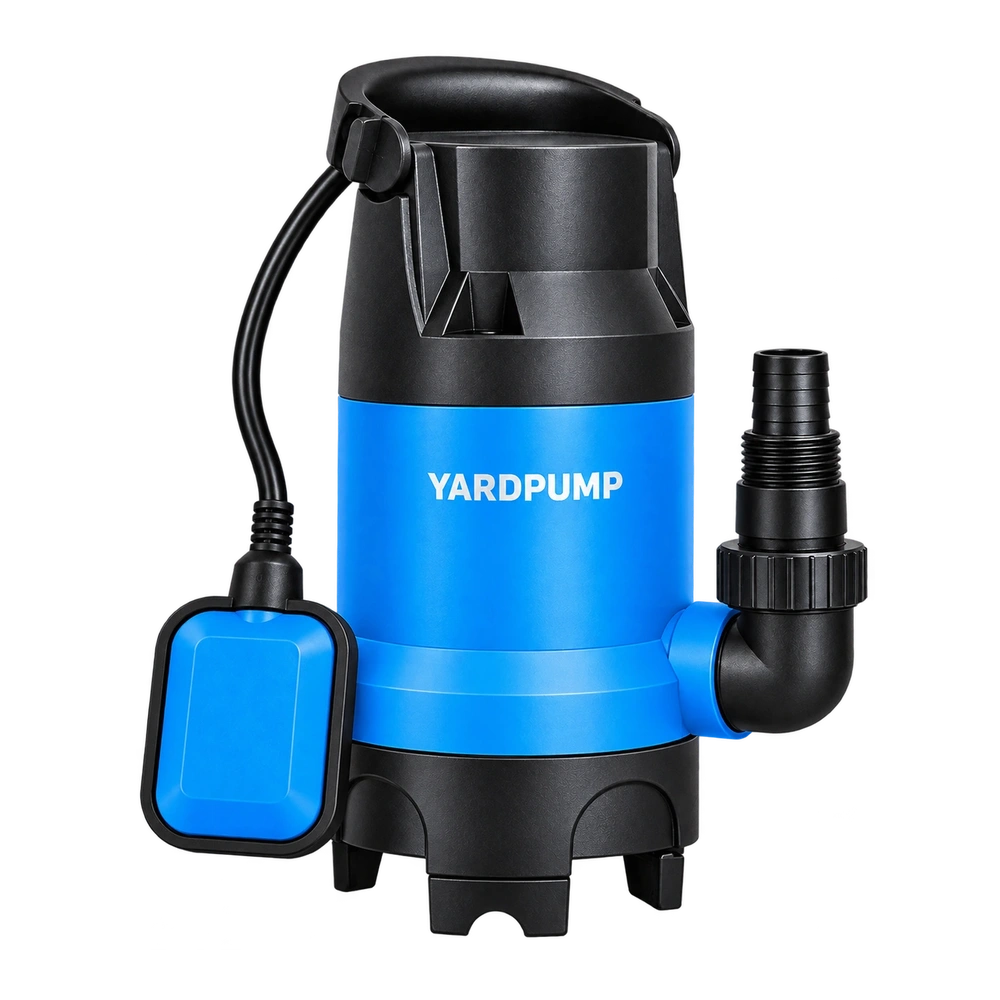
A low-level pump starts normally on a tarp or waterproof liner, then loses flow while the motor remains audible. Once the pump is lifted, no obvious obstruction remains. The flexible surface may have lifted against the inlet and fallen away after shutdown. Isolate power and inspect the contact between liner and inlet rather than repeatedly restarting the pump or puncturing the surface to restore delivery.
The liner can block flow without entering the pump
A shallow water layer has little weight and the flexible sheet can move. Local pressure at the inlet lifts a fold, reduces open area and finally lets the sheet act like a flap valve against the screen. When the pump stops the sheet drops away, so the unit can appear normal when lifted.
This is different from a grain lodged in the impeller. The sheet need not enter the wet end: covering the opening is enough to restrict the water path. As the surrounding layer becomes shallow, the liner and pump base can approach each other. Once contact develops, replacement water has difficulty reaching the inlet. After shutdown the pressure difference disappears and the sheet relaxes. That explains an intermittent obstruction which vanishes as soon as the pump is lifted.
Check whether the surface is suitable for the pump
Disconnect power from a dry location; never reach below a running pump. Inspect the liner for stretch marks, punctures and drawn-in edges. Use a rigid, rounded, non-floating support permitted for the pump so water can approach from several sides. It must not raise the inlet above the useful level or point-load a vulnerable liner.
First establish that the application is permitted. A low-level clean-water pump is not automatically a pool-cover pump, and a waterproof roof membrane is not automatically a suitable load-bearing surface. Check the pump application, surface loading and material requirements, safe access and discharge destination separately. Do not step onto a covered pool or a roof of uncertain capacity to move equipment. Do not drag the pump by its power cable.
Where a support is allowed, it should be stable, smooth-edged and arranged to keep the inlet supplied. Counting drilled holes in a board is insufficient. Check whether the pump covers those holes, whether the liner can bulge through them and whether the board edge can abrade the surface. Include the pulling force of the filled discharge hose in the assessment. A suitable original broad base or purpose-designed device is easier to verify than improvised loose supports.
Compare safely with a rigid support surface
Example: directly on the sheet, delivery falls from 20 to 2 L/min in ten seconds. After isolation, the same water level on an approved support remains stable for one minute. These are diagnostic example values; the comparison matters because only the support condition changed.
A controlled comparison can use an approved safe test area with a rigid surface and the intended liner surface. Keep the pump, hose and lift unchanged. Note water depth, pump tilt and liner movement when flow declines. For illustration, normal replenishment on the rigid surface but loss of flow only as the liner puddle becomes shallow supports an inlet-contact diagnosis if sheet movement is also observed. Loss of delivery on both surfaces calls for checking air release, the discharge route and pump condition instead.
Choose residual level and safe placement together
A safe support may leave more water behind by raising the intake. Accept that tradeoff or select equipment intended to reach the required finish; do not remove the screen, defeat protection or allow dry running to compensate. When sourcing a low-level pump, identify whether the surface is rigid flooring, a flexible waterproof layer or an approved pool cover. Ask for the corresponding placement method. A residual-water figure alone cannot establish suitability for all three.
Frequently asked questions
Will a mesh bag prevent liner suction?
Not necessarily. A flexible bag can collapse against the inlet and add restriction.
Can I suspend the pump above the sheet?
Only if the instructions allow a secure arrangement; never suspend it by the power cord.
Is a board with several holes enough?
Open area, edges, stability and liner loading all need review rather than judging by hole count.