Imagine a lined ornamental pond that needs a seam repair after heavy rain. Emptying the pond looks like an easy way to expose the seam. But removing inside water reduces the pressure holding the liner down, while water beneath or beside it may remain high. The liner can lift locally and turn a small repair into a larger problem. First ask whether the work can be done after partial drawdown. A pump’s ability to remove water does not establish that the pond can be safely emptied.
Compare water levels on both sides
A flexible liner separates the pond from the surrounding ground. If water outside can communicate pressure to its underside, the difference in water levels can act on the liner. The pond level can fall much faster than groundwater. Low points, changes in slope, and areas with restricted sub-liner drainage may respond differently. Have someone who understands the structure and site assess groundwater and drainage. Dry paving nearby does not show that there is no water under the liner.
For an illustrative order of magnitude, suppose the water levels differ by 0.25 metres at a location and both fluids are water of similar density. Considering only the hydrostatic difference gives about 2.5 kilopascals, or approximately 2.5 kilonewtons over an idealised square metre. Actual forces depend on liner restraint, soil, drainage and the distribution of water pressure. This is not an allowable drawdown, an anchorage calculation, or a safety rating for any pond.
Set the permitted stop line before choosing the pump
Draw the repair location, how much needs to be exposed, allowed water level, drainage under the liner and potential sources of inflow. Ask the person responsible for the pond or liner system whether the work can be isolated in sections, whether water must be retained, and who will assess outside pressure. If the liner is already bulging, the slope changes shape or unexplained cloudy water appears, pause the drawdown and have the situation assessed. Do not walk on a bulge, puncture the liner to relieve water, or try to press the membrane flat.
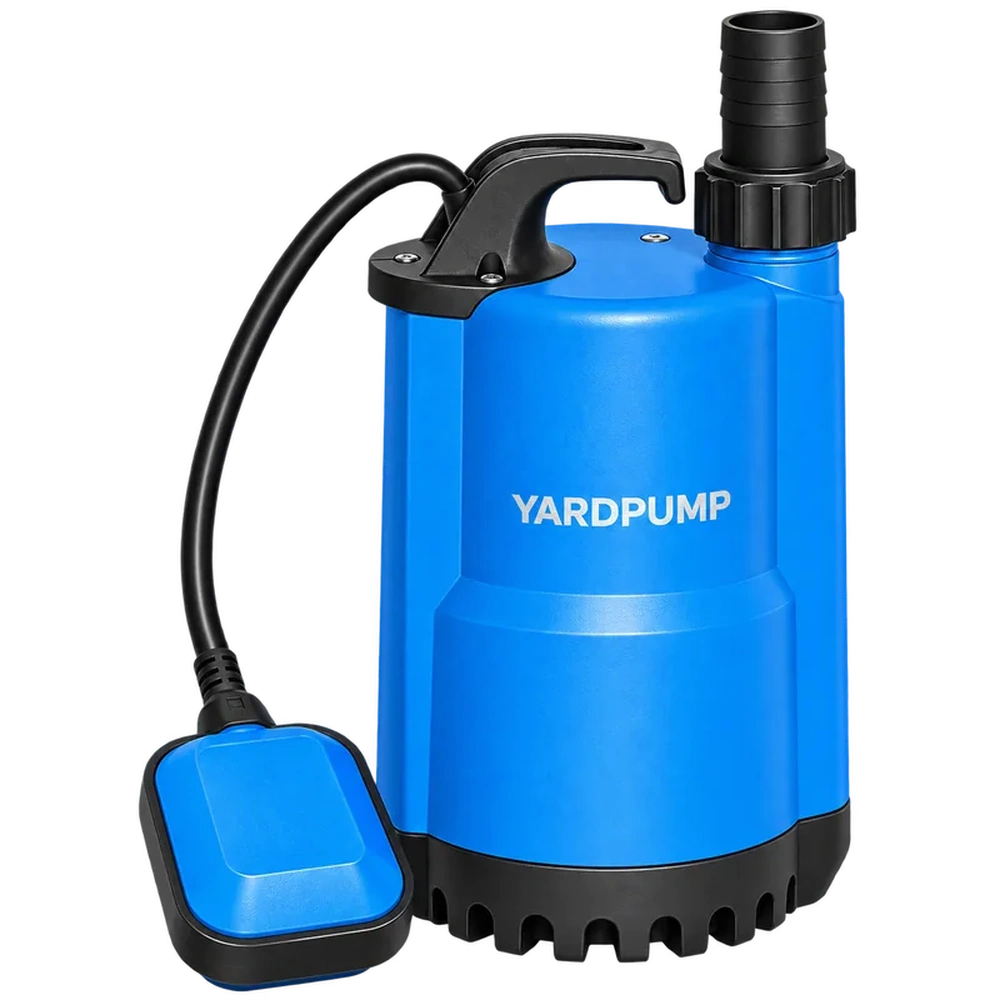
Once the work sequence is agreed, choose the pump for the actual liquid and the required flow at the discharge route. A clean upper layer, water with soft debris, and thick bottom deposits are different services. A pump that handles certain particles is not necessarily suitable for grout, sand slurry or fibrous material. Use an approved stable support that protects the membrane and keeps the intake clear of loose folds. Follow the electrical arrangements for the site. Do not reposition or handle equipment in potentially energised water or lift it by its power cord.
Verify the drawdown in stages
Under the approved conditions, lower the level in stages and record time, pond level, discharge behaviour and visible changes to the liner. Stop at the agreed repair line and reassess before going further. If the required rate is below the pump’s installed delivery, use an approved operating sequence and suitable monitoring. Do not improvise by closing the outlet for extended periods or leaving a drained pump running. Check where the water goes so it cannot simply soak back into the ground beside the liner. Revisit the limits if there is new rain or water collects near the pond.
Distinguish the level that would expose the work from the lowest level the pond can safely tolerate. If those two levels are incompatible, change the repair sequence rather than trying to remove water faster.
Frequently asked questions
Can I repeat a complete drain that worked before?
Previous success does not establish the current groundwater or drainage condition. Check again after rain, changes around the pond, or signs of movement.
What if a small bulge appears as the level falls?
Stop lowering the level and get the responsible person to assess it. Do not stand on, puncture or force down the bulge.
Will a smaller pump remove the uplift risk?
Slower pumping may improve observation, but it does not ensure that outside groundwater follows the pond level. Keep the agreed stop line and verification steps.