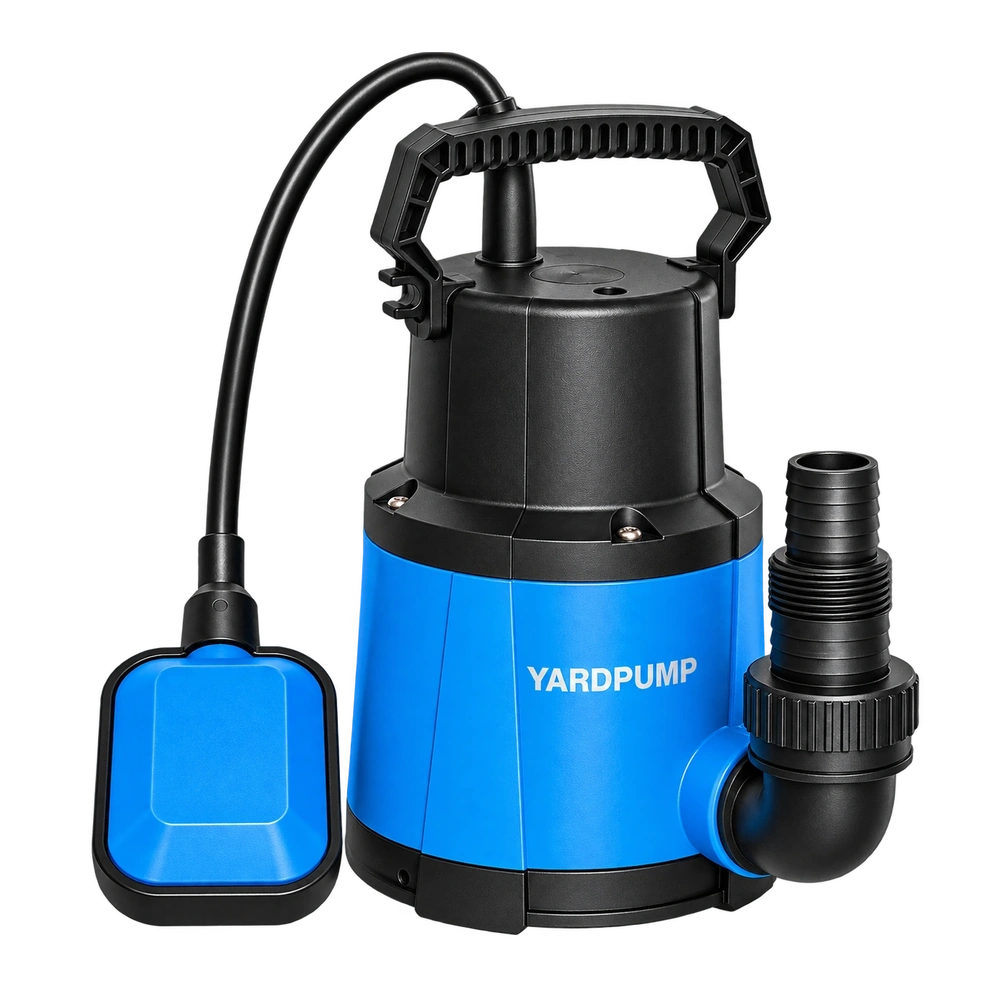
Pool-filter backwash cannot reach a higher disposal point, or the existing waste route cannot keep up. Can a submersible pump help? A collection-and-transfer arrangement may be worth assessing. Do not insert an ordinary utility pump into the pressurised filter circuit and assume it can assist backwashing. Separate the original filtration duty from downstream wastewater transfer first.
The two circuits have different jobs
The filter must backwash under its own specified valve positions, flow conditions and safety procedure. A downstream transfer pump moves water after it enters an appropriate collection facility. It should not informally change filter pressure or replace the original circulation pump.
Any alteration of the filtration circuit needs competent review. Filters, valves and connected pipework can retain pressure. Follow the equipment's shutdown and pressure-release instructions before operation or disassembly; do not change connections under pressure.
This article concerns downstream collection and pump selection. It is not a universal backwashing procedure for different filter types.
Size for the short inflow event
Backwashing can produce concentrated, intermittent discharge. Daily wastewater volume does not necessarily describe the collection tank's immediate demand. Establish actual incoming flow, event duration and any simultaneous inflow, then compare transfer delivery at the real operating head.
Usable collection space is not the tank's external volume. Normal water level, stopping level and other occupied space reduce the available buffer.
For a hypothetical calculation, inflow is 120 L/min while the transfer pump delivers 80 L/min at its installed duty. Over five minutes, net accumulation is approximately 200 litres. That simplified figure excludes start delay, drainback and additional margin. It shows why maximum pump flow alone cannot guarantee that a basin will not overflow.
| Selection information | Purpose | Insufficient shortcut |
|---|---|---|
| Peak inflow and duration | Short-event accumulation | Daily discharge volume |
| Actual transfer duty | Water removed during the event | Maximum-flow label |
| Usable collection space | Buffer for flow difference and delay | External tank dimensions |
| Wastewater composition | Material and maintenance suitability | Clear-looking water |
The liquid may not be ordinary clean water
Backwash can contain suspended contamination, filter-media particles, treatment residues or salt, depending on the system. Establish composition and concentration before checking pump materials, solids limits and service requirements.
Settling may reduce some incoming particles. It does not remove dissolved salts or establish compatibility with treatment chemicals. Special filter aids or unidentified contamination need assessment before choosing both transfer equipment and disposal arrangements.
Do not carry over every suitability statement for normal pool water merely because the waste comes from the same pool. An ingress-protection rating does not establish chemical resistance.
Match control to collection behaviour
Check automatic start, stop and high-level indication. The pump must remain within its permitted water-level and cooling conditions. Rapidly rising water requires allowance for control delay and installation space. A float must remain free of the wall, incoming jet and discharge hose.
Assess discharge resistance, downstream backpressure and return flow after shutdown. Confirm the permitted disposal route with the site and applicable local requirements. Overflow prevention does not justify discharging untreated water onto a road or into an unsuitable drainage system.
The collection facility also needs practical access for inspection and removal of settled material. A design that works once but cannot be serviced safely is incomplete.
Verify one complete task before purchasing
Using an approved actual cycle or controlled equivalent inflow, observe maximum level, transferred volume, starting, stopping, drainback and cleaning needs. Do not adjust energised equipment while standing in collected water. Isolate power before clearing or inspection.
If collection space or disposal capacity is inadequate, revise the system arrangement before simply increasing motor wattage. A larger pump may move the problem downstream.
This application framework does not establish that every YARDPUMP clean-water or dirty-water model can handle filter-backwash waste. Suitability must match the liquid, duty point, installation and confirmed intended use.
Frequently asked questions
Can the transfer pump replace the pool circulation pump?
Do not assume so. Filtration and downstream collection transfer are different duties.
Will a settling container remove salt and every treatment chemical?
No. Settling is not desalination or chemical treatment.
Does maximum transfer flow above inflow guarantee no overflow?
No. Check installed delivery, start delay, usable buffer space and return flow.