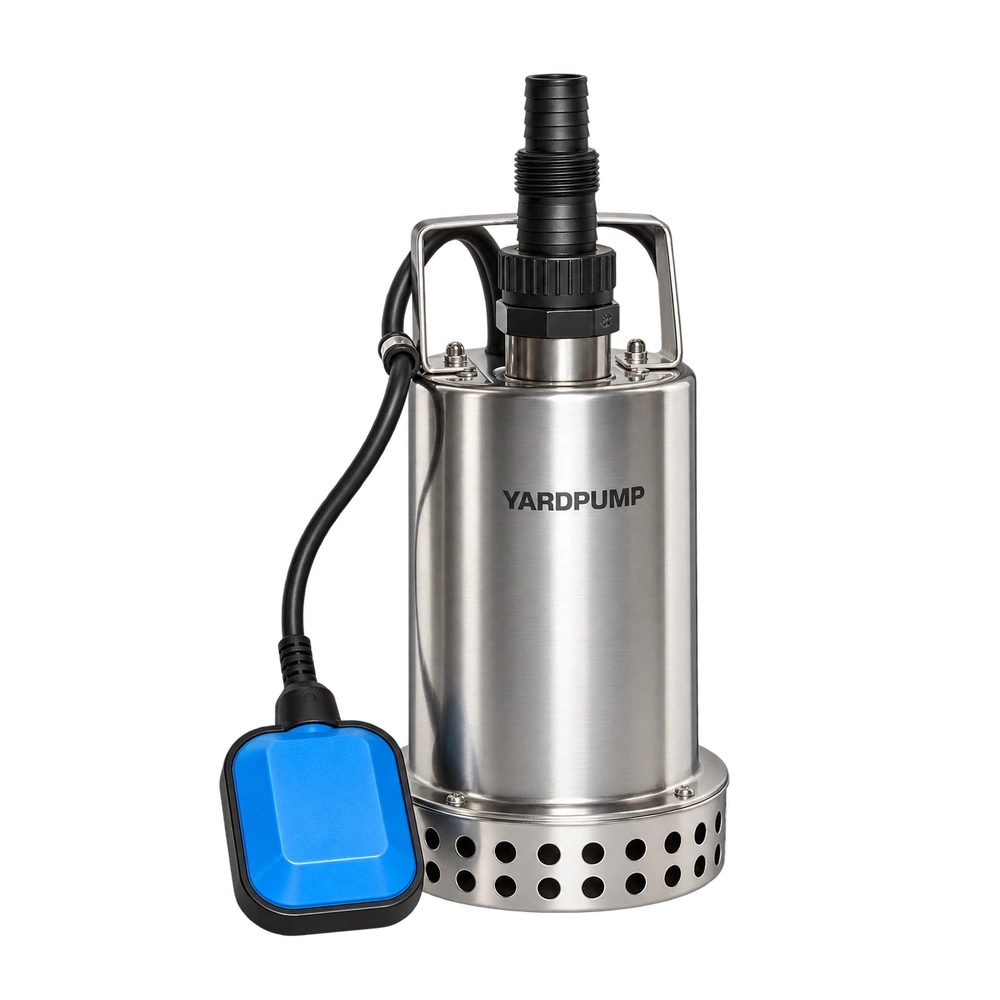
A pump has been approved for a seawater application. After use, can the operator rinse its outside with fresh water and put it into storage? That may leave important work unfinished. Exterior cleaning, replacement of internal saline water and drainage are different tasks. The actual flushing route, any permitted operation and storage method must follow the particular model’s maintenance instructions. A seawater configuration is not a maintenance exemption.
No dripping does not mean no salt remains
Seawater can remain in a chamber, connector, check-valve arrangement or low section of hose. As water evaporates, dissolved salts may leave local deposits. Subsequent humidity or immersion exposes those locations again. A clean-looking housing cannot establish the internal condition.
Sand, shell fragments and biological material may accompany the salt. Separate soluble residue from solid debris. Water replacement can remove some dissolved material without clearing a trapped particle from a narrow space. Clear-looking rinse water is not proof that every internal path has been cleaned.
Establish permitted maintenance first
Obtain the model’s cleaning method, acceptable liquids, orientation and storage requirements. Its approved flushing path may differ from pouring water over the casing. This does not justify connecting an uncontrolled pressurised supply, removing seals or opening the motor enclosure. Cleaning itself can introduce unsuitable pressure or water-entry conditions.
Where the prescribed process includes running, confirm the necessary immersion, flow route, duration and electrical conditions. Do not run the pump dry to shake out water or bypass a float and other protection. Isolate power for cleaning that does not require operation. Dismantling belongs to appropriately qualified personnel under the accepted procedure.
| Maintenance stage | Information to confirm |
|---|---|
| Exterior cleaning | Permitted methods for casing, cable and connections |
| Internal replacement | Approved water route and flushing conditions |
| Solid-debris removal | Accessible areas, tools and service authority |
| Drainage and storage | Orientation, retained water, temperature and reuse checks |
Drain the connected arrangement
A pump may drain while its hose or fitting retains water. A valve closing after shutdown may isolate a saline section. Identify actual retained-liquid locations instead of prescribing one waiting period for every installation.
Consider an illustrative arrangement with an upward outlet, a sagging hose and a valve at its far end. The lifted pump may stop dripping while the low hose section still contains liquid. The example demonstrates a route inspection; it is not a customer failure report or a universal instruction to store every pump in one orientation.
Flushing cannot extend material suitability
An unsuitable fresh-water pump does not become seawater-compatible because it receives a rinse after each use. Maintenance cannot replace acceptance of the complete wetted materials, sealing design and duty. Similarly, an improvised acid, bleach or descaling treatment can create new compatibility and personnel risks.
Where water contains fuel, sewage or other contamination, establish collection, treatment and discharge arrangements as well. Fresh water does not automatically remove those hazards or permit discharge anywhere. Conditions on a boat, at an aquaculture facility and in an onshore installation require their own assessment.
Give the next operator an executable sequence
Distributors should provide maintenance information matching the supplied configuration: shutdown, isolation, cleaning, drainage, drying and checks before reuse. Record identification, seawater service, cleaning date and observed abnormalities. “Clean after use” leaves too much interpretation to someone who may not have installed the equipment.
Before reuse, examine cable, connections, housing, inlet and visible metal surfaces. Cracking, unusual corrosion, sealing damage or abnormal operation calls for stopping and assessment. Repeated starting is not a method for clearing salt-related obstruction. Extended storage, freezing conditions or uncertain internal condition may require additional competent inspection.
A useful maintenance procedure identifies what residue must be removed, which areas the user must not open and when reuse should stop. It preserves an accepted seawater configuration rather than substituting a maintenance promise for application evidence.
Questions about seawater shutdown
Does an exterior rinse establish a clean interior?
No. Confirm the approved replacement route and liquid retained in connectors and hoses.
Can the pump run dry briefly to expel residual water?
Do not use dry running as a general drainage method. Follow the exact model’s maintenance and minimum-water requirements.
Can a normal clean-water pump handle seawater if rinsed every time?
No such conclusion follows. Establish acceptance of the full model and configuration for the actual seawater duty first.