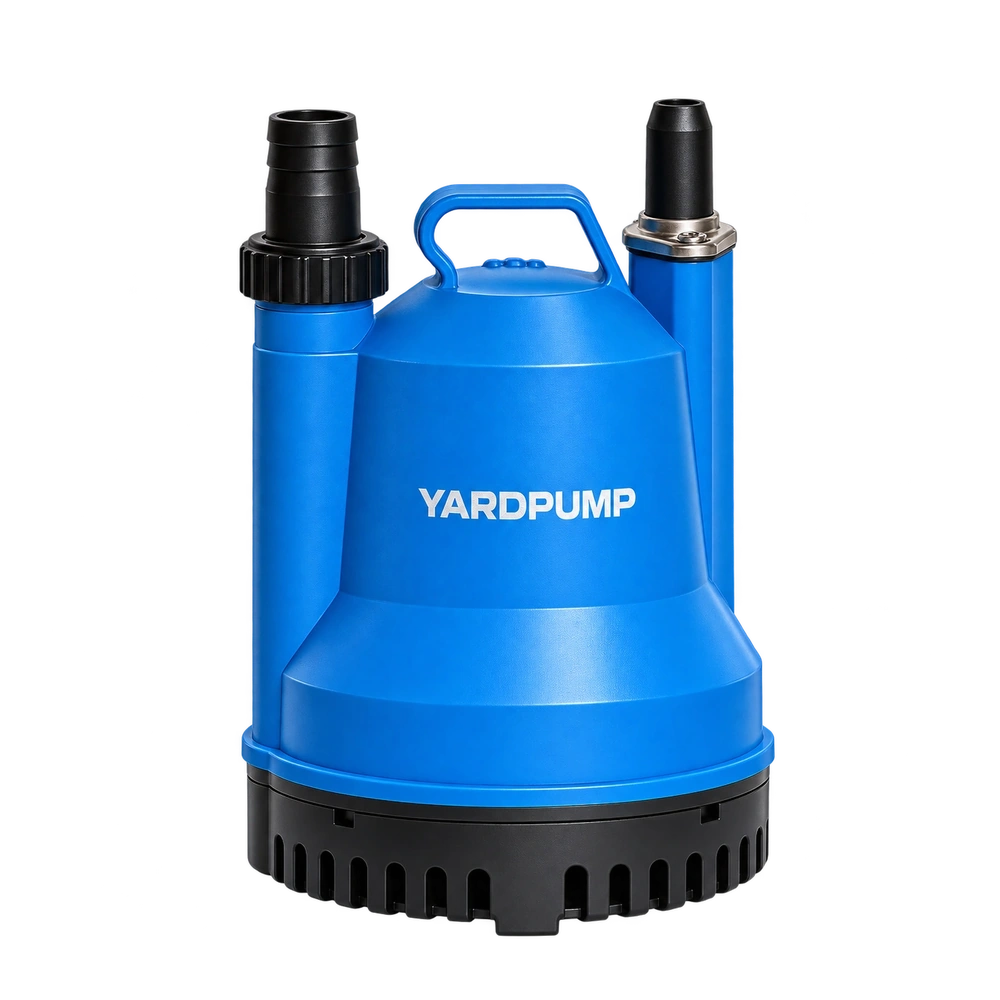
Suppose a clear-water submersible pump supplies a garden from a rainwater tank. The first spray heads look normal, while the pressure-regulating heads at the far flowerbed fall short. Check pressure at the far head's inlet with the actual zone running. A regulating head can reduce excess pressure to a more stable nozzle pressure within its operating range. It cannot raise an inadequate inlet pressure. The regulator's nominal setting is not the discharge pressure to specify at the pump.
There are two pressure locations at the head
The inlet is upstream of the regulating mechanism; the nozzle is downstream. A gauge near the pump is also upstream of the supply hose, filter, fittings and elevation change. Reading that gauge alone misses losses before the far head. Turning every other head off changes zone flow and line losses, so an individual spray pattern does not prove the whole zone will work. Check the documents for the actual body and nozzle combination, including inlet conditions, nozzle pressure and flow.
A head that receives too little pressure may simply be short of supply. If its inlet pressure is adequate and one head still performs poorly, a blocked nozzle, assembly problem or regulator fault becomes more plausible. Also check the physical spray pattern. Wind, a different nozzle or a riser that has not fully lifted can change the visible reach. A dry patch by itself is not a pump fault diagnosis.
Measure the zone as it is used
Run the normal sprinkler group, preferably near the lower water level for which the system is being selected. Note the filter condition, hose bore, near and far heads and their height difference. Take steady readings at installed test points; if there is no suitable point, have an installer arrange one. Do not loosen a live fitting to fit a gauge. Compare the near and far readings and write down the zone's total delivery. Pressure measured with water flowing is more useful for checking the duty point than static pressure with every outlet closed.
Change one condition at a time. If the system allows it, test a smaller group while keeping the same nozzle and comparable supply level. When the far head recovers, examine zone demand and pipe loss. When pressure is adequate at both locations but one head stays weak, look at its local branch or the head itself. If cleaning a filter restores delivery, note the maintenance interval and the effect of a loaded filter. A single reading is not a new pump rating.
What remains of 2.6 bar at the far end?
In an illustrative system, the running pressure near the pump is 2.6 bar. The far head is two metres higher, costing about 0.20 bar of static pressure, and the hose, filter and fittings lose another 0.35 bar. That leaves about 2.05 bar at the inlet. If this head needs at least 2.4 bar there, it falls short, even if its nominal regulated nozzle pressure is 2.0 bar. Those values are assumed, not universal sprinkler data. Use the actual head and check pressure at the target flow before accepting the installation.
Use the result to choose the change
Look first at zoning, fine hose runs and filter losses. Then compare the required duty point with a pump curve. A low-level drainage capability does not guarantee sprinkler pressure. If the curve or head data are missing, run a controlled trial in a representative small zone rather than promising throw across the entire garden. Also verify that the selected pump and filter are suitable for the actual stored water and its maintenance needs.
Frequently asked questions
Will a regulating head fix low pressure at the far sprinkler?
No. It needs adequate inlet pressure. Verify that before changing heads.
Why is static pressure good but spray weak with several heads on?
Flow changes both the pump's duty point and the losses in the line. Measure the actual running zone.
Will smaller nozzles always fix it?
They can reduce demand but also change coverage and application rate. Check the exact combination and zone requirement.