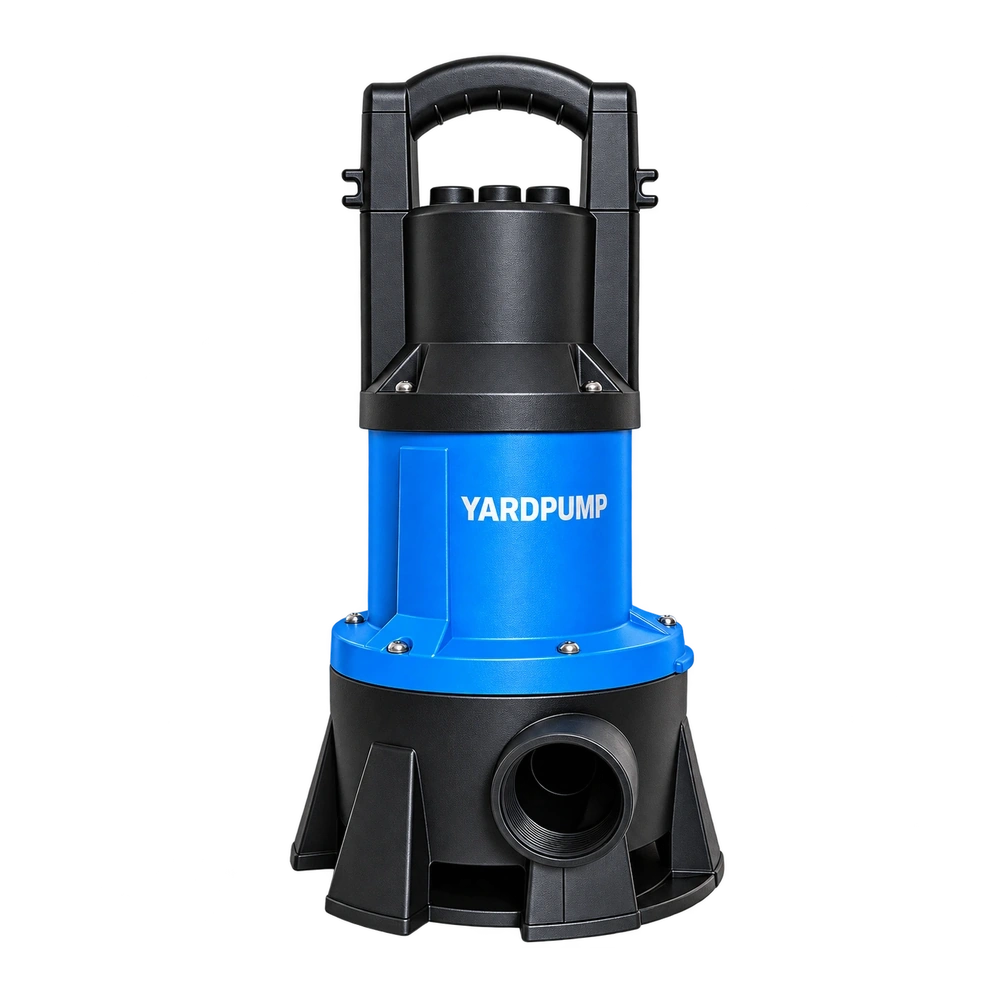
Pollen and small leaves form a ring on the surface of a rain barrel. A submersible pump feeds the garden well when the barrel is full, but its inlet screen gathers fragments later in the draw. Lowering the pump is not always helpful. Keep its inlet away from both the descending floating layer and the sediment on the bottom, while meeting the pump's minimum operating water level. The barrel's nominal capacity is not the amount available for a clean draw.
Watch what moves with the surface
Floating material follows the waterline. A fixed inlet stays where it was installed, so the distance between it and the surface shrinks during pumping. Light fragments that sit harmlessly in a corner when the barrel is full may concentrate near the inlet as flow draws them in. Bottom sediment behaves differently: it stays near the floor unless disturbed. Lowering the pump may move the inlet away from the first problem and towards the second.
From outside the tank, check whether material comes in during refill, accumulates around the overflow or moves into the inlet only late in a draw. Record the water level when a clean screen first shows a change in delivery. A dirty screen seen at the end gives no reliable timeline. It may hold surface debris, disturbed sediment or material introduced during the latest rainfall. Isolate the pump before cleaning or changing its position. Do not enter a confined tank or reach into water beside energised equipment.
Put the usable layer on one drawing
Use the bottom as the common reference. Mark the top of the sediment, the actual inlet elevation, the planned stop level and the volume between operating levels. The top of the carrying handle is not the inlet elevation, and a full tank gives no information about the lowest permissible running level. A proposed stop point has to respect both the manufacturer's operating requirement and any higher level needed to keep floating debris away from the intake.
Consider a hypothetical inlet 18 cm above the bottom. For this example, the selected arrangement requires at least 8 cm of cover over that inlet. The surface would then need to stay at or above 26 cm on that condition alone. If an observed trial finds that pollen starts reaching the screen when the surface is 12 cm above the inlet, plan to stop before that condition with a margin for fluctuation. Thirty centimetres is an observed boundary in this example, not a universal stop setting. The layer thickness, inlet shape and flow change the result. Moving the inlet also changes the available volume; compare that volume with the amount needed per watering session.
Decide what to change first
When debris arrives with incoming rain, begin with maintainable leaf exclusion and cleaning at the inlet to the barrel. Do not treat unidentified oily film, odour or contamination as ordinary pollen, and do not keep irrigating with suspect water. A suitable floating intake can follow the surface and draw from below it, if the system is designed for that arrangement. Do not fit an improvised suction hose to a submersible pump with a built-in inlet. A floating device can also touch bottom at low level or fail to move freely if its hose is trapped.
Commission the arrangement at both a fairly full level and near the planned stop. Check that the intended sprinklers or emitters get enough water, the screen stays usable over the interval and the pump stops as intended. If the volume left below the stop level makes one long watering session impractical, change the size or timing of the zones. It is better to plan for usable water than to depend on the pump drawing from a layer it should avoid. Check the model's instructions for this non-potable rainwater application and the flow available through the actual filter and hose.
Frequently asked questions
Will a finer screen let me pump all the way to the bottom?
It may block sooner, and it does not change the minimum water level or allowable liquid. Exclude debris first and check the planned stop level.
Do I need a floating intake?
Not necessarily. A fixed intake can work with surface cleanup and a suitable stop level. Choose using the actual depth and the permitted inlet arrangement.
How can I tell surface pollen from bottom grit?
Compare the water level, the first sign of restriction and the material recovered. Both can be present, so keep the location and timing with any sample.