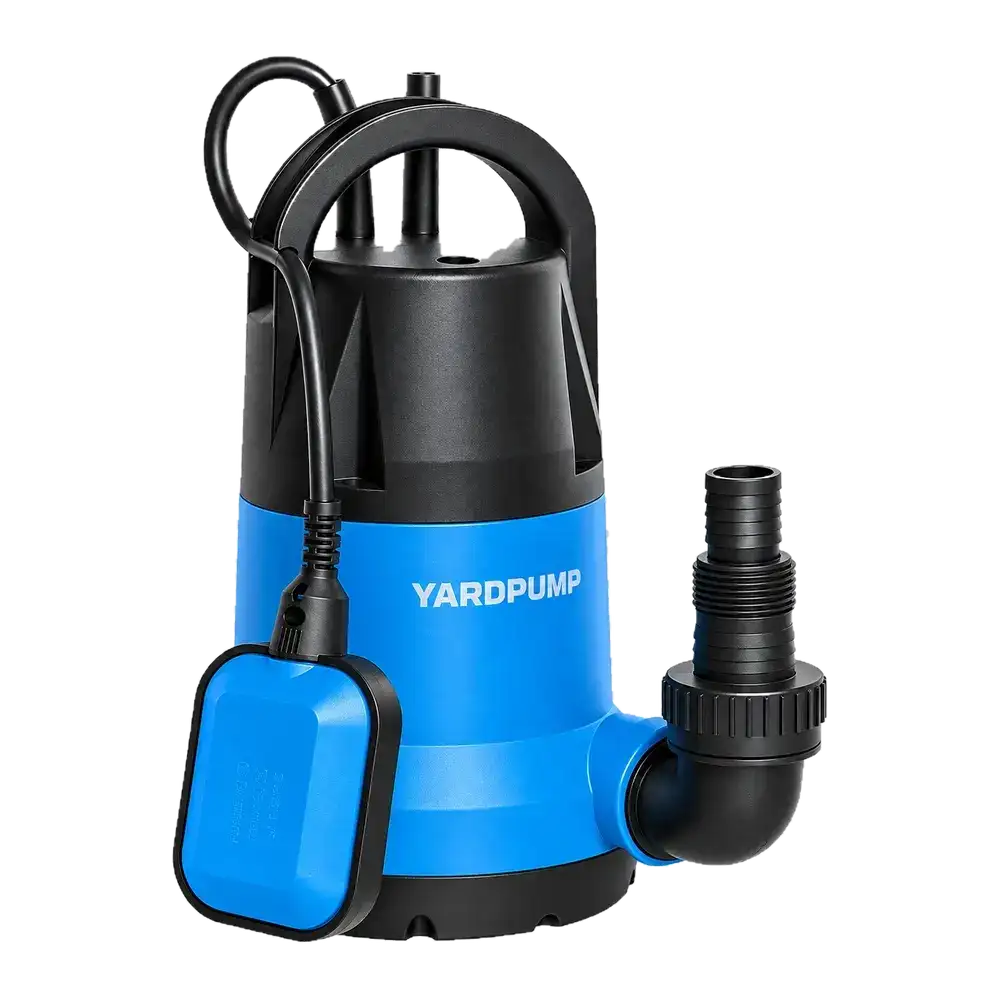
Suppose a clear-water submersible pump supplies a garden from a rain tank. Delivery is steady in dry weather. When a downpipe sends water into the tank, the sprinklers surge even though the water level is still adequate. First check whether the incoming stream carries bubbles into the pickup area. Adequate water above the intake does not establish that the liquid reaching it is free of air. Check whether filter restriction, valve position or irrigation demand changed at the same time.
A tank can be full while the intake receives uneven flow
A stream falling onto the water surface can carry air below it. The path of the bubbles depends on the direction, height and rate of incoming flow, the circulation in the tank and any partitions. If the inlet is close to the pump, an aerated stream can reach the intake below the surface and affect flow or pressure. Routing incoming water to a different part of the tank or using a calming inlet approved for the tank can reduce direct disturbance. A bend by itself does not establish that air stays away from the pump; location and actual inlet conditions matter.
A different problem occurs when the intake is too close to the surface and the running pump draws a vortex that carries air downward. Both can produce bubbles at the outlet. One follows incoming water and the other commonly follows water level or intake position during pumping. Rain can also deliver dirt to the filter even when the tank otherwise contains clear water. Record the conditions that bring on the symptom before deciding whether to investigate falling water, intake cover or filtration.
Compare at a similar level and with the same outlet
From a safe, dry position, record the outlet arrangement, active irrigation zones, external tank level, when refill starts and when delivery weakens. Use only a permitted viewing point or external instruments. Do not open a cover that must be closed, enter the tank or move a powered pump to watch bubbles. If the system has a non-potable refill that can be controlled safely, compare a period with incoming flow and a short settled period at a similar level, keeping the valves and sprinklers the same. If roof runoff cannot be controlled safely, observe again after it stops at a comparable water level. Do not block a downpipe to force the test.
In an illustrative comparison, delivery pressure repeatedly falls during refill. When the inlet flow stops and bubbles disperse, pressure steadies at a similar tank level with the same outlet. Seeing the same timing again supports investigation of inlet disturbance. If delivery also weakens at low levels when the tank is not refilling, check minimum operating depth, the screen and the hose first. A change in sprinkler count or filter condition belongs in the record. It prevents the comparison from being attributed to air alone. The absence of visible surface bubbles does not prove that air cannot reach the intake.
Separate the inlet disturbance from the pickup area
Have the installer review the tank inlet, pump location, inlet screen and cleaning access against their instructions. Possible changes include correcting an allowed inlet direction, using an approved calming inlet, moving the pump to a quieter area or watering when refill is not disturbing the tank. A new pump position still has to account for sediment, minimum operating depth and stress on the discharge connection. Do not arbitrarily raise the pump, obstruct the intake or remove a protection device.
Repeat the check with the actual irrigation zone after a change. Record when refill begins and ends, the weakest sprinkler's behaviour, measured pressure or collected delivery and the stopping conditions. This shows whether inlet layout improved delivery or whether filtration and duty still need review. This applies to non-potable rainwater. Any potable connection or backflow issue calls for a qualified person to assess the installation.
Frequently asked questions
Can a deep tank still deliver air to the pump?
Yes. Air carried by incoming water can reach the intake even when the pump has sufficient depth above it.
Do bubbles at the outlet prove the downpipe is the cause?
No. Compare timing, level, intake vortices, connections and filter condition.
If moving the pump steadies the flow, do I need a low-level test?
Yes. Check the new position at its permitted minimum water level and actual watering duty so the intake still has enough cover.