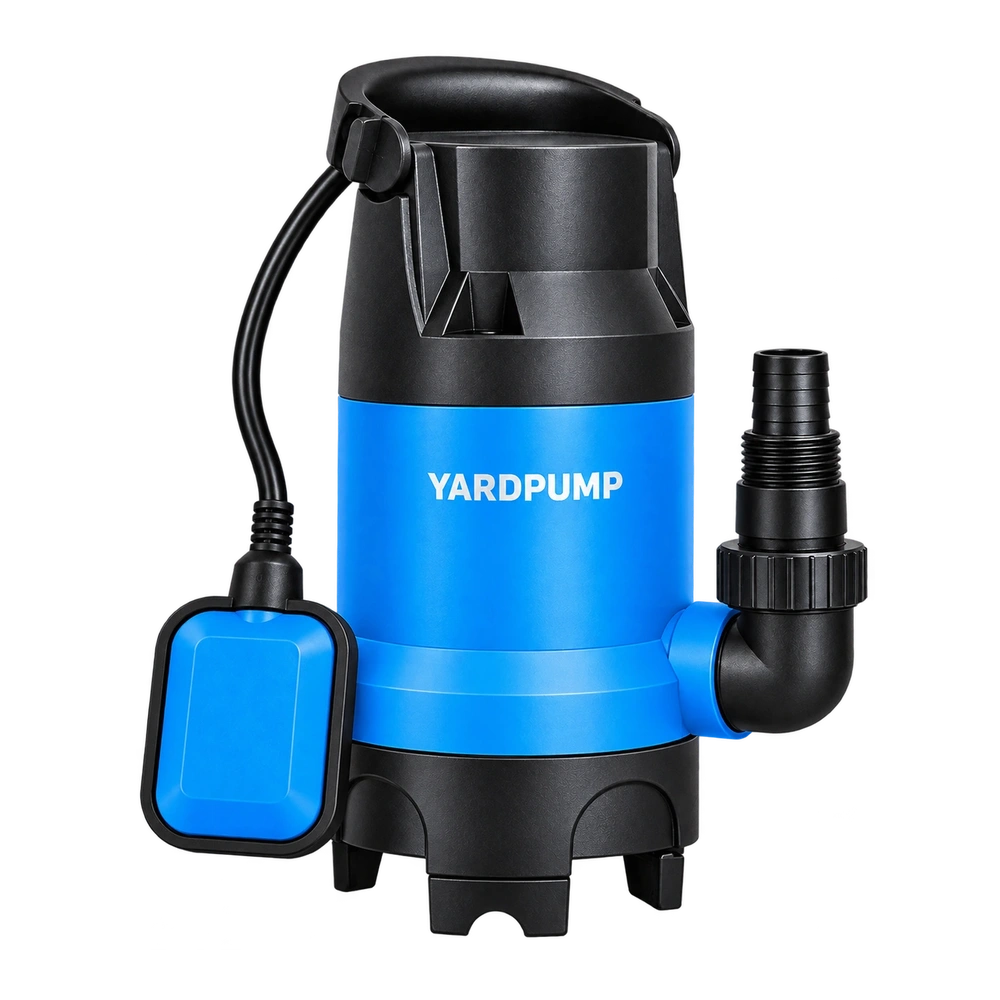
A sewage pump has a stated solids passage. That dimension helps screen for blockage, and it tells you little about service life in sand or gravel. Before specifying a pump for mineral solids, describe the water mixture, how long the pump will see it and how often it can be inspected.
A particle can fit and still damage the pump
Hard mineral particles strike and rub the impeller, casing and seal interfaces. Gravel can wedge between moving and stationary parts. Fine sand can enter clearances in large quantities. Soft sewage solids behave differently even at similar dimensions.
For example, a 6 mm rounded soft solid and a 6 mm sharp stone share one dimension but impose different impact and jamming risks. The comparison explains why a sieve number is incomplete.
A few stones at the bottom of a trench and a steady stream of fine sand give the pump different exposures. Gravel can strike leading edges or wedge at the entry. A much finer mixture can circulate through the pump and repeatedly wear the impeller, volute and any surfaces where particles enter a clearance. Abrasion depends on concentration, particle hardness and shape and on how long the pump runs in that mixture.
Sample the dirty part of the job
Use representative material from near the intended inlet. Describe the mix during startup, normal inflow and the last drawdown, when settled material may be disturbed. If you can safely collect a sample, record the settled layer after a known interval and take a photo beside a scale. A single bottle is a field observation. Moving fines and intermittent surges may need a more complete assessment.
Give the supplier the lift, flow, duty cycle and documented variation in solids. Ask which wetted and wear components are intended for that abrasive service and how to inspect them. If the offered pump is for ordinary soft solids, request written confirmation for the mineral mix before treating it as a candidate.
Decide whether to change the intake or the pump
Use a pump and handling method explicitly suitable for the documented abrasive mixture, or settle and remove minerals before pumping where the process permits.
Where the process permits, keeping the intake above the settled mineral layer or separating the solids before pumping can reduce the load. Confirm stable support, submersion and controls if the intake is raised. Some jobs need an application-specific dewatering or slurry pump with a documented wear and service plan.
During evaluation, record initial flow and head at a reproducible point. After a representative period, compare the performance and inspect the wear parts using the approved procedure. Completing one short pumping run can show the mix passed on that occasion. Life and replacement intervals need evidence from the expected exposure.
Frequently asked questions
Does the biggest stone determine which pump I need?
It sets one blockage constraint. Note the fines, their concentration and run time as well. Fine hard particles can account for substantial wear over repeated cycles.
Is a metal impeller enough for abrasive water?
Check the material and shape of the impeller and the rest of the water passage together. A change to one component leaves the casing, clearances and seals exposed.
Can I position the pump above settled grit?
Where permitted, a stable raised intake can reduce pickup of settled grit. Recheck water depth, support, switch levels and whether the flow still stirs the solids into the inlet.