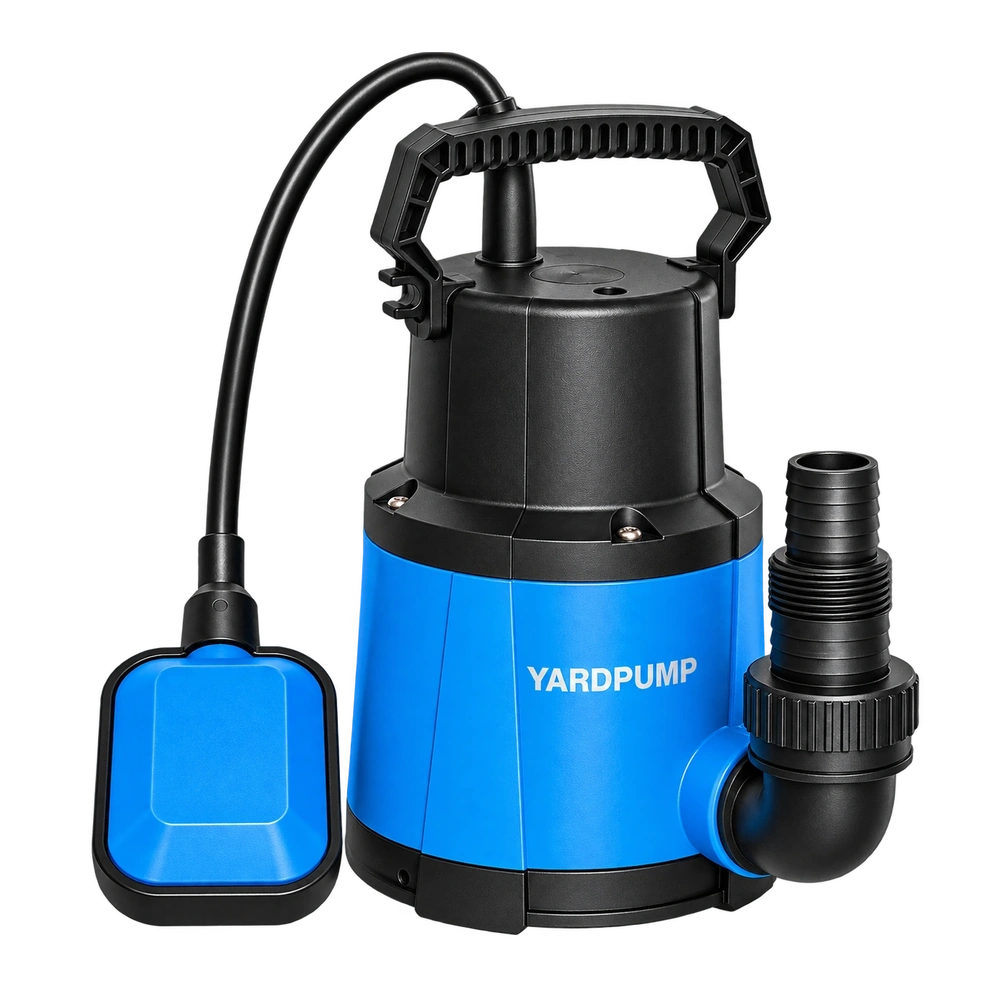
A sump pump has been placed inside a removable perforated basket to catch loose debris. During the next inflow, the pump starts and its float drops after only a short run. The water outside the basket is still rising. Check both water levels at the same time. If the pump empties the basket faster than water passes through its walls, the switch inside can reach its stop level while most of the pit still needs draining.
Watch the level that actually moves the float
When the pump is idle, water can slowly pass through the basket and leave both sides at the same elevation. During a run, the difference in level drives water through the available openings. Leaves pressed against the side, a basket seated over its bottom openings, or openings left above the active water band can all limit that transfer. Some holes visible at the top of an empty basket may never be submerged at the levels where the pump cycles.
If the float is inside the basket, it responds to that smaller volume. The pump can draw the inside level down and stop, then start again after water seeps back in. The result may look like a bad switch. A separate mechanism is physical interference. If the float touches the basket wall, the same low delivery can occur even when the two water levels stay together. A fault in the discharge is also worth checking when both levels stay high and the pump runs continuously.
Compare the two sides before cleaning changes the evidence
An installer can use dry, accessible observation points to record the two water surfaces against a common height reference. Look at the level just before starting, the lowest inside level during delivery and the level outside as the switch stops the pump. Include any independent alarm indication and the discharge behaviour. Keep the lid, electrical equipment and protective arrangements as specified. If the basket cannot safely be observed, use a qualified, controlled clean-water check. Do not reach into the pit, enter floodwater or open a powered enclosure.
In an illustrative run, both sides start at 200 mm above the same datum. When the pump stops, the inside is at 110 mm and the outside is at 190 mm, an 80 mm gap. The gap closes over the following minute without another pump command. That pattern supports a restriction at the basket. If both sides drop to 110 mm but the float stays against the wall, investigate clearance or the switch mounting instead. Those water levels illustrate how to read the trace. They do not set an installation limit.
Check the whole installation with the right accessory
With qualified isolation in place, compare the basket position, visible fouling and float travel against the pump and basin instructions. Use a repeatable approved test before and after servicing an allowed removable basket. If the gap returns quickly, ask whether the basket can handle the expected debris and inflow with an accessible maintenance interval, or whether interception at a different point is appropriate. Inspect the pump intake only in the manner its manufacturer permits. The manufacturer’s intake screen and any other protective parts stay in their specified configuration.
If both sides rise while the pump is delivering, measure installed flow and verify the expected inflow at the relevant duty point. A small sump pump needs enough water at its intake, safe float clearance and a discharge that can move that water away. Raising a float or selecting a higher-output pump without checking all three can hide the original problem in a short demonstration. Record the verified basket, float and pump arrangement before approving it for the job.
Frequently asked questions
Can the two levels match when the pump has a supply problem?
Yes. They can match between cycles. The difference while the pump is moving water and at switch-off is the relevant evidence.
Should the float be moved outside the basket?
Have the installer check the complete approved arrangement. Moving one sensor without reviewing intake supply and low-level protection can leave the pump running with too little water inside.
Does a wider basket automatically give better flow?
The active submerged openings, expected fouling, fit and service access all matter. Verify the basket that will actually be used at the relevant levels and inflow.