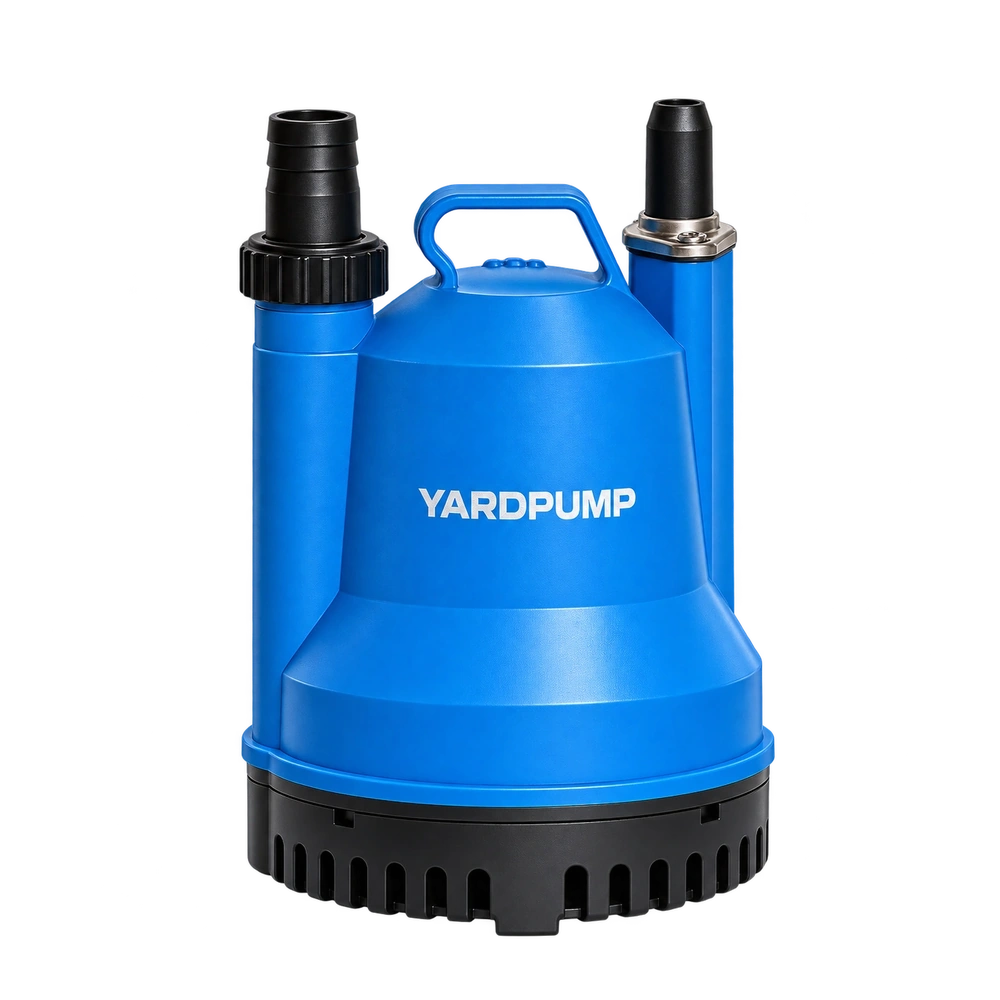
Imagine this pre-season readiness check. Before the rainy season, someone lifts the sump float briefly and hears the motor run. Is the system ready? That confirms only a limited response under the conditions of the check. It does not demonstrate that the float rises naturally, water reaches the inlet, the discharge route works or the pump stops and restarts correctly. Use the manufacturer's approved wet system test and observe the entire cycle from a safe position.
Manual movement can skip the problem
A hand can lift a partly waterlogged float, overcome a sticky guide or move a cable around an obstacle. Water buoyancy may not do the same. Manual movement can also miss the actual start and stop levels. Conversely, an audible motor may be running without useful delivery because of an airlock, closed route or another hydraulic problem.
This is not a recommendation to reach into an energized sump. Keep hands and tools away from the connected pump and moving parts. If electrical connections or access are flooded, stop and have qualified personnel address the hazard from a safe location. The approved procedure determines what an owner may check and what needs an installer.
Prepare the route before adding test water
Identify the final discharge destination, expected water levels and safe test-water introduction point. Confirm access, visible connections and any known maintenance needs through the appropriate isolated inspection. Keep debris out of the basin. Do not add water faster than the safe test plan allows, or pour into an uncertain electrical area.
Some properties depend continuously on pumping. Arrange backup or supervision appropriate to that dependency before testing. A test should not create a flood while proving the equipment intended to prevent one. Check whether a sealed or gas-controlled cover requires a specialist procedure rather than removing it casually.
Observe a natural rise, delivery and stop
Under the approved method, let the water level produce the start demand naturally. Record the level from a fixed datum, where the float travels and whether it contacts the wall, hose or cable. Observe actual water reaching the intended destination. A sound from the pipe is less informative than confirmed discharge, where the outlet can be viewed safely.
Continue only within the planned safe conditions to observe the normal stop. Check that the stop level leaves the pump within its specified requirements and that the float returns freely. Then observe the permitted drain-back and next cycle. A check valve closing audibly does not establish how much water returns or whether it creates rapid cycling.
| Stage | Useful observation |
|---|---|
| Rising water | Natural switch action and actual start level |
| Pumping | Stable delivery and safe connection/support condition |
| Falling water | Unobstructed control travel and normal stop level |
| After stop | Drain-back, leaks and unintended continued flow |
| Next demand | Repeatable restart and restored automatic readiness |
Interpret the time record against the test inflow
For illustration, a straight-sided basin has an effective area of 0.20 square metres and drops 100 millimetres in 30 seconds. Storage decreases by 20 litres, equivalent to a net 40 litres per minute. If the filling hose continues supplying water, actual pump discharge is greater than that net decrease by the simultaneous inflow. These numbers are an example, not a capacity acceptance for a particular pump.
A bucket-fill test with low inflow also does not reproduce a storm's design demand. Its value is checking the real sequence and revealing obvious installation problems. Required capacity, backup and alarm tests need their own defined conditions. Do not deliberately block the discharge, bypass switches or dry-run the pump to invent a fault test.
Leave evidence and a ready system
Record the date, exact configuration, observed start/stop levels, discharge result and any abnormal noise, leakage or delay. Stop and refer unresolved faults for qualified assessment. After testing, confirm normal power, automatic mode, closed covers and the required alarms or backups in their service state.
For compact sump-pump handover, a brief wet-cycle record is more useful than “motor runs.” It checks the pump together with the basin, control and actual pipe route. It still has a defined scope: passing today's permitted test does not promise every future storm will be within capacity, and it does not remove the need for the prescribed maintenance schedule.
Frequently asked questions
Can a hand-lifted float pass while natural operation fails?
Yes. Manual force or a changed movement path can bypass buoyancy, friction and clearance problems.
Is one wet cycle enough to prove storm capacity?
No. It checks that sequence under the test conditions. Design inflow and the required operating point need separate evidence.
What if the pump starts but the level does not fall?
Stop according to the safe procedure and check inflow, actual delivery and the installation. Do not continue a suspect run just because the motor is audible.