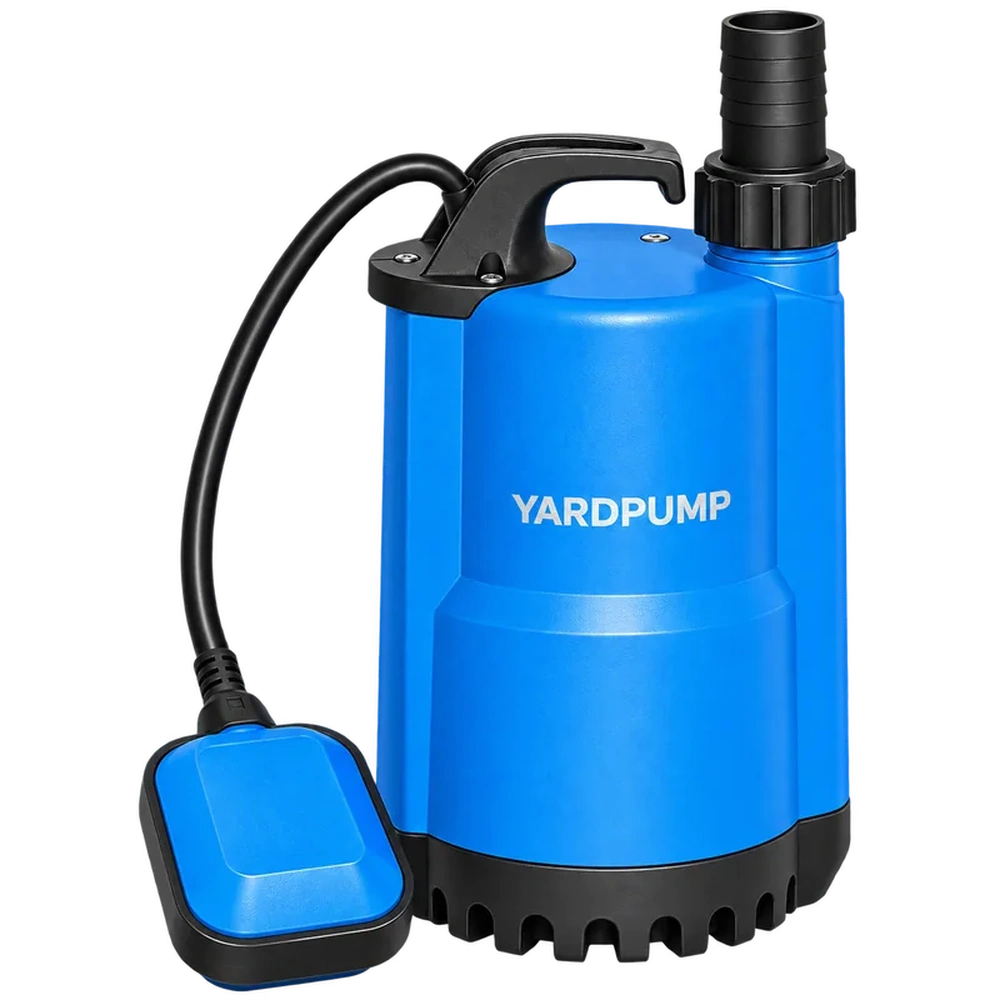
Consider this installation proposal as an example. A narrow sump has little room for a tethered float, so a buyer proposes an ultrasonic sensor under the lid. Will a device advertised for a long measuring range necessarily work? No. The nearest measurable distance can be more important than the maximum range. Confirm that the highest relevant water surface remains in the sensor's usable zone, and that the complete control system handles an unreliable or missing echo safely.
Leave room for the sensor to hear its own echo
A typical pulse-echo ultrasonic sensor transmits sound and evaluates the reflection from the liquid surface. Immediately after transmission, its construction and signal processing limit how close a target can be evaluated. The specified blind zone or minimum distance is not usable measuring space. A software scale that displays the whole basin height cannot remove that physical limit.
For illustration, assume a proposed sensor requires 200 millimetres of minimum distance. Its sensing face would sit only 160 millimetres above the high-water alarm surface. That geometry is unsuitable even if the maximum range greatly exceeds the pit depth. These are assumed dimensions, not a specification for a named sensor. Use the actual reference point, mandatory margin and conditions in its documentation.
Check the beam through the entire operating range
An ultrasonic beam has width. A discharge riser, basin wall, cable loop or inlet stream can create an unwanted reflection. The relevant clearance is not simply whether the round sensor housing fits through the lid. Review the manufacturer's detection geometry at both high and low levels, including the planned mounting angle and any nozzle or recess.
Foam, a strongly disturbed surface, condensation and the actual atmosphere can affect a particular installation. Their significance depends on the device and configuration. A model suitable for a calm tank is not automatically suitable for a splashing sump. Do not assume all ultrasonic products have the same blind distance, compensation or response to weak echoes.
| Installation question | Evidence for approval |
|---|---|
| How close can the water rise? | Distance from the specified sensor reference to the highest relevant surface |
| What else is inside the beam? | Actual pipe, cable and wall layout across the range |
| Can the level move quickly? | Response time, filtering and remaining storage margin |
| What happens without an echo? | Defined output, alarm and pump-control response |
Do not allow a held reading to hide rising water
Some controls can retain a previous value briefly during a poor signal. That may be useful filtering, but it must not silently present an old safe level indefinitely. Specify the permitted time, fault indication and response. Deciding whether a fault should start a pump, stop it or call for immediate attendance requires the actual application: uncontrolled pumping can also violate minimum-water or duty requirements.
As a timing example, an effective basin area of 0.15 square metres with 100 millimetres of remaining rise stores about 15 litres. At a net rise of 15 litres per minute, that is approximately one minute. A long filtering or loss-of-echo delay can consume much of that interval. The values illustrate a calculation; they are not recommended alarm settings.
Validate the external control with the pump installed
Have qualified personnel install compatible electrical interfaces and use an approved wet test. Observe rising and falling levels, normal pumping disturbance, high-water warning and specified fault simulation. Keep necessary drainage and independent warning available during testing. Do not bypass protection or deliberately let the basin overflow to obtain a result.
If the geometry fails, consider an approved alternative sensor or a different installation arrangement rather than simply raising the alarm setting into the blind zone. Sump height, access, sensing technology and pump operating levels must work together. This is guidance for selecting an external control, not a claim that standard YARDPUMP float pumps include ultrasonic sensing. Removing a mechanical float solves nothing if the replacement cannot reliably observe the most important water level.
Frequently asked questions
Does a longer maximum range mean a smaller blind zone?
No. Check the minimum distance independently. Products with ample far-range capacity can still be unsuitable for a shallow headspace.
Can I mask a pipe reflection and accept the installation?
Only using the device's approved configuration and a verified installation. Masking must not also suppress the real surface where detection is needed.
Is radar automatically interchangeable with ultrasound?
No. They use different physical principles and have their own mounting, medium and configuration requirements. Evaluate the actual alternative, not the technology name alone.