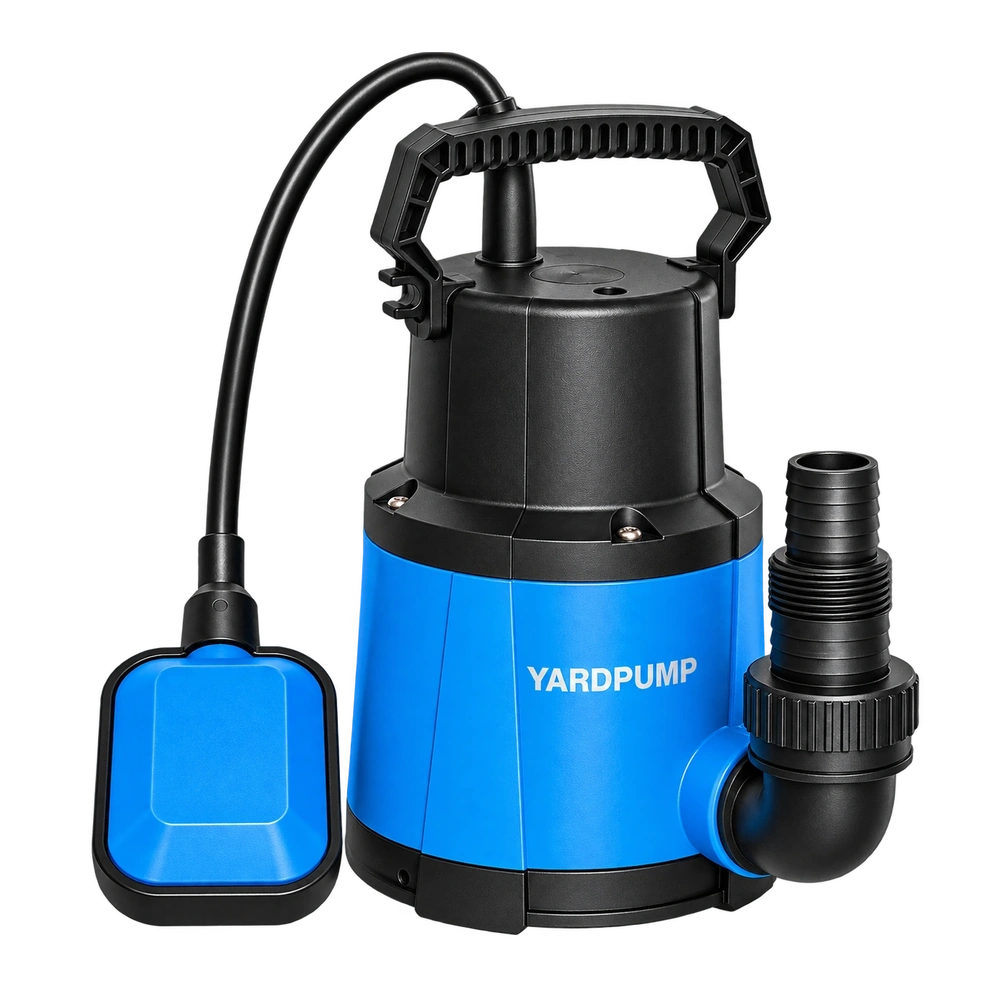
Temporary drainage is finished, but a long discharge hose still contains water. Can the coupling simply be removed and the hose rolled away? Do not equate stopping the pump with a depressurised, empty line. Confirm isolation, manage pressure and establish a suitable drainage route before handling the hose under the equipment and site procedure.
Water does not disappear when the motor stops
Valves, low points and outlet routing can retain water. Other arrangements allow continued discharge or reverse movement. Motor condition, pipe pressure and handling conditions are different states and need separate confirmation.
A hose crossing steps, roads or changes in elevation can shift load as its contents move. Do not stand in the expected release path or loosen an unknown-pressure connection to find out whether it is safe. The responsible personnel should choose the pressure-release and drainage method for the actual arrangement.
Improvised compressed-air clearing is not a universal solution. It changes the hazard and requires its own assessment rather than being treated as a convenient way to empty any hose.
| State to establish | Reason | Insufficient substitute |
|---|---|---|
| Pump isolated against restarting | Prevent renewed supply during handling | Motor happens to be stopped |
| Pressure removed through the procedure | Control coupling and liquid release | Hose looks less inflated |
| Suitable drainage destination | Avoid flooding, contamination and slips | A nearby low point |
| Manageable handling load | Plan movement and assistance | One person can lift the empty hose |
Estimate retained water before planning the lift
For a hypothetical example, a 12 m hose with an effective internal diameter of 32 mm contains approximately 9.65 litres when completely full. The water alone weighs about 9.65 kg. Hose material, couplings and retained solids add further weight.
Use internal diameter, not outside diameter. Deformation, incomplete filling and another hose size will change the result. The calculation is an estimate, not a universal manual-handling limit.
Grip, posture, ground conditions, distance and available assistance affect the handling plan. An empty-hose weight does not represent the final task. In particular, do not transfer the load of a full hose to the pump outlet or use the electrical cable to drag the pump.
Plan the end of the task when laying the hose
Consider safe emptying while arranging the temporary installation. Identify low points that may retain water and where released liquid can go. Water containing sediment, cleaning chemicals or other substances needs an appropriate destination; it is not automatically equivalent to clean water.
If incoming water continues, determine how the site will remain controlled after this pump stops. Removing the only drainage arrangement to collect equipment can leave the original problem unmanaged. Handover, alternative arrangements and access control should follow the site's actual requirements.
This article does not establish a universal legal discharge rule. The responsible party must confirm the destination and handling conditions for the particular site.
Inspect before storing and reusing
After drainage and cleaning, inspect for abrasion, kinks, bulges, loose couplings and other damage. Follow the hose information when deciding repair, replacement, coiling and storage. A dry outside surface does not prove that the inside is free of retained material.
Use the pump's specified handle or lifting point for movement. Electrical cables and hoses should not carry unapproved handling loads. Electrical work, intrusive repair and abnormal-pressure conditions require qualified personnel working to the applicable procedure.
Record the liquid handled, unusual behaviour and discovered damage. Those observations help the next installation select suitable equipment and avoid repeating an unsuitable route or connection.
The focus here is shutdown planning and handling after temporary drainage. It provides no universal depressurisation sequence. Special valves, substantial elevation differences or uncertain pressure require an appropriate professional work plan.
Frequently asked questions
Can a coupling be removed immediately after unplugging the pump?
Unplugging does not establish the line's pressure or liquid state. Follow the applicable procedure before disconnection.
Does a flattened hose prove that all pressure and water are gone?
Appearance alone is insufficient. Water may remain elsewhere in the route, and the relevant states need appropriate confirmation.
Is dragging the pump by its cable acceptable for a short distance?
No. Use the specified handle or lifting point. The cable and hose must not carry handling loads that the equipment does not permit.