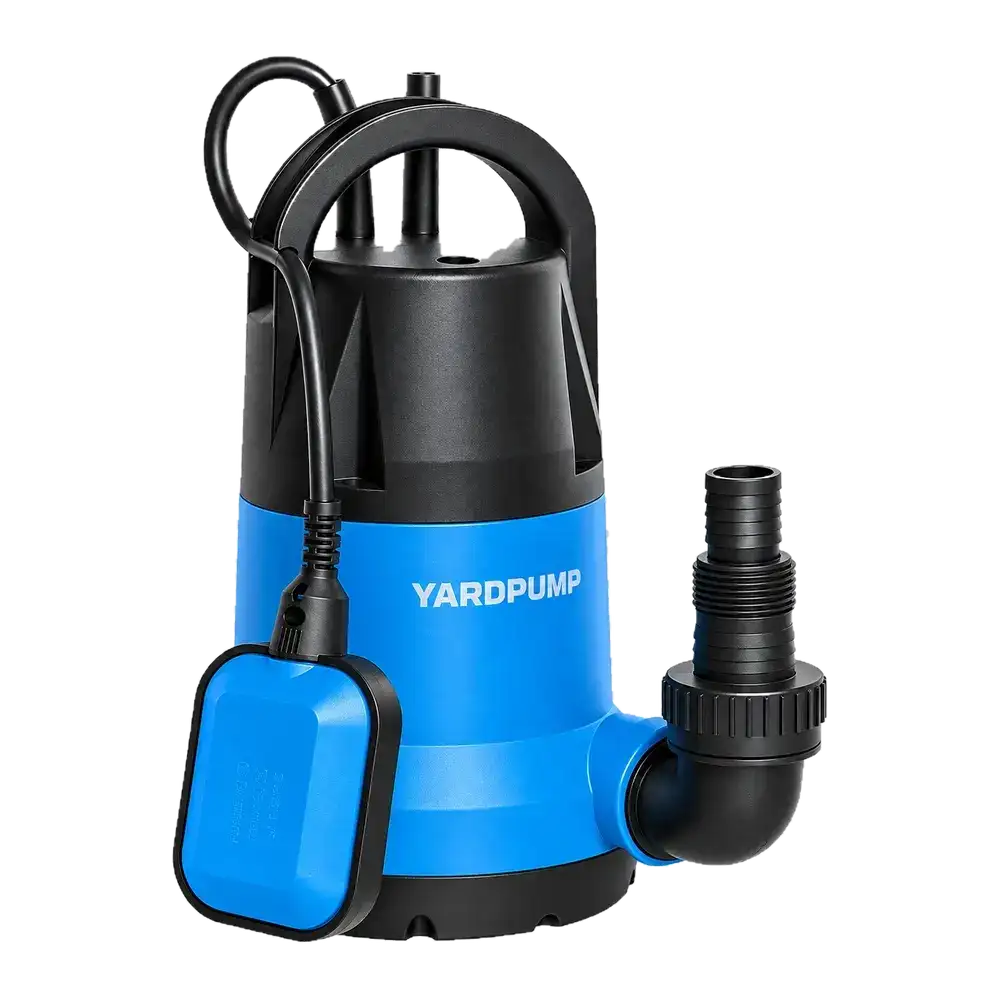
Consider a sump with two submersible pumps for heavy rain. Each delivers steadily when tested alone. When both run, the stream sputters and water begins to swirl near one inlet. A new check valve or a larger pump will not necessarily help. Two pumps drawing from the same space can change the path of the water approaching their inlets. Establish whether the pumps are drawing the pit down too quickly, disturbing the intake flow, or losing flow against a shared discharge. Each points to a different correction.
Stable intake conditions can change as the second pump starts
Incoming water has a direction. Walls can turn it, and a second inlet creates another place for it to go. An approach that looks even with one pump may become uneven with two. A sustained surface vortex reaching an inlet can carry air and interrupt delivery. Alternatively, both pumps may simply lower the water too quickly for the inlet to remain adequately submerged. Record the level at the time of the symptom. Bubbles after both pumps start do not distinguish a layout problem from drawdown.
A common discharge adds another possibility. Greater combined flow generally increases pipe losses and changes each pump’s operating point. The two installed pumps need not deliver twice the single-pump flow even with air-free inlets. A low total alone cannot identify an intake problem. Inlet disturbance and discharge restriction can also be present together.
Compare three pumping states over a matching level range
Have the people responsible for the installation run pump A alone, pump B alone and the permitted two-pump configuration. Keep the discharge arrangement and approach flow comparable. Stay within the permitted level and operating conditions. Do not restrain a float, bypass a protection or deliberately run below the permitted depth to reproduce the complaint. Record which pumps are running, the pump and inlet positions, water level, vortex location, outlet behaviour and any safe flow or pressure measurements. Observe from a dry, safe position. Isolate automatic start sources and deal with retained water pressure before touching or repositioning equipment.
In one illustrative case, both pumps run steadily on their own through the same level band. Running both produces an air core beside the inlet pipe while the water is still above the level at which either pump misbehaved alone. That supports an interaction with the approach flow. In another, delivery becomes uneven only at the lower limit of the permitted water range. Control and drawdown deserve attention. If flow falls without visible air ingestion and common pipe pressure changes substantially, evaluate the discharge restriction. Mark observations as observations; do not use noise alone to decide what happened.
Choose a layout or control change that you can verify
Sketch the inlets in relation to the walls, incoming pipe, water levels and float travel. Options may include distributing the incoming flow more evenly, separating or repositioning pump inlets under an approved design, or reviewing when the second pump is allowed to start. An improvised baffle can obstruct float travel or collect debris. There is no universal spacing that can be copied to all small submersible pumps. Check intake clearance, cooling, operating levels and service access for the actual equipment.
After a change, repeat individual and simultaneous operation across the agreed range. Confirm that the normal stops and alarm still work. A backup pump may rarely overlap the duty pump, but the arrangement should be verified where the controls allow overlap. Have qualified personnel deal with dirty water or an inaccessible sump, and keep effective drainage available while checks are performed.
Frequently asked questions
Is more space between the two inlets always better?
No. Moving an inlet can put it near a wall or in a fast incoming stream. Compare the actual layout, float clearances and observations at matching levels.
Do two pumps delivering less than twice the flow prove air is getting in?
No. Common discharge losses can limit delivery. Look for inlet air, and compare the levels and discharge behaviour.
Can the controls start both pumps only at a higher level?
The responsible designer can consider it within the approved operating range. Check the remaining high-water margin, maximum inflow, stop levels and alarm before making a change.