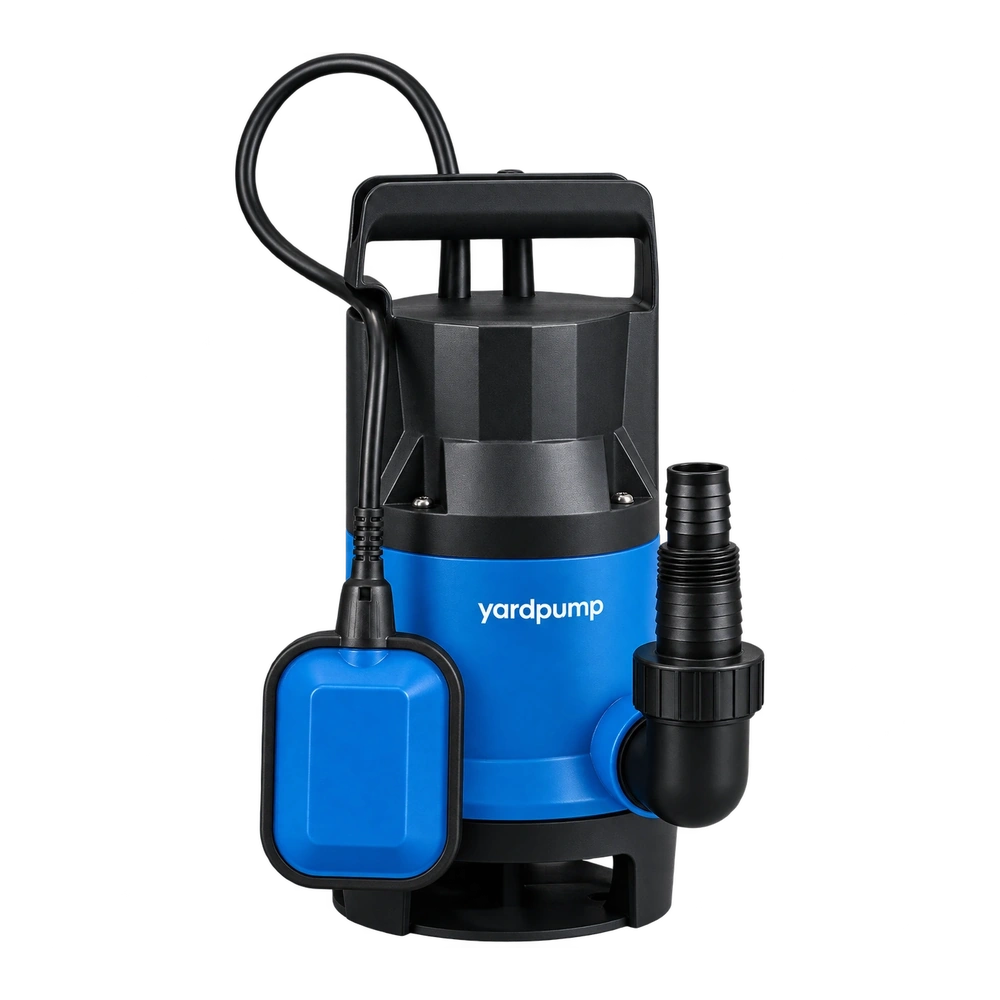
The puddle has cleared, but an automatic utility pump briefly turns every so often and the wattage display jumps. Check how that model detects water. Some small pumps start briefly as part of a timed check, then decide whether to continue pumping. Other models wait for a float or an electronic level signal and can behave differently while idle. Use the manual and a record of actual timing to tell an expected check from water returning or a fault that needs service.
Check three possible explanations for a short run
If the instructions specify motor pulses for detection, a brief sound at regular intervals without delivery can be consistent with that program. Check what the pump does immediately after power is supplied and how later cycles work. Also verify when it is meant to continue running. If an externally float-controlled pump cycles despite an apparently low water level, look for water draining back down the hose or entering from another source. When the level climbs after a stop, sound at regular intervals is not enough to call it a programmed check.
Unpredictable start durations, scraping, sustained operation without observable discharge, protective trips, odor or sharp temperature changes call for a service assessment. Stop and isolate the equipment from a safe, dry place. If electrical equipment is flooded or cannot be operated safely, leave it to qualified personnel. Do not bypass a water sensor, hold a float in place, or run a pump dry unless its instructions specifically permit the operating mode.
Measure energy across time, not from the highest displayed watts
Record the electronics waiting, a short water check, and sustained discharge as three states. Confirm the exact control version, expected interval and whether it is intended to wait when no water is present. Have qualified technicians use an appropriate energy instrument in a safe, dry test arrangement. Match the energy measurement to start and stop times, water level and actual delivery. One high reading can overstate daily use. Reading only the idle wattage between checks misses what the checks consume.
Accumulate energy across several whole cycles during an approved observation interval. Start and finish at the same point in the cycle, and extend the measurement if short intervals are below the meter's useful resolution. If the equipment must be wet or supervised, use the approved method. Do not leave it in an unauthorized dry configuration for a whole-day test. Mark actual pumping periods separately instead of counting them as time without delivery. Report each measured energy amount and its time basis for a purchase comparison.
Calculate a cycle in one illustrative case
Suppose a cycle is 180 seconds from one start to the next. A check occupies 2 seconds and averages 120 W of real power. For the remaining 178 seconds the electronics average 0.8 W. Weighting those readings by time gives an average of about 2.12 W. If the example pattern were scaled to 24 hours, it would amount to about 0.051 kWh. The 120 W is an average during a short interval, not a momentary starting peak. Neither the example numbers nor the daily extrapolation amount to permission to run a real model under those conditions. Actual energy depends on the controller, inflow and load.
For procurement, consider the measurements alongside the response to water, effective start level, noise during quiet hours and the intended job. Rated motor watts and pumping efficiency alone do not describe the control strategy. Energy measured while waiting also does not establish rated-load performance or efficiency.
Frequently asked questions
Do all automatic pumps briefly start when there is no visible water?
No. Confirm whether the model uses an active check, a float or another level sensor. If the behavior is not documented for that controller, do not assume it is normal.
Does a brief wattage peak mean the pump wastes energy?
Not by itself. Record energy across complete cycles with suitable instrumentation, noting how long the pulse lasts and comparing it with the approved behavior.
How can I distinguish a check from water coming back after shutdown?
Record the water level after stopping and any observable return from the discharge line. If water rises and is pumped out on the next start, record that separately from brief checks with no visible delivery.