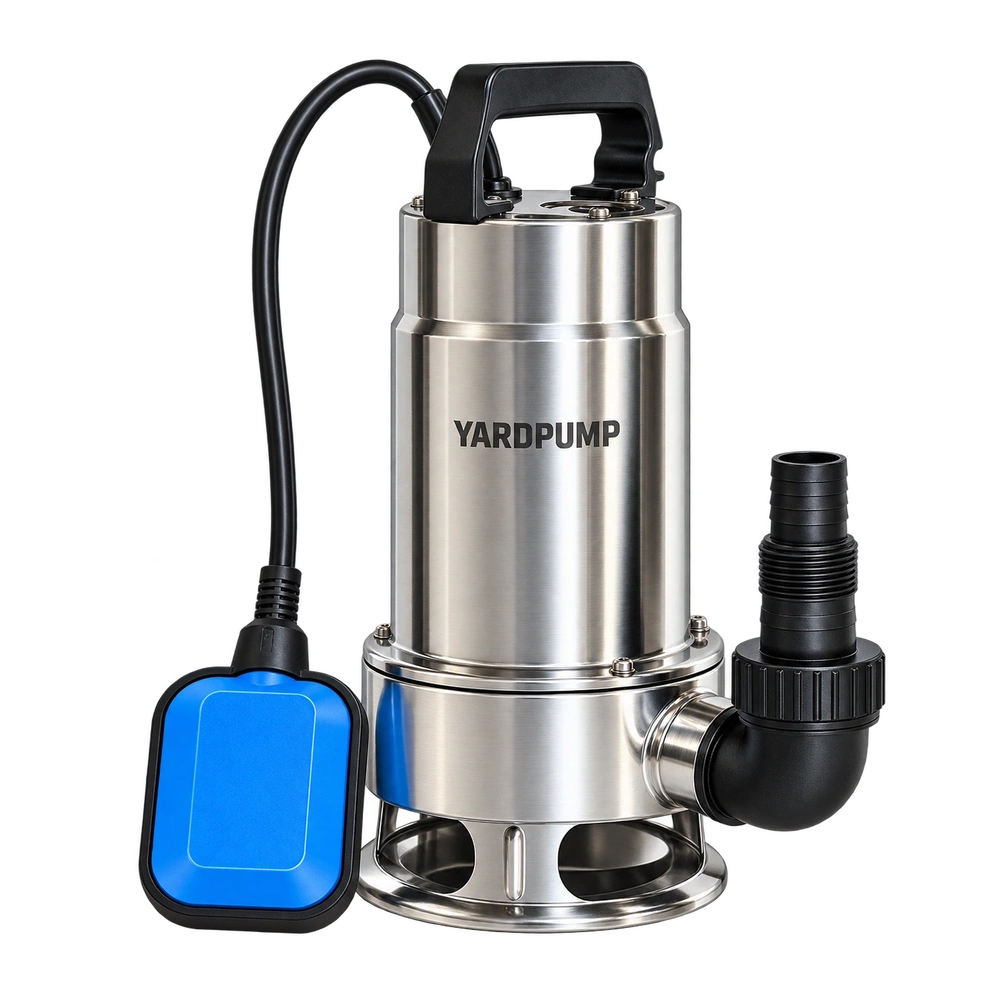
Picture a submersible drainage pump approved for the water in use. It empties rainwater from a low corner at a good rate at first, then the stream dwindles. You find no pebble lodged in its intake screen, but there is a coat of wet mud. Fine particles can blind a screen by forming a layer that water struggles to cross. Check how the delivery changes as that layer forms and after it is removed. That result can tell you whether to clean the inlet, move the intake, or ask for a pump inspection.
Smaller than a hole does not mean easy to draw through
Fine solids can stick to a wet surface or collect on bits of grass and coarser material already lodged in the screen. Once the first layer forms, water moving toward the pump brings new material to it. Flow then has to pass through the film as well as the screen. Some of the open area is lost and the remaining covered area may be harder to draw through. A pebble obstructs a small section; a fine film can cover much of the screen even though you can still make out the holes.
Water that looks muddy does not necessarily create this problem. Some particles rinse away readily, some clump together, and others collect around strands of vegetation. An inlet near the bottom can draw a different mixture when the current lifts settled sediment. Finding mud on a stopped pump gives you a hypothesis. A repeatable loss of flow and its recovery after cleaning make the hypothesis useful.
Compare at the same water level
Observe from a dry, safe position and note the water level, outlet and time since startup. Where you can safely collect the discharge, compare how long it takes to fill the same volume while the hose route, discharge height and valve settings stay the same. Compare at similar source levels. As the surface falls, the lift to the same outlet can increase and the intake may approach a level where it starts drawing air. A pinched hose or another change downstream belongs in the record, too.
Stop and isolate the pump before handling any part. Remove only the screen or cover that the instructions allow you to service. Photograph the whole screen and note whether solids are on the face, inside individual holes or farther into the wet end. Do not reach into the running pump or run it with the screen removed for comparison. Clean it as approved and restore the original assembly. Repeat at similar depth with the same discharge setup. A flow recovery followed by gradual loss in the original water supports surface blinding, especially if the same film returns.
Make a decision with the flow change
For an illustration, suppose it takes fifteen seconds to collect ten litres after cleaning and thirty seconds after another period in the same water at a comparable depth. The rate fell from forty to twenty litres per minute. That does not tell you the exposed screen area was halved, or that the material is a particular clay. Send the observations about settled solids, fibres and intake height to the seller when you check the permissible liquid and service interval.
If the job tolerates leaving water behind, a stable, approved support can move the intake away from bottom sediment. If the job requires removing concentrated deposits, separate moving the water from removing the sediment. A particle passage claim for a drainage pump does not establish a slurry rating. An added finer guard also increases the need to assess inlet area and cleaning access. A timed cycle at the intended location helps decide whether routine inspection can catch loss of capacity.
What to send a service desk
Send the intake depth, outlet arrangement, before-and-after collection times, and screen photos. If the restriction persists on a clean screen, carry on with the hose, valve and wet-end checks instead of ordering an impeller from the first image. When the symptom follows placement in settled material, revisit the intake position first. Stop experimenting with a household drainage pump if the liquid is outside the approved use or contains hazardous material.
Frequently asked questions
Can hole diameter tell me how soon mud will build up?
No. Clumping, fibres, concentration, screen area and intake layout all matter. Check a representative water condition.
How can I tell if flow is falling without a clear hose?
Where discharge can be collected safely, time a marked volume and record the source depth and outlet position. Leave pressurised fittings intact.
Will a bigger pump solve mud that comes back after cleaning?
First check why the screen coats again and whether the liquid is approved. A larger pump does not eliminate a bed of concentrated mud at the inlet.