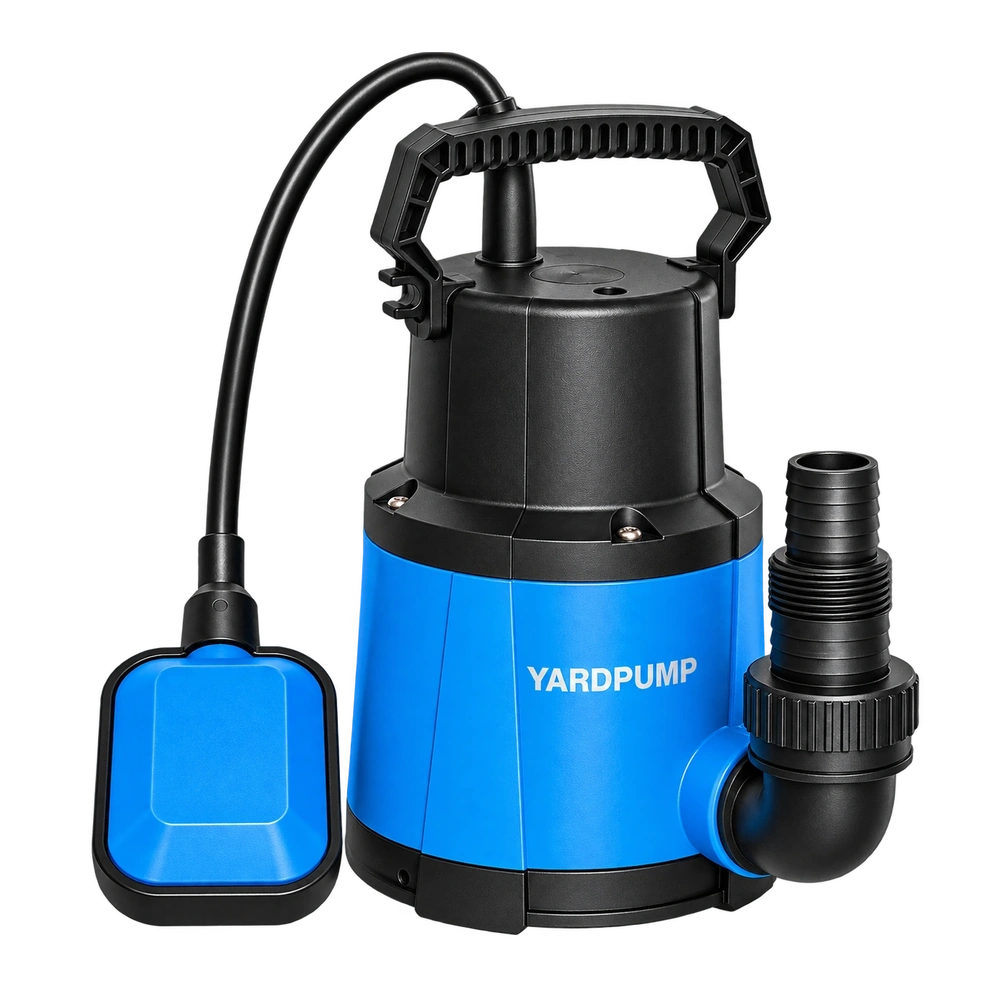
“If I remove two blades from a four-vane impeller, will flow increase and motor load fall?” There is no reliable blade-count conversion for either result. Removing existing blades creates a hydraulic and structural development variant. Two remaining, apparently symmetrical blades do not make it equivalent to a purpose-designed two-vane impeller.
First identify the objective: less clogging, lower overload risk or a different operating point. The objective determines what the modified assembly must demonstrate.
More space is not necessarily more flow
Vanes occupy passage space, but they also guide liquid and transfer energy. Removing some changes slip, recirculation and the distribution of velocity leaving the impeller. The casing receives different flow conditions, so head, efficiency and the stable operating range may change together.
Installed flow comes from the intersection of the new pump characteristic and the system requirement. If available head falls, a restrictive installation may deliver less water. Lower input power could simply mean less hydraulic work. An efficiency comparison needs the same required flow and total head.
Symmetrical removal answers only part of the question
Opposite cuts may preserve ideal static mass symmetry if geometry and material are uniform. Real parts have machining variation, unequal remaining roots, burrs and possibly non-uniform reinforcement. Static balance does not establish acceptable hydraulic forces, vibration or bearing loading during operation.
A rough hand-cut prototype should not go directly to a customer's installation. Cutting can introduce stress concentrations, sharp edges, loose fragments or damage to a load-bearing hub or shroud. The responsible designer and test personnel should control machining, cleaning and inspection.
| Intended improvement | Evidence needed after modification | Unsupported shortcut |
|---|---|---|
| Better solids handling | Complete passage and defined debris tests | More space means no ragging |
| Lower motor loading | Real power and temperature over the operating range | Half the blades means half the load |
| More delivery | New curve and installed duty point | Fewer blades guarantee more flow |
| Mechanical reliability | Part integrity and complete-pump validation | Symmetry proves every balance requirement |
Compare the required task
Consider a hypothetical acceptance task: deliver six cubic metres per hour at a specified total head. Both the original and modified configuration must first achieve that duty. Input power, temperature and stability can then be compared. If the prototype delivers only four cubic metres per hour, its lower power is not evidence of savings for the same task. These numbers predict no actual impeller's performance.
Check the permitted operating range rather than choosing one favourable point. Keep supply, liquid, water temperature, motor, casing and assembly conditions comparable. If clearance or capacitance also changes, record it separately; the result cannot all be attributed to blade removal.
Starting and thermal behaviour matter as well as a settled curve. A configuration that looks acceptable during a brief cold test may behave differently after warming or when operating conditions move.
Test the actual clogging path
Removing blades does not enlarge the inlet screen, casing throat or discharge connector. Fibres may catch on newly formed cut edges or remaining roots. Evaluate hard solids passage, fibrous ragging and abrasive exposure as different questions.
Define challenge material, introduction conditions and the criterion for intervention before comparing variants. A clean-water run cannot establish performance with every kind of debris. If inspection or clearing is necessary, isolate the supply and use qualified personnel; never reach into an energised inlet.
Development alternatives may include a newly designed two-vane component or another matched hydraulic arrangement. The original modified part does not have to be retained merely because time has already been spent on it.
Release a configuration rather than a description
Give the development variant a drawing or revision identity. Record material, machining boundaries, critical dimensions, remaining features and the matched casing. Do not automatically carry forward the original curve, liquid suitability or approval scope.
One successful prototype does not demonstrate a repeatable production process. Production parts need an approved method and relevant checks linked to the validated configuration.
For procurement, “achieve this duty and pass these agreed mechanical, thermal and debris checks” is more useful than “make it two blades.” This is a development framework, not a statement that every YARDPUMP model permits impeller cutting or offers such a version.
Frequently asked questions
Will removing opposite blades guarantee low vibration?
No. Machining variation, dynamic mass condition and hydraulic loading still require assessment.
Is lower current enough to approve the change?
No. Establish the real power basis and delivery task, then check performance, temperature and reliability.
Can the original four-vane curve remain in the new datasheet?
Not automatically. Published data must correspond to the final configuration and its verified results.