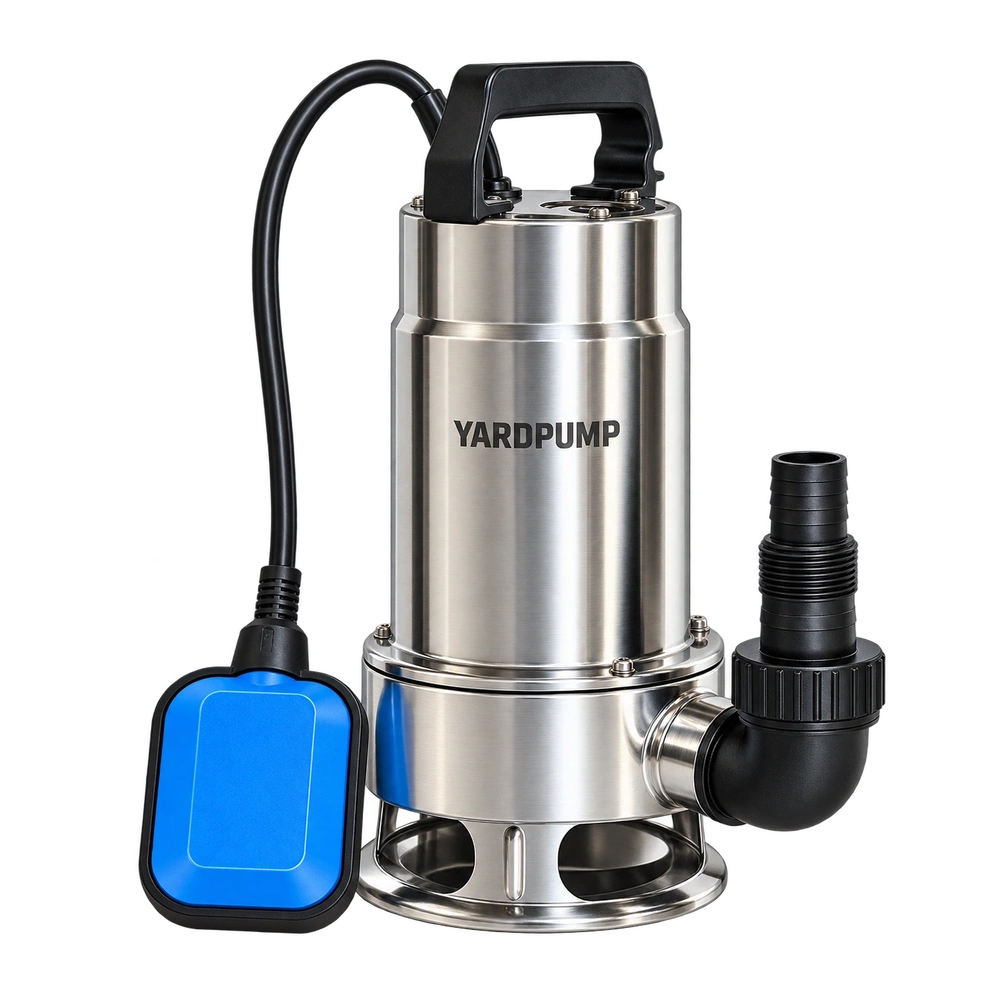
A PA66 impeller turns freely during dry assembly but may rub after time in water. Moisture-related dimensional change is worth investigating, yet it does not mean every PA66 impeller will jam. Design clearance around the actual grade, conditioning state, temperature and tolerances. Dry dimensions describe one state, not the complete operating fit.
Moisture absorption is not automatically degradation
Polyamides absorb moisture, and their dimensions and mechanical behaviour can change with moisture condition. Normal conditioning is different from hydrolytic damage.
Long-term hot-water or chemical exposure can introduce degradation mechanisms requiring their own grade-specific assessment. Do not classify every dimensional change after wetting as chemical failure.
Reinforcement, fibre orientation, wall thickness and processing affect the response. A percentage from one resin data sheet cannot be applied indiscriminately to impeller diameter, bore and thickness. Different directions may respond differently, and a moulded component is not identical to a standard test specimen.
Dry clearance can miss the operating stack
The impeller and housing may both change, but not by the same amount or in the same direction. A metal shaft, plastic hub, retention arrangement and temperature expansion also affect the running position.
Checking that dry room-temperature parts just avoid contact can leave inadequate allowance for immersion, heat, runout and production variation.
Consider an illustrative impeller with a 100-millimetre outside diameter. If its diameter grows by 0.3 millimetres under a particular assumed condition, radial growth is 0.15 millimetres. With an unchanged housing, an original 0.20-millimetre radial clearance would reduce to 0.05 millimetres.
The 0.3-millimetre change is an assumption for the example, not a universal PA66 coefficient or a recommended clearance. The calculation shows why diameter change must be converted correctly before comparing it with a one-sided radial gap.
Define conditioning that represents the task
Equilibrium in humid air differs from full water immersion. Time to approach the relevant state depends on thickness, temperature and diffusion. Wetting the surface briefly does not establish the moisture condition throughout the part.
Arbitrary boiling is not automatically representative either. The procedure should identify initial condition, liquid, temperature, duration or stabilisation criterion, measurement locations and method.
Check critical dimensions and the assembled fit on the actual shaft and housing. Supplier conditioning guidance is useful only after confirming its applicability to the grade and intended component. Retain the specimen state with the dimensional record so later measurements can be compared fairly.
Avoid solving contact by creating excessive leakage
Making every clearance much larger can increase internal recirculation, reduce performance or alter solids behaviour. Validate a fit that avoids interference while retaining the intended hydraulics.
The budget should cover relevant dimensional limits, shaft movement and thermal conditions. Trimming one sample until it turns freely is not a complete design correction, particularly if the drawing and published curve remain unchanged.
A material, reinforcement or regrind change can also alter the relevant conditioning and dimensional behaviour. Assess whether earlier evidence still applies. Otherwise, differences in storage humidity can be mistaken for moulding drift, or a genuine change can be concealed by comparing unlike specimen states.
Preserve the evidence from a rubbing complaint
Isolate power before inspection by suitable personnel. Record contact marks, foreign material, axial position and dimensions. Moisture change is one candidate; eccentric assembly, temperature, particles and bearing condition can produce related symptoms.
Do not ask a user to turn an energised impeller or keep running until contact wears itself smooth. A useful investigation establishes the actual contact and its cause before changing the gap.
Measure the hub bore and shaft fit separately from outside diameter. Fibre orientation and local restraint can make different regions respond differently. Use consistent datums before and after conditioning and assess shape or roundness where relevant. This helps prevent local distortion being mistaken for uniform expansion and then compensated by an inappropriate proportional mould change.
Questions about PA66 conditioning
Does moisture absorption make PA66 unsuitable for impellers?
No. Suitability depends on the compound, fit design and verified operating conditions.
Is the smallest final dimensional change always best?
Assess the target state and required performance, including changes during conditioning and other material properties.
Can dry dimensional inspection be removed?
It remains useful. Combine it with the specified conditioned or running-state checks rather than allowing one state to represent every acceptance requirement.