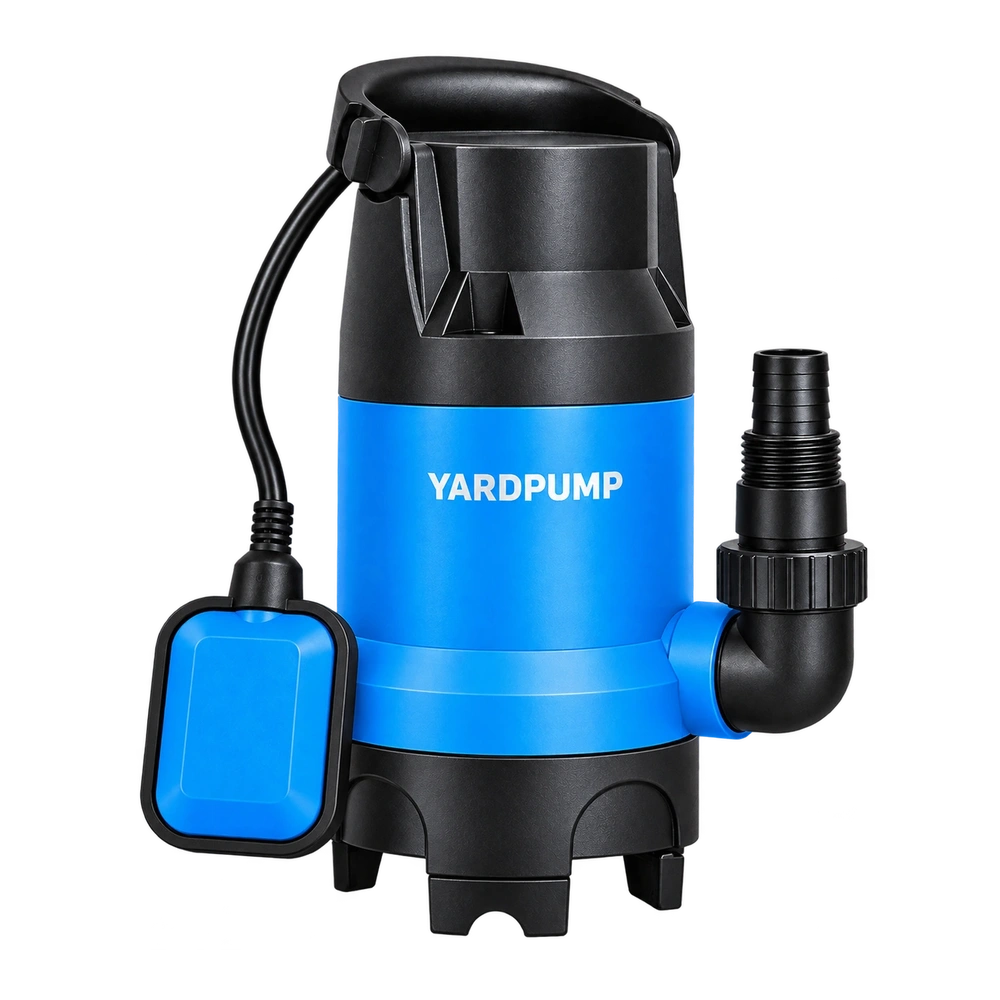
Imagine a PA66 impeller removed from a returned plastic submersible pump. Its vanes bend more readily than those of a stocked spare, and a dimension has changed. Start by checking moisture condition. Water absorption can soften the material and change dimensions, and some of those effects can reverse as moisture leaves. Hydrolysis involves breaking polymer chains; drying does not rejoin them. Both effects can be present in the same part. A buyer or repairer needs to know whether the impeller retains the necessary size, strength and running clearance at the agreed water temperature and exposure time. Bending a wet vane by hand does not answer that question.
Separate moisture condition from damage in service
PA66 absorbs water. Moisture can increase molecular mobility, commonly reducing stiffness and potentially causing swelling. The size of the effect depends on the grade, reinforcement, moulding direction, temperature and time. The hub and vane tips of one impeller may change at different rates. A dry spare straight from stock and a part that has operated in water are not in the same condition. Different lots, mould cavities or formulations can also differ even if their parts look alike.
Assess hydrolysis against the service conditions and material evidence. Temperature, exposure time, liquid conditions and formulation can affect chain degradation. An enduring loss of strength after controlled drying calls for further investigation, but it is not unique to hydrolysis. Stress cracking, wear, moulding defects and chemical exposure can also leave irreversible changes. Colour, a pale mark or a single weighing cannot establish the cause. Dimensions returning toward their initial values do not prove that strength has recovered.
Prepare samples that answer the same question
Identify the resin and part revision. Record grade, reinforcement, colour, mould cavity and lot, and preserve returned parts before unplanned cleaning or heating. Use unused pieces from the same lot where possible. Condition one group using a method accepted by the material supplier or test laboratory, and retain another group in its initial state. Record the returned pump's water temperature, service time, liquid and operating conditions. Under the agreed method and comparable temperature, record mass, impeller diameter, tip positions and hub fit. Use consistent tools and datums. Otherwise a worn vane tip may appear to have shrunk.
In an illustrative comparison, an unused conditioned part shows nearly the same size change as the return. After controlled drying, the return's mass and diameter are close to those of the unconditioned control. Moisture condition can likely explain much of the dimensional difference. If the dried return still performs poorly in a comparable mechanical test, a materials laboratory can choose an appropriate measure such as molar mass or solution viscosity to investigate chain damage, alongside wear marks and service history. This is an investigation sequence, not an acceptance limit. Uncontrolled heat can change the part again. A household user should not bake a used impeller and reinstall it for submerged operation.
Apply the finding to the pump and the purchase
If conditioning mainly changes clearance, assess the combined vane, casing and shaft dimensions in the service state. A dry incoming inspection may otherwise miss a wet running issue. If irreversible damage is verified and the service conditions were within the agreed scope, review the formulation, material, design or production process. Any material change also needs checks on assembly, durability, flow and head. A single soak weight cannot stand in for a pump test. Write down whether the part is measured dry or conditioned, the measurement locations and the comparison conditions. A shared dimensional limit is easily misapplied when stock parts and returns are in different states.
Frequently asked questions
Is a softer wet PA66 impeller automatically nonconforming?
No. Moisture plasticization can occur in normal service. Assess the specific grade and complete pump against their defined operating conditions.
Does dimensional recovery after drying rule out hydrolysis?
No. It points to a moisture effect on size; strength and evidence of chain damage still need assessment.
Will a less absorbent material always prevent rubbing?
No. Shaft eccentricity, moulding, temperature and casing load can also change running clearance. Verify the complete pump.