A coupling is rated for the pump's pressure, yet the hose pulls off its end. Is the pressure statement false? Not necessarily. Pressure containment and axial retention are different properties. A connection must both contain the water and resist the forces that try to separate its parts, using the specified hose, fittings and restraint arrangement.
Pressure creates a separating force
At a closed end or a suitable connection boundary, pressure acting over an effective area produces force. The basic relation is force equals pressure difference multiplied by effective area. The actual load path depends on the fitting design and installation, but a pressure label alone cannot establish how that force is resisted.
For a simplified illustrative calculation, 100 kilopascals acting over a 40-millimetre circular area gives about 126 newtons. Doubling diameter gives four times the area at the same pressure. These values are not a pump rating, coupling acceptance load or complete transient calculation. They show why larger connections can require meaningful retention even at apparently modest pressure.
Identify what carries that load
Depending on the system, load may be carried by a properly engaged barb and clamp, a locking coupling, a threaded union or dedicated restraint. Each has its specified parts and assembly conditions. A hose held on by friction alone is not equivalent to a connection with a qualified mechanical retention feature.
Bends introduce other force directions, while hose weight and movement add loads. Starting, stopping and valve actions can change pressure and motion. A pipe support designed only to keep the hose off the floor may not prevent axial separation. The engineer or installer must trace where forces go instead of assuming that a nearby tie is an adequate restraint.
Check the complete hose assembly
Verify hose inside diameter and wall construction, barb geometry, insertion length, clamp type and permitted installation method. A wrong combination can seal briefly but have poor pull-off resistance. Repeatedly increasing clamp torque may cut the hose or crush a plastic barb without creating a reliable assembly.
For a coupling with locking arms, pins or other retention parts, confirm full engagement and the required secondary locks. Use compatible mating components rather than assuming similarly named sizes interchange. Damage, wear or a missing gasket can affect fit and engagement as well as leakage. Do not secure a suspect joint with an improvised strap and call it a pressure-rated repair.
Test retention as well as containment
The acceptance plan should define the relevant pressure, axial load, temperature and installation conditions. Use guarded equipment and competent personnel for pressurized or pull-off testing. Never stand in the likely separation path or hold the joint by hand while challenging it. A successful short leak test is not automatically a retention test.
After any separation, isolate the system, relieve pressure safely and inspect both the hose and fitting before reuse. Look for the initiating mismatch or damage, not merely the last loose clamp. Correct support and routing where they contributed to the event.
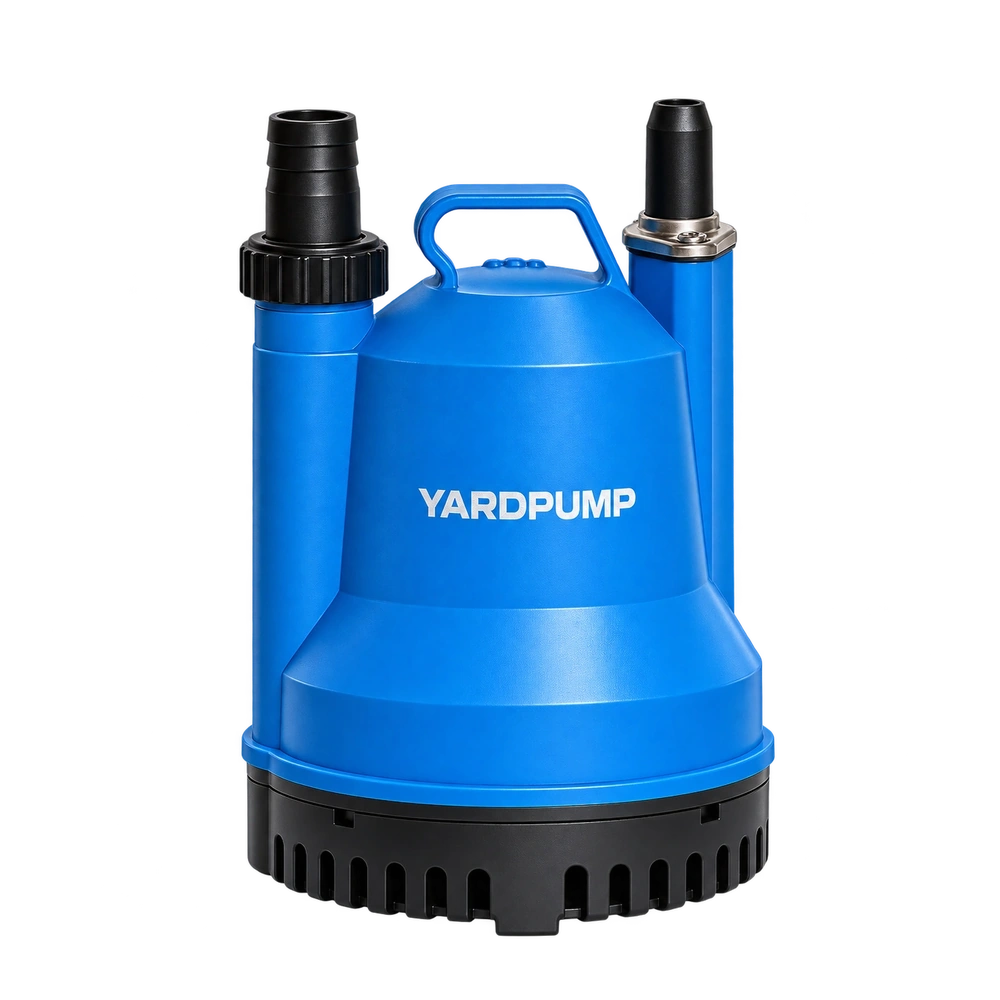
For YARDPUMP drainage accessories, select against the actual model and supplied kit, including its maximum operating conditions. Do not infer a restraint capacity from a generic hose burst value. The practical purchasing decision is to buy and install a connection whose containment and retention are both supported for the intended arrangement.
Use the effective loaded area defined by the coupling design when making an engineering calculation. The outside diameter of a bulky housing is not necessarily that area, and a balanced or restrained assembly can distribute forces differently. The simple example is a warning to identify the load path, not a formula for assigning a universal pull-off specification. The approved assembly test remains tied to its actual components and geometry.
Frequently asked questions
Does a higher burst rating guarantee the hose cannot pull off?
No. Burst resistance of the hose wall does not establish assembled coupling retention.
Is the calculated pressure force the only load?
No. Hose movement, weight, bends and pressure transients can add relevant forces.
Can another clamp always solve the problem?
No. Use the approved assembly. Extra clamps cannot automatically correct incompatible sizes, weak parts or inadequate restraint.