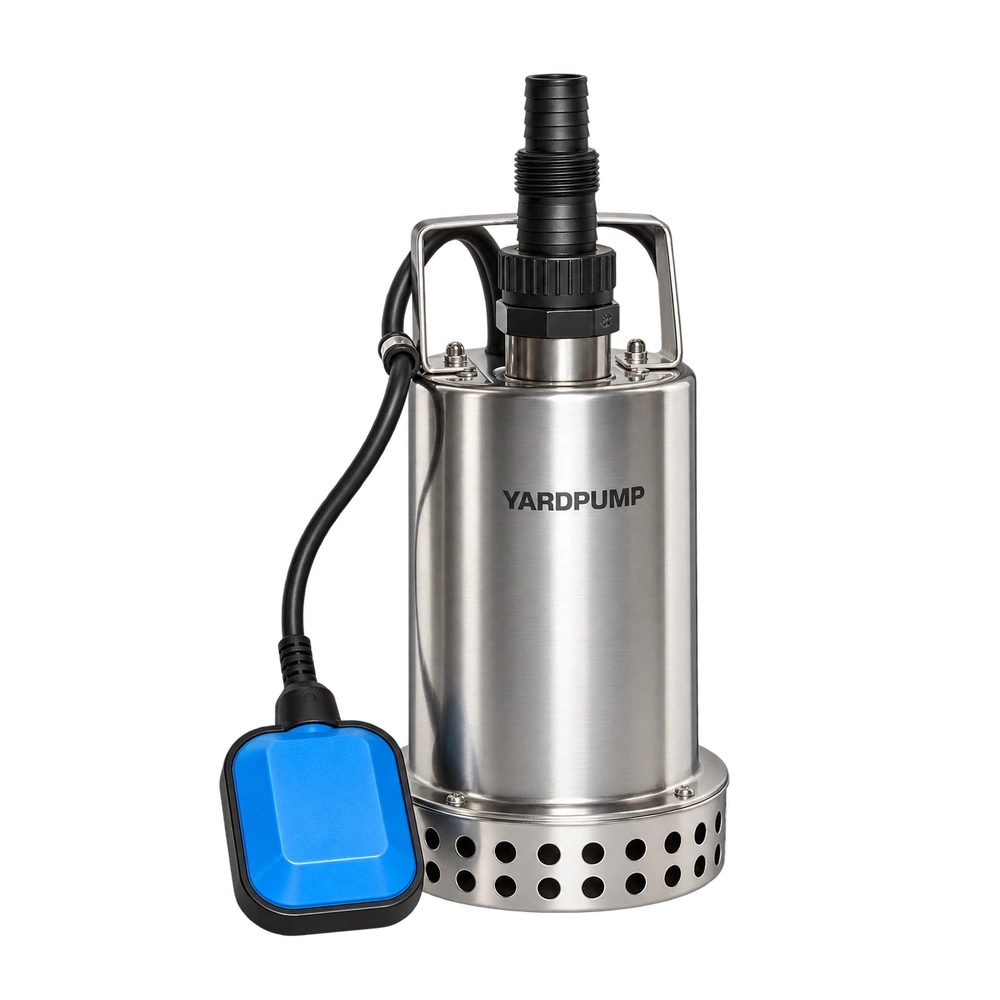
Take a dirty-water pump whose mechanical seal has already been replaced. After another period of service, liquid is found in a chamber that should be isolated from it. The faces show no obvious fracture and the spring is intact. Before fitting another identical seal, inspect the shaft or sleeve where a secondary ring makes contact. On a design with axial compensation at that interface, a groove can give liquid a route around the main faces. Confirm that the mark lies at the actual sealing surface and find out why it developed.
A secondary ring does not work like a rotary lip seal
The primary faces of a mechanical seal rotate relative to one another. A shaft-side secondary ring seals between a seal component and the shaft or sleeve. In designs with a sliding secondary ring, it can make small axial movements as the seal compensates for wear or shaft position. It does not necessarily rub circumferentially like the lip of a rotary oil seal. Repeated small movements and hard particles caught at the elastomer-to-metal interface can wear or scratch the shaft. The secondary ring may still move even when a worn surface no longer supports effective sealing. A ring that moves freely on the bench does not establish a leak-free assembly.
If there are several bands on the shaft, check the assembly drawing before attributing them to one part. A lip-seal track, a polished bearing seat, the mechanical seal’s secondary contact zone and a removal scratch have different origins. Brightness is a poor guide. Look for a groove or axial scratch in the working zone, and for embedded grit, flattening or edge damage on the removed ring. Do not assign a particular seal path from the appearance of oil alone.
Preserve the matching parts and their positions
Qualified service staff should isolate power and pressure, and handle the equipment according to the liquid involved. Record the pump configuration and service conditions. Keep the old seal, sleeve and any debris identified, including the direction of installation and the distance from a known shoulder. Photograph the contact surfaces in angled light before cleaning. Avoid mixing rings or sleeves from different returns. After cleaning, measure the shaft or sleeve through the working band at several axial positions and around the circumference. Where needed, use approved methods for surface finish, wear depth and runout. A groove that can be felt is useful evidence; it does not establish whether there is enough material left for an approved repair.
Consider two illustrative marks. One aligns with the documented secondary-ring position, carries short axial scratches, and corresponds to hard grains lodged in the old ring. Another is a bright line outside the travel zone with no measurable loss. Those observations deserve different dispositions. Still check axial motion, runout, possible contamination and service history. The most conspicuous mark need not be the actual leak path.
Restore the mating surface and validate the assembly
If dimensions or surface condition do not meet the drawing, choose an approved shaft, replaceable sleeve or repair procedure. Do not polish the shaft to a shine or use a thicker ring as an improvised filler. Diameter, finish, sleeve position and the ring’s travel all affect performance. Where hard particles are present, check where they came from, whether the pump suits the liquid, and whether excessive motion at a bearing or other rotating component is contributing. A new part alone does not remove those conditions.
Verify the approved assembly rather than just the new ring. A static leak check can identify some open paths, while others may appear only when the assembly moves, warms or operates. Record the dimensions, static result and any required running result separately. In a dual-seal arrangement or one with an oil chamber, identify the compartments and each boundary before interpreting which path leaked.
Frequently asked questions
Can the new secondary ring be shifted away from the groove?
Only where the design permits it and the working length and travel have been verified. Moving it arbitrarily can change the face loading or available compensation.
Does a hardened secondary ring prove it wore out the shaft?
No. Check liquid compatibility, temperature history, aging, grit and matching marks. Hardness is one observation rather than the whole diagnosis.
Does every submersible pump have this wear mechanism?
No. It depends on the seal arrangement and where relative axial movement occurs. Identify the actual design before using the diagnosis.