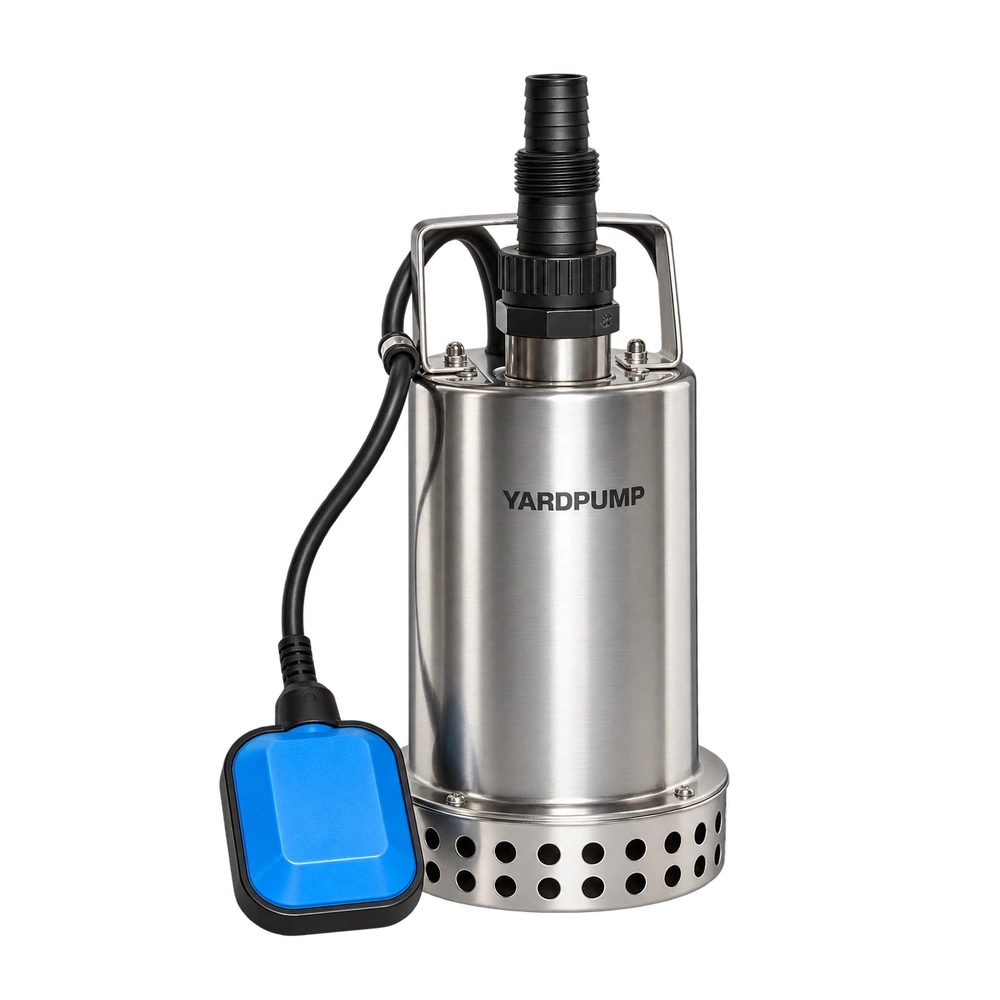
Pump A consumes less power immediately after starting. Does that establish lower long-term energy use than pump B? A cold measurement is useful, but it does not replace a comparison at the same duty and stable thermal condition. Winding resistance changes with temperature, while copper loss depends on the relevant winding currents. Hydraulic load and cooling also change. Record temperature, operating point and measurement boundary together.
Copper loss depends on current and actual resistance
Resistive winding loss can be understood as current squared multiplied by resistance. Copper resistance normally rises with temperature, but operating motor current is not an externally fixed constant. Multiplying cold resistance by a temperature correction therefore cannot independently calculate hot complete-pump input or efficiency. The actual electrical and mechanical state is still needed.
Single-phase circuits also have their particular main and auxiliary winding relationships. Total current at the plug cannot simply be assigned to every winding. Electronic control adds waveform and instrument considerations. Use suitable real-power measurement rather than treating supply voltage multiplied by total current as complete energy evidence.
An illustration, not a motor prediction
Suppose a copper winding section measures five ohms at 20 degrees Celsius. At 80 degrees, a common approximate copper temperature relationship gives about 6.18 ohms. If current is assumed constant at two amps solely for illustration, resistive loss changes from twenty to approximately 24.7 watts. These are hypothetical values, not pump measurements, and do not predict that operating current will remain constant.
A real motor also has iron, mechanical and other relevant losses. Applying the percentage copper-loss increase directly to complete-pump input is an unsupported extension. Using housing temperature as winding temperature introduces another error. The example explains a mechanism; the final comparison needs measured operating evidence.
| Comparison condition | Why it matters |
|---|---|
| Liquid and thermal state | Changes heat rejection and winding resistance |
| Flow, total head and speed | Defines the useful hydraulic task |
| Supply and capacitor version | Affects currents and thermal behaviour |
| Instrument and measurement location | Defines waveform suitability and cable-loss inclusion |
Stable does not mean waiting a fixed ten minutes
Define stabilisation under the appropriate test plan rather than imposing one time on every pump. A tank that keeps warming, a falling source level or a changing flow can prevent a valid comparison despite a long run. Record the process and identify whether protective cycling has altered average behaviour.
Competent personnel should use an appropriate temperature method. Users should not open energised motors to obtain readings. Abnormal heating, noise or protection requires the predefined response. Bypassing protection or exceeding the allowed liquid temperature to obtain a stable-looking number invalidates the exercise and creates risk.
Equal-task energy is more useful than one low reading
For continuous duty, compare real input and delivered water at the same stable operating point. For intermittent work, define a time boundary covering starts, waiting and actual delivery as appropriate. A cold advantage that reverses when hot is a possibility to investigate, not a result to assume in advance.
If delivery changes with temperature or operating conditions, compare total energy for the same task rather than selecting the lowest watt reading. Shaft power calculated from a default efficiency is not independent evidence of efficiency. Distinguish measured electrical input, hydraulic output and measured or calculated mechanical output in the report.
Retain conditions that can be reproduced
Link cold and stabilised readings to the same configuration. Include supply, liquid temperature, flow and head, duration and temperature method. Ask whether the difference repeats, exceeds measurement variation and accompanies acceptable thermal and hydraulic performance. An energy conclusion belongs to the specified task; it is not a promise for all temperatures, models or service lives.
For procurement, the strongest result explains what the pump delivered and what energy it used throughout the relevant condition. Temperature is part of that condition, not an optional note after ranking two watt figures.
Questions about hot-state losses
Is a cold-power measurement meaningless?
No. It describes the cold condition. Long-running or intermittent energy needs its corresponding test boundary.
Does input rise in proportion to winding resistance?
Not generally. Current and other losses can change. Measure real input together with the water duty.
Can housing temperature stand in for winding temperature?
Do not assume equivalence. Use a method appropriate to the model and purpose and identify what temperature was measured.