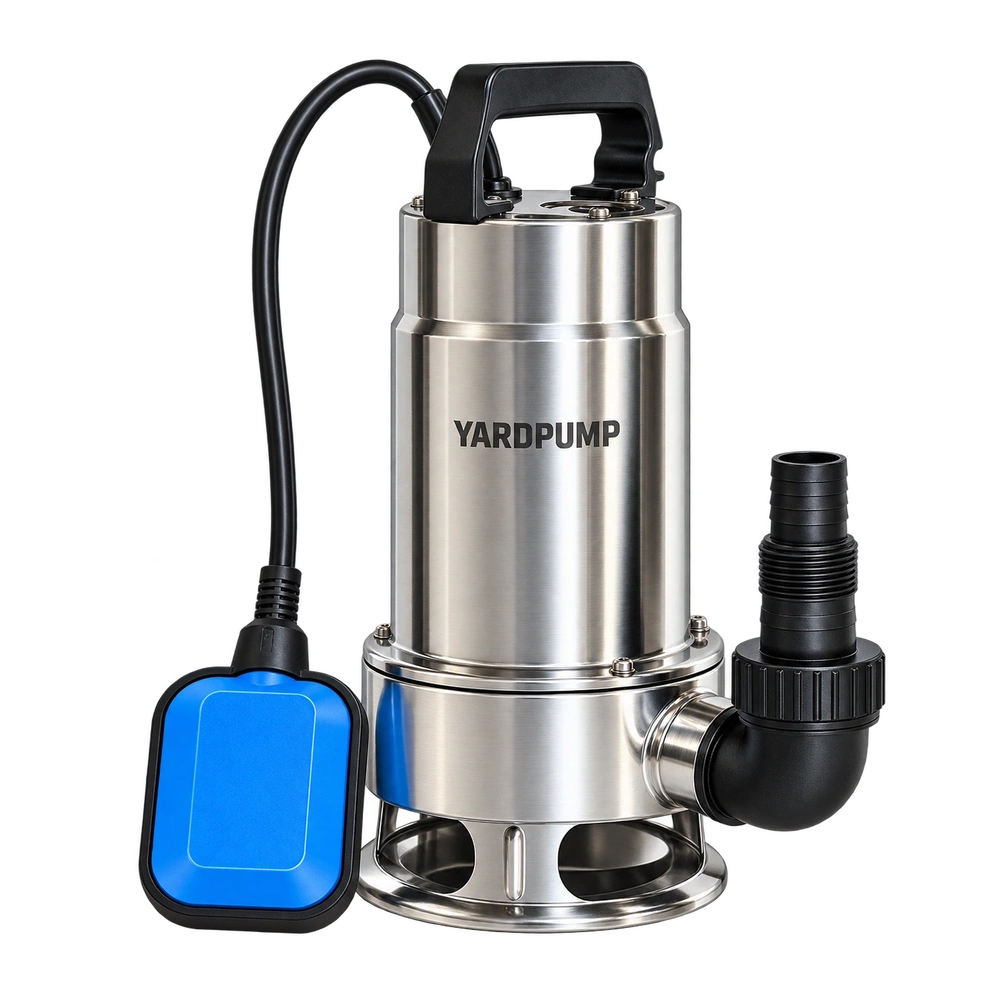
A purchasing inspector measures 4 ohms on a cold sample and nearly 4.6 ohms on another pump after running, then suspects thinner copper wire. The comparison is missing a temperature boundary. Metal conductor resistance changes with temperature. A higher hot reading does not by itself establish reduced material.
Align winding identity, temperature and measurement connections before deciding whether a difference exceeds design and measurement variation.
Measure the same circuit
A single-phase motor’s main and auxiliary windings may intentionally have different resistances. Comparing one with the other is not a valid substitution check. External cable, connectors, thermal protection and internal joints may also be included in a reading. A measurement at the plug is not identical to one at the motor leads.
Qualified personnel must isolate power, verify the de-energised condition and manage capacitors or other stored energy under the approved procedure before resistance testing. Never connect an ohmmeter to a live circuit. Ordinary users should not open a submersible pump’s electrical chamber to perform this comparison.
Temperature correction needs winding temperature
For copper windings, an applicable approximation relates two readings as R₂/R₁ = (235 + T₂)/(235 + T₁), with temperatures in degrees Celsius. Other conductor materials need the appropriate parameters; the copper constant should not simply be transferred to aluminium.
For illustration, a copper winding measuring 4.00 Ω at 20°C would measure approximately 4.00 × 295/255 = 4.63 Ω at a uniform 60°C. The increase is about 16% and can be explained by temperature rather than thinner wire. These are assumed values, not a pump specification.
Actual winding temperature is not necessarily casing or tank-water temperature. Cooling after shutdown and the measurement sequence matter. Substituting an arbitrary temperature can make the calculation look precise without making it valid.
| Comparison condition | Align | Risk if ignored |
|---|---|---|
| Circuit identity | Main or auxiliary winding and connections | Design differences labelled as defects |
| Measurement boundary | Cable and joints included or excluded | Extra resistance mixed into the result |
| Temperature | Equilibrated cold state or defined hot sequence | Heating mistaken for a material change |
| Instrument method | Resolution, leads and contacts | Distorted low-resistance readings |
Low resistance makes connection error important
Test-lead and probe-contact resistance can be significant relative to a low winding value. Four-wire measurement can reduce lead-voltage-drop influence, but still requires appropriate equipment and contacts. The name of the method does not remove every source of error.
Record the instrument, range, settling time and repeated readings. Check the measurement system against a suitable known standard where necessary. Do not repeatedly damage terminals to obtain a stable contact. If slight movement changes the result, investigate the connection and measurement stability before drawing a winding conclusion.
Investigate persistent differences systematically
After establishing a repeatable difference under comparable temperature and boundaries, review conductor material, diameter, turn count, parallel paths, winding length and joints. Resistance is not a complete BOM description. Thinner wire and fewer turns can affect resistance in opposite directions, so one ohmic value cannot reveal the cost change.
Connect approved drawings, incoming records, process information, necessary examination and complete-pump loaded performance. Insulation safety requires its own appropriate tests: normal DC winding resistance does not prove freedom from electrical leakage.
A supplier discussion framed as a repeatable, temperature-corrected difference is more actionable than an accusation based on unlike hot and cold readings. It directs both parties toward the evidence that could resolve the question.
Record the interval from shutdown to a hot reading. A cooling winding may change during the measurement sequence. Formal temperature-rise evaluation needs the applicable method rather than the last convenient reading. A purchasing screen can identify a question, but does not automatically replace complete thermal or electrical-safety assessment.
Frequently asked questions
Does half an hour of cooling establish a 20°C cold reading?
Not necessarily. Confirm suitable thermal equilibrium and record actual temperature instead of assuming a fixed waiting period.
Do identical resistance readings prove identical wire and turns?
No. Different design combinations can produce similar resistance. Configuration and performance evidence remain necessary.
Is lower resistance always better?
No. A short, changed turns or a different measurement boundary may lower the reading. Interpret it against the specific design.